

Keeping complex equipment running smoothly needs a careful plan for spare parts. The aim is to keep things moving without wasting money on parts that won’t be used. It starts with figuring out which parts are really important.
Managing parts well means sorting them by two main things: operational risk and procurement lead time. Parts that stop production for a long time are high-risk. Add long wait times for parts, and they become critical spares.
Knowing how often parts are used helps sort them. Fast-moving parts and slow-moving ones are different. This helps figure out how urgent they are and how long it takes to get them.
This approach makes a clear list of what’s most important. It tells us where to put our storage and money. This way, we protect our production by focusing on the parts that are most at risk.
Genuine vs aftermarket: fit, warranty, safety; when re‑engineering is acceptable
When buying custom machine parts, it’s important to weigh the pros and cons of original and third-party components. This choice affects how often the machine works, maintenance costs, and safety. Looking at the total cost of ownership is key.
Genuine OEM parts ensure a perfect fit and keep the warranty intact. They meet the machine’s design standards, reducing errors and downtime. But, they can be more expensive than aftermarket options.
Aftermarket parts can save money and bring new ideas or better materials. Yet, quality can vary. Some parts might not live up to OEM standards, affecting performance and lifespan.
Warranty issues are a big deal. Using non-OEM parts can void the warranty. For new equipment, this risk might be too high. Parts like pressure valves and high-speed bearings should be genuine.
The debate between OEM and non-OEM parts needs a detailed look at each component. For non-essential parts, quality aftermarket options can be a good choice. They often have shorter lead times.
Re-engineering parts is an option under certain conditions. It’s often due to parts becoming obsolete. It can also save a lot of money, sometimes by 40% or more.
This process involves detailed reverse-engineering and testing. It’s acceptable when:
- The original design is fully understood and met.
- Material upgrades improve performance or lifespan.
- The new part passes functional tests before use.
- Documentation is made for future purchases.
Checking part numbers and specs during purchase is critical. It avoids costly mistakes and delays. A thorough receiving inspection should include:
- Matching the part number with the machine manual.
- Checking dimensions and material certifications.
- Verifying the supplier’s reputation and quality.
This careful approach reduces the risk of getting low-quality parts. It also prevents disruptions from unreliable suppliers.
In the end, the decision is about balancing risks and benefits. For custom machinery, a mix of OEM and aftermarket parts is often best. Use OEM for critical and warranty-sensitive parts. For others, choose reputable aftermarket or re-engineered options with strict quality checks. This strategy controls costs and ensures machine reliability.
Set min‑max with consumption/lead data; safety stock math made simple
Setting the right stock levels starts with two key pieces of information: how much of a part is used and how long it takes to get it. This method moves away from guessing and bases stock levels on solid math. It helps set min/max levels accurately.
Knowing how often a part is used helps. It shows the average demand and any patterns. Knowing how long it takes to get a part after ordering is also important. Both pieces of information need to be up-to-date and correct.
The first step is to find the Re-order Point (ROP). This is the point when you need to order more. The formula is straightforward:
ROP = (Average Daily Usage × Lead Time in Days) + Safety Stock
For example, if a seal is used twice a week and it takes 14 days to get one, you need about 4 units. This tells you when to order more to avoid running out.
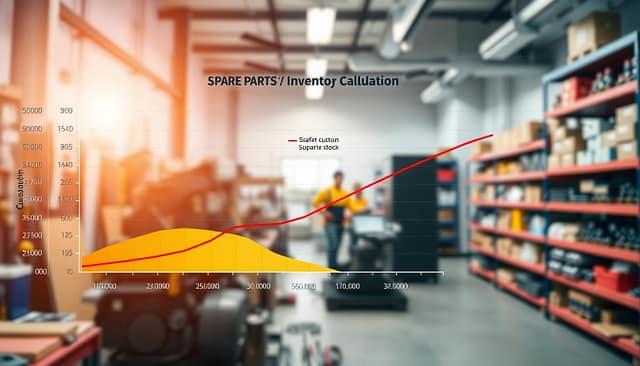
The Economic Order Quantity (EOQ) helps figure out how much to order each time. It balances the cost of ordering with the cost of holding inventory. For important parts, the EOQ often matches a standard package or a few months’ worth.
Safety stock is the extra buffer for unexpected changes. It helps protect against demand changes and delays. The formula for this is:
Safety Stock = (Maximum Daily Usage − Average Daily Usage) × Lead Time
A more detailed method uses the standard deviation of demand and lead time. For practical use, a simpler formula works well for “A” and “B” items. This way, you have a buffer without overstocking.
Using this approach for different types of parts makes managing inventory easier:
- A Items (Critical): Calculate precise ROP and safety stock. Review levels quarterly.
- B Items (Essential): Use simplified formulas. Set safety stock for items with volatile demand or long lead times.
- C Items (General): Use basic min/max based on annual usage. Minimal or zero safety stock is often acceptable.
This method keeps inventory costs low and ensures parts are available when needed. By using math with accurate data, you create a strong and cost-effective spare parts inventory.
Kitting by Job (PM Kits, Overhaul Kits) to Cut Wrench Time
Pre-assembling parts kits for specific jobs is a best practice. It directly attacks the problem of excessive ‘wrench time’. This time, where technicians search for parts, delays maintenance.
Kitting is the strategic process of creating predefined assemblies. It includes all parts, tools, and consumables needed for a specific maintenance task. The two main types are Preventive Maintenance (PM) Kits for routine services and Overhaul Kits for major equipment rebuilds.
This model transforms the storeroom into a proactive efficiency center. The benefits of a formal kitting program are significant and measurable.
- Drastically Reduced Wrench Time: Technicians get a complete, job-ready package, cutting down on trips to the storeroom.
- Fewer Errors and Omissions: Pre-verified kits ensure all correct components are present, preventing work stoppages.
- Improved Planning Accuracy: Kitting requires and enforces accurate bills of materials (BOMs), leading to better inventory forecasting.
- Smoother Work Execution: With all materials on hand, jobs start faster, proceed with fewer interruptions, and finish more predictably.
Successful implementation relies on foundational logistics. It needs meticulously verified BOMs for each kit and a dedicated, organized staging area in the storeroom for kit assembly and storage.
Integration with a Computerized Maintenance Management System (CMMS) is critical. The CMMS should allow planners to reserve parts for upcoming kits, track kit assembly status, and record kit issuance against specific work orders. This digital thread ensures inventory accuracy and provides data for continuous improvement.
Ultimately, kitting is a powerful tool for elevating maintenance from a cost center to a value-driven operation. It reduces downtime, increases technician productivity, and supports a more streamlined workflow from concept to commissioning for any custom machinery asset.
VMI and consignment options; return & core policies
Manufacturers can give up inventory ownership to suppliers with Vendor-Managed Inventory (VMI) and consignment agreements. These models help save money and build stronger partnerships. They take the burden of stocking parts off the buyer’s shoulders.
A Vendor-Managed Inventory program keeps stock levels topped up. Suppliers use shared data to check stock levels at the customer’s site. They keep inventory levels as agreed, and the customer owns the stock only when it’s used.
Consignment stocking is simpler. Suppliers stock parts at the customer’s site. The customer pays for parts only when they’re used. Ownership changes hands at use. Both need trust and open data sharing.
The main advantage is saving on carrying costs. Companies free up space and cash. Suppliers work harder to avoid stockouts, improving part availability. These models also help both sides work better together for the long term.
Choosing between VMI, consignment, and traditional buying depends on several factors. The table below shows the differences.
| Model | Inventory Ownership | Payment Trigger | Management Responsibility | Best For |
|---|---|---|---|---|
| Vendor-Managed Inventory (VMI) | Customer upon consumption | As parts are used | Supplier (with customer data access) | High-volume, predictable usage items |
| Consignment Stocking | Supplier until consumption | At point of use | Customer (physical storage) | Expensive, slow-moving critical spares |
| Traditional Purchase | Customer upon delivery | Upon receipt of invoice | Customer entirely | Low-value, irregular usage items |
Choosing the right vendor is key for success. Not all suppliers are good partners. Look for financial stability, tech skills, and a good track record. The relationship should be strategic, not just about buying and selling.
For VMI, technology is essential. Real-time data exchange is needed for accurate demand forecasting and automated restocking. Without this, the system relies on guesswork.
Clear contracts outline what’s expected. They include fill rates, inventory turnover goals, and cost savings targets. Regular reviews ensure the partnership is beneficial for both sides.
Return-to-Vendor and Core Exchange Policies
Return and core policies handle defective parts and recover value. A return-to-vendor (RTV) policy outlines how to send back faulty parts. It covers time limits, condition requirements, and authorization steps.
A core exchange program is common for repairable items like pumps or motors. A “core” is the defective unit returned for remanufacturing. The customer gets a credit or a lower price on the replacement. This supports sustainability and cost control.
Effective policies need clear documentation. Each returned item should have a reason code. This data helps spot quality issues with specific parts or suppliers. It turns reverse logistics into a source of insight.
These agreements make operations leaner. They remove old or faulty inventory from the storeroom. They turn scrap into financial gain. With VMI or consignment, they form a cost-effective spare parts strategy.
In summary, VMI and consignment turn inventory into a collaborative advantage. With disciplined return policies, they improve cash flow and strengthen the supply chain. The goal is a partnership where both sides succeed through shared efficiency.
Obsolescence watch: last‑time‑buy, redesign plans
Technology keeps changing, making parts outdated. It’s key to manage obsolescence to avoid surprises. This turns a problem into a planned action.
Starting an obsolescence watch means keeping an eye on updates. Teams watch for alerts from makers and trends. They set rules to know when to act.
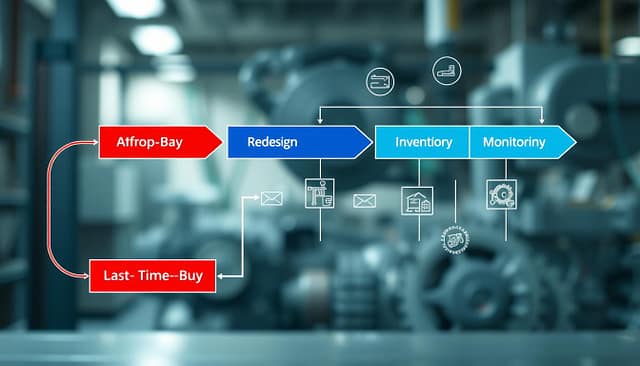
The last-time-buy (LTB) decision is very important. It’s about buying the last batch of a part that’s going to stop being made. Companies must think hard about the cost and how long they’ll need it.
Another option is to update the part. If buying the last batch is too expensive, updating is a good choice. It makes the machine better and avoids future problems.
Good programs have backup plans for both buying and updating. They look for other parts and make sure new ones work well. For key systems, a careful upgrade plan is best.
Having a solid obsolescence watch program is key to keeping production going. It helps manage the life cycle of products. For more on this, check out a guide on electronics component life and managing obsolescence.
CMMS parts master hygiene and cycle counts
Inventory Record Accuracy (IRA) is not just about numbers. It’s a key measure of reliability. It connects digital data with the real world in the storeroom. When IRA is high, maintenance teams find what they need easily. But when it’s low, they waste time and buy things on impulse.
A clean Computerized Maintenance Management System (CMMS) parts master is the base of IRA. Each part record must be full, consistent, and unique. Important data fields are the heart of any reliable record.
- Description: A clear, standard text using common plant terms.
- Manufacturer & Part Number: The exact OEM or supplier ID.
- Technical Specifications: Details like voltage, size, material, and pressure rating.
- Storage Location: Where the part is kept, like an aisle or bin.
- Unit of Measure: How many parts are in a box or gallon.
Bad data hygiene hurts operations. Duplicates lead to too much stock. Missing specs mean the wrong part is used. These mistakes make safety stock or min/max levels unreliable.
Old ways of counting stock once a year are costly and disrupt work. Now, we count small parts often. This keeps records up to date by matching count frequency with part usage.
Counting is based on how often parts are used. This way, we focus on the most important items for keeping things running.
| Category | Definition | Recommended Count Frequency | Primary Goal |
|---|---|---|---|
| Fast Movers | High-usage, critical spares. Often A-class items. | Monthly or Quarterly | Ensure immediate availability for frequent repairs; validate consumption data. |
| Slow Movers | Used infrequently, but often for planned overhauls. | Semi-Annually | Confirm existence and condition for scheduled downtime events. |
| Non-Movers | No issues in 2+ years; possible obsolete or dead stock. | Annually | Identify stock for possible return, repurposing, or disposal. |
This method does more than fix ledger balances. It gives a constant feedback loop. Accurate counts for fast movers check historical usage data for min/max level calculations. Finding issues early helps fix problems before they cause stockouts. For slow and non-movers, it shows that storage and preservation work well.
CMMS hygiene and smart cycle counting are key. They make sure data for all strategies is reliable. High IRA turns the storeroom into a predictable, efficient part of maintenance.
Template: critical spares register
A structured Critical Spares Register makes strategy a daily reality. It brings together data from part classification, inventory policies, and supplier agreements. It’s the go-to for an organization’s most critical inventory assets.
The template has key fields. Part number, description, and criticality classification (A/B/C) are at its core. It also includes minimum and maximum stock levels, supplier info, lead times, and current stock. Location and obsolescence status round out each item’s profile.
Keeping this register up to date ensures clear accountability and communication. Regular checks against machine downtime and consumption data keep it current. This makes the register a dynamic tool for ongoing improvement.
Having a disciplined Critical Spares Register is the last step in managing spare parts. It offers a clear plan for procurement, stores management, and financial planning. This ensures the right critical spares are available and ready to meet production goals.


