

For U.S. climate spending, Renewable Energy and direct air capture now occupy very different positions in the evidence base. The available 2026 research indicates that adding low-carbon generation often delivers larger near-term carbon and health benefits per dollar than paying for atmospheric carbon removal, while direct air capture remains a technology pathway that may be needed under tighter long-term climate constraints.
The policy question is not whether direct air capture, often shortened to DAC, has value. It is how public funds should be allocated while DAC costs, energy demand, site requirements, and storage needs remain uncertain. A cautious reading of the research supports near-term emphasis on renewables deployment, with DAC funding focused on cost reduction, measurement, and site-specific learning rather than broad substitution for emissions reductions.
Why Renewable Energy Leads The Cost Comparison
Renewable Energy Evidence From 2026
A May 2026 Boston University School of Public Health report discussed research comparing renewables and DAC across U.S. regions through 2050. Under a 2020 DAC baseline of about 5,500 kilowatt-hours per ton of carbon dioxide and roughly $1,000 per ton, the study found that spending on renewables often produced greater climate and health benefits. Only under very optimistic DAC breakthrough assumptions, near 800 kilowatt-hours per ton and $100 per ton, did DAC outperform renewables in many regions, and not in all of them, according to the BU cost-effectiveness study.
That finding does not make Renewable Energy a complete substitute for carbon removal. It does indicate that near-term public spending has to distinguish between avoiding emissions and removing emissions after they have entered the atmosphere. Avoidance through low-carbon power can displace fossil generation and reduce associated air pollutants. DAC, by contrast, requires energy input and then needs a destination for captured carbon, usually long-term geological storage if the goal is durable removal.
What The Cost Gap Means
The comparison is strongest where renewable projects can reduce fossil-fuel generation at the margin. In those cases, each public dollar can support electricity output while cutting emissions and pollution. DAC spending buys removal capacity, but the same ton removed can be costly if the equipment uses large amounts of electricity or heat, if capital costs remain high, or if the site lacks suitable storage access.
The evidence also points to regional variation. The BU analysis did not say DAC can never compete. It found that optimistic DAC assumptions improved its position in many regions, while renewables still remained preferable in others. For policy makers, that is a warning against one national rule that treats all locations as economically identical.
Direct Air Capture Cost Targets And Limits
DOE Targets Are Aspirational, Not Achieved Costs
The U.S. Department of Energy’s Carbon Negative Earth Shot, launched in 2021, set an aim of driving carbon removal costs toward $100 per ton of carbon dioxide. The agency’s 2022 strategy assessment framed cost reduction as a target for the next decade, not as a current market price, in its DOE strategy assessment.
This distinction matters for appropriations, procurement, and tax policy. A target can guide research priorities, but it should not be treated as evidence that large-scale deployment is already cost competitive. The research notes describe current DAC costs as far above the most optimistic benchmark. They also describe projections in which costs could fall under favorable electricity, storage, site-quality, and scale conditions. Those are conditional estimates, not guaranteed outcomes.
Energy Demand Is A Policy Constraint
DAC is not only a capital-cost issue. It also consumes energy, and the source of that energy affects the net climate value. If DAC relies on low-carbon power that would otherwise have displaced fossil generation, the policy comparison becomes more difficult. Public funding then has to ask whether the same power, land, interconnection capacity, and storage infrastructure would produce more benefit if used directly in the grid.
Research on renewable-powered DAC configurations shows that costs vary widely by technology design and power source. That range is not a reason to dismiss the field. It is a reason to separate research-stage concepts, pilot projects, and commercial procurement decisions. Public policy should require clear reporting of energy input, capture cost, storage pathway, and net removal before treating DAC credits as equivalent across projects.
Regional Policy Tradeoffs For U.S. Agencies
Budget Design Should Reflect Local Grid Conditions
U.S. policy makers face different marginal choices by region. In a coal- or gas-heavy grid area, renewable deployment may reduce emissions and health-damaging pollutants more directly. In a region with constrained renewable buildout, surplus low-carbon power, and suitable carbon storage, DAC may have a stronger case as a complementary investment. The available evidence supports this regional framing rather than a single national ranking for every funding decision.
Program design should therefore require location-specific analysis. Agencies can compare the emissions displaced by new solar or wind generation with the net tons removed by DAC after accounting for energy use. They should also assess whether DAC projects draw on new clean supply or compete with grid decarbonization. A related network resource, SGTT, can be a valuable tool for those keeping track of technical policy material across different sectors.
| Policy Question | Renewables Deployment | Direct Air Capture |
|---|---|---|
| Primary effect | Avoids fossil generation where it is displaced | Removes carbon dioxide after emission |
| Key cost evidence | Often higher climate and health benefit per dollar in 2026 research | Baseline costs around $1,000 per ton in cited comparison |
| Key constraint | Grid integration, siting, transmission, and matching demand | Energy demand, capital cost, storage, site quality, and scale |
| Best policy use | Near-term emissions reduction where fossil generation remains | Targeted research, pilots, and hard-to-abate residual emissions planning |
Implementation Barriers For Direct Air Capture
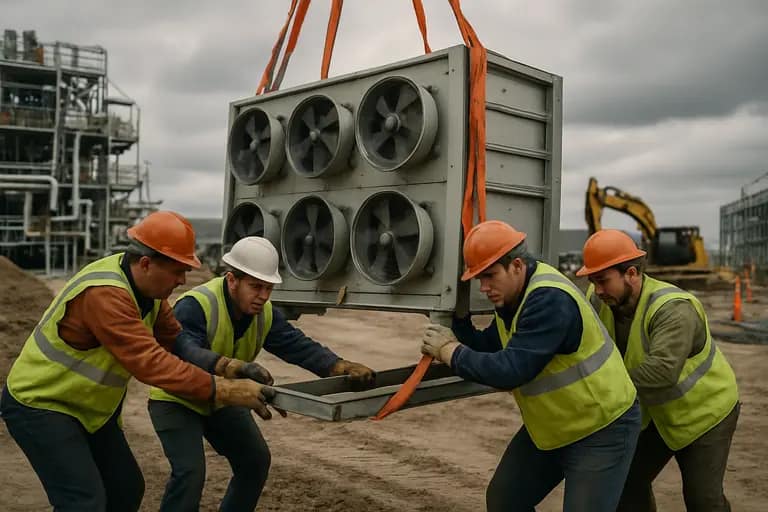
Storage And Site Quality Shape Real Costs
DAC economics depend on more than equipment price. The research notes identify electricity pricing, storage, site quality, and scale as cost drivers. A project that looks attractive under an assumed energy price may be less attractive once interconnection, clean-power procurement, compression, transport, and storage monitoring are included. Those factors are not secondary details; they determine whether a claimed removal cost can be achieved at a real site.
Safety and permanence also require disciplined review. The provided research notes do not include accident-rate data or site-specific storage performance data, so policy makers should avoid broad safety claims. Instead, funding programs can require monitoring plans, clear storage accounting, and public reporting of net removals. That approach keeps the evidence standard consistent without rejecting early projects that can produce useful data.
Incentives Should Not Hide Performance Data
Federal incentives can narrow the gap between project revenue and project cost, but incentives alone do not prove social cost-effectiveness. If a DAC project receives public support, agencies should still measure energy input, carbon source accounting, storage durability, and opportunity cost. That is especially relevant if the same low-carbon electricity could have reduced fossil generation directly.
- Prioritize emissions reductions where renewable deployment displaces fossil generation at lower cost.
- Fund DAC research and pilots with transparent cost, energy, and storage reporting.
- Use regional analysis before assigning equal value to avoided emissions and removals.
- Separate long-term carbon removal needs from near-term power-sector decarbonization budgets.
Renewable Energy Vs Direct Air Capture Policy Use
A cautious policy reading is that Renewable Energy remains the stronger near-term use of many climate dollars when the objective is measurable emissions reduction plus public-health benefit. DAC deserves continued research and targeted demonstration support, but the evidence available in 2026 does not justify treating it as a broad replacement for lower-cost emissions avoidance.
The more defensible approach is sequencing. First, reduce emissions where mature low-carbon generation can displace fossil generation. Second, invest in DAC research aimed at lower energy intensity, lower capital cost, reliable storage, and better site selection. Third, reserve larger DAC procurement for cases where reported costs, power sources, and storage pathways meet transparent performance standards.
This framing does not close the door on DAC. It keeps the policy claim aligned with the evidence. If DAC moves closer to the $100-per-ton benchmark under real operating conditions, its role could expand, especially for residual emissions that are difficult to eliminate. Until that evidence is available across sites, U.S. policy makers should treat DAC as a developing removal option and renewables as the more cost-effective near-term mitigation tool in many regions.


