

Pulsed Laser Deposition can support high-quality HTS films, but rate, texture, control, cost, and scale limits still matter.
Industry
How a battery manufacturing facility shapes energy

A cautious review of how a battery manufacturing facility can affect clean energy innovation through pilot lines, supply chains, and scale-up.
Power Factor Capacitors Can Make Factory Harmonics Worse: What Engineers Must Check

Adding power-factor correction capacitors to a factory can improve electrical efficiency at the distribution level, but it can also create a serious power-quality problem. In facilities with variable frequency drives (VFDs) and other electronic equipment, capacitor banks may amplify existing harmonic currents instead of improving overall electrical performance. The risk Continue Reading
Energy Infrastructure Funding Trends in 2026

Energy infrastructure funding in 2026 is shifting toward grid upgrades, data-driven transmission, and supply constraints, with limits still material.
Helium Critical Material Status Tests U.S. Supply

DOE’s helium critical material designation raises supply, refining, and energy technology questions for U.S. manufacturers.
Aires Tide Additive Manufacturing: Promise and Limits

Aires Tide Additive Manufacturing showed rapid defense prototyping, but qualification, materials, scale, and cyber controls still limit deployment.
OEE Can Improve While Factory Output Stays Flat: How to Find the Real Production Bottleneck
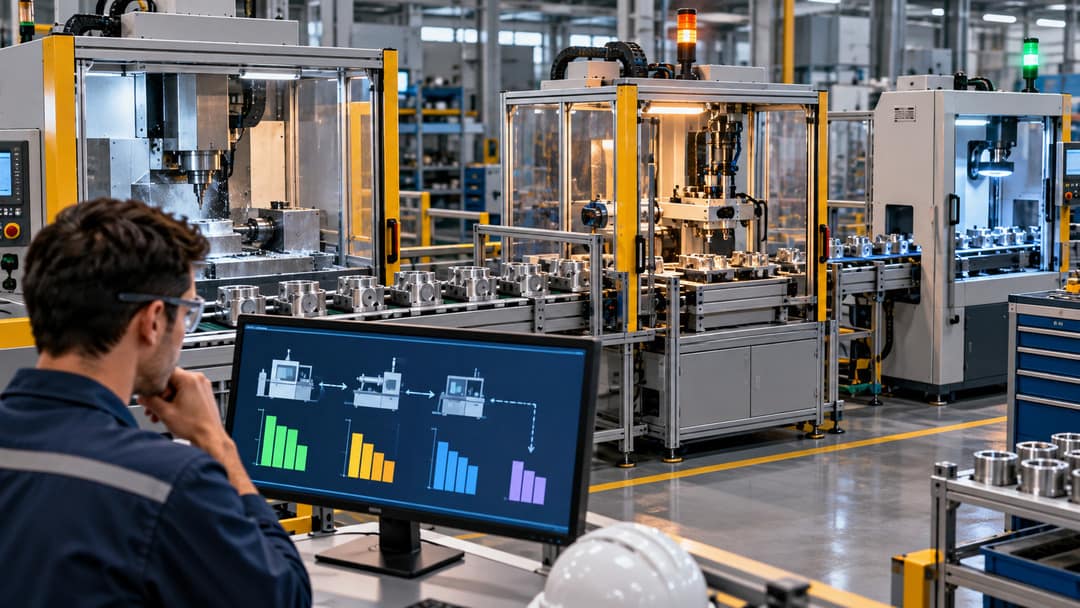
Improving a machine’s Overall Equipment Effectiveness (OEE) does not necessarily increase the number of finished products a factory can deliver. If another process is already limiting production, making a faster machine even more efficient may simply create additional work-in-process inventory. This distinction matters when manufacturers prioritize maintenance projects, justify automation Continue Reading
Aires Tide Tests AI and Additive Manufacturing

Aires Tide shows how AI and additive manufacturing affected one defense test vehicle, with policy, cost, and scale limits still unresolved.
Regenerative Servo Drives: Why Recovered Braking Energy Does Not Guarantee Big Electricity Savings
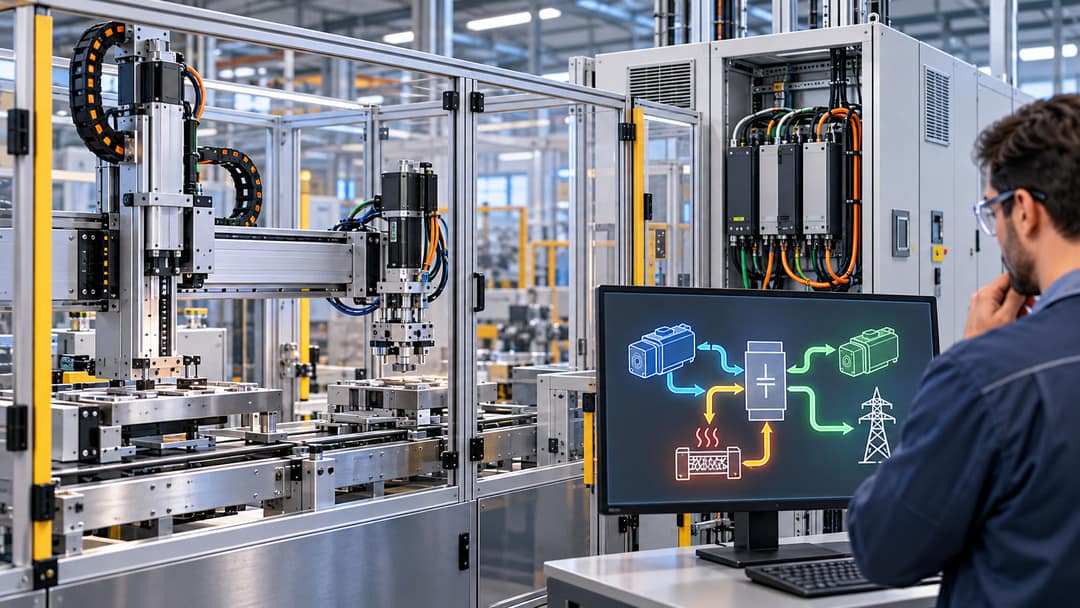
Regenerative servo drives can reduce industrial electricity consumption by recovering energy when motors slow down or when loads drive the motors. However, the amount of energy generated during braking is not necessarily the amount of electricity a factory will save. Some braking energy is lost through friction and electrical conversion. Continue Reading
Paper Waste Chemicals From Mill Byproducts

Paper waste chemicals are gaining attention as mills test lignin and black-liquor routes, but scale, energy balance, and markets remain uncertain.