

Genesis Mission Data may aid AI work in water, minerals, energy, and biology, but deployment depends on validation and governance.
GAO Semiconductor R&D Findings for Manufacturing

GAO Semiconductor R&D findings show manufacturing awards moving faster than research structures, raising policy questions for U.S. fabs.
OEE Can Improve While Factory Output Stays Flat: How to Find the Real Production Bottleneck
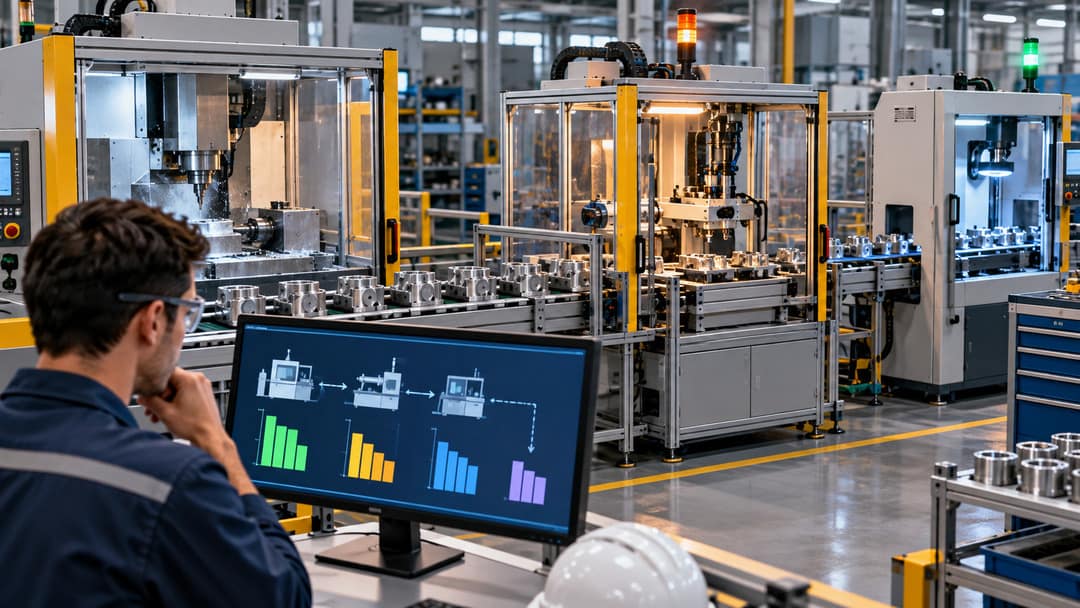
Improving a machine’s Overall Equipment Effectiveness (OEE) does not necessarily increase the number of finished products a factory can deliver. If another process is already limiting production, making a faster machine even more efficient may simply create additional work-in-process inventory. This distinction matters when manufacturers prioritize maintenance projects, justify automation Continue Reading
Genesis Mission Data for Critical Resources

Genesis Mission Data could shape AI work on critical materials, but evidence remains early and depends on governance, scale, and testing.
Aires Tide Tests AI and Additive Manufacturing

Aires Tide shows how AI and additive manufacturing affected one defense test vehicle, with policy, cost, and scale limits still unresolved.
Regenerative Servo Drives: Why Recovered Braking Energy Does Not Guarantee Big Electricity Savings
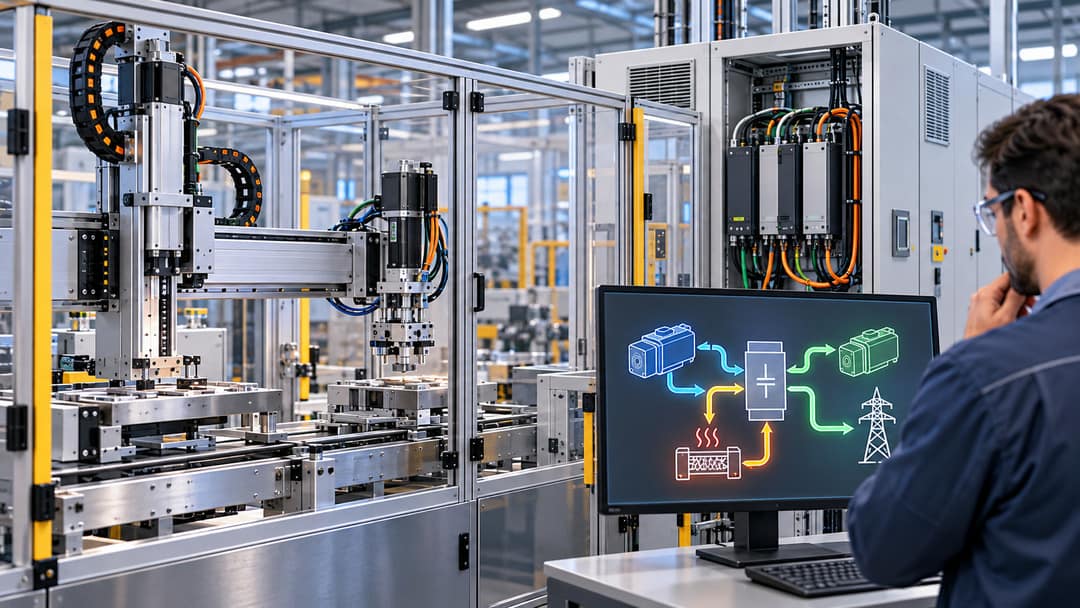
Regenerative servo drives can reduce industrial electricity consumption by recovering energy when motors slow down or when loads drive the motors. However, the amount of energy generated during braking is not necessarily the amount of electricity a factory will save. Some braking energy is lost through friction and electrical conversion. Continue Reading
Project Triad and Quantum Integration Limits

Project Triad links quantum sensing, networking, and computing, but NSF’s plan remains early and integration barriers are substantial.
AI Automated Laboratories: NSF Funding Test

AI Automated Laboratories drew major NSF funding in 2026; the opportunity is real, but scale, standards, skills and safety remain open.
AI-Capable Chips and Future Technology Growth

AI-Capable Chips are drawing policy, fab, and cloud investment; evidence points to growth, but scaling and cost risks remain.
Paper Waste Materials: Feasibility Signals

Paper waste materials show pilot-scale promise, but feasibility depends on recovery rates, barriers, water use, costs, and regulation.