
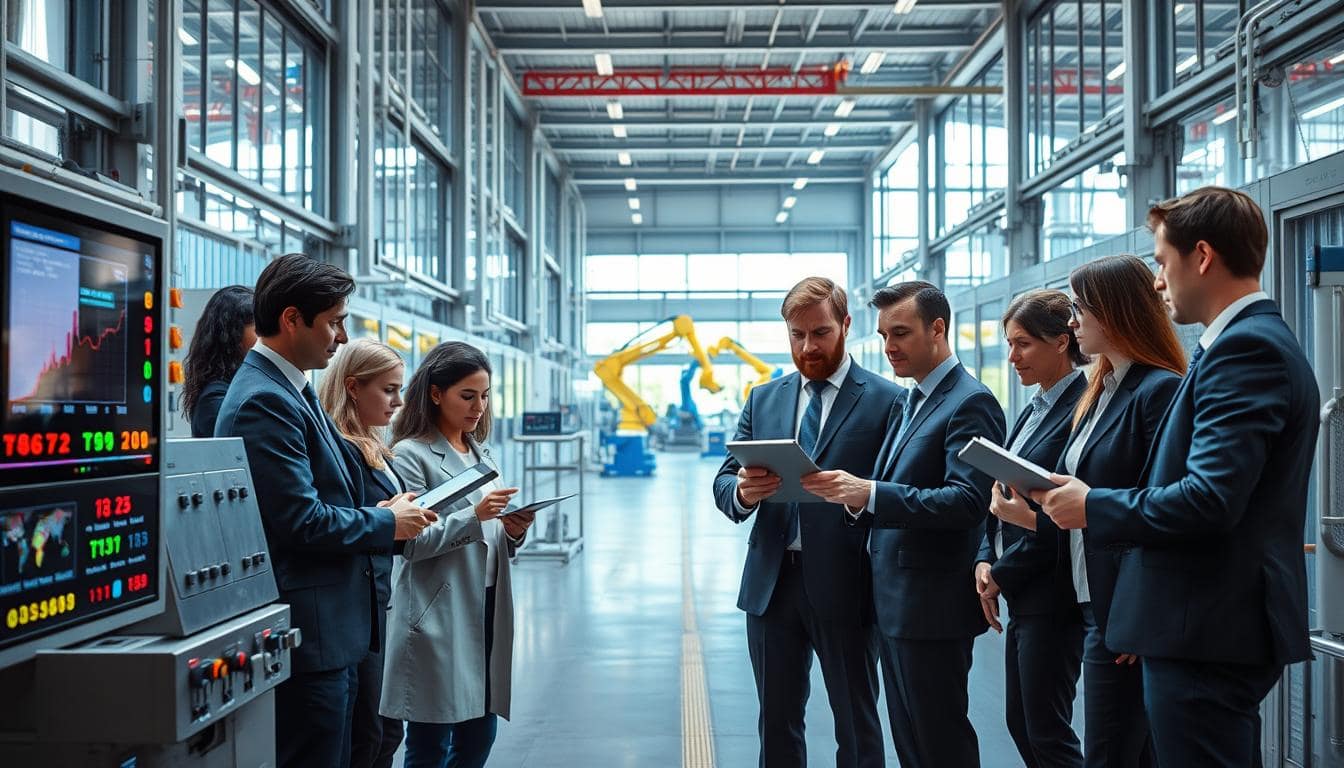
Let’s be honest. When you think of cutting-edge tech, a factory floor probably isn’t your first mental stop. We imagine greasy gears and control panels older than the interns, not exactly a Silicon Valley hackathon.
But here’s the plot twist. The most profound engineering revolutions are happening right where the conveyor belts hum and the reactors pressurize. This is where brute force gets a brain transplant.
We’re witnessing a quiet but seismic shift. It’s driven by a relentless pursuit of four pillars: automation, efficiency, safety, and sustainability. This isn’t about buzzwords or shiny apps. It’s about real process improvement with a tangible ROI.
Think about it. What if energy waste could be converted directly into profit? What if a mechanical failure became a predicted, scheduled event on a calendar? That’s the new reality.
This article pulls back the curtain on that gritty transformation. We’re moving from the industrial age to the information age, and the plant floor is the new frontier. Forget “move fast and break things.” The modern mantra is “move intelligently and stop things from breaking.” Let’s explore the projects making that happen.
Defining “Innovation” in Manufacturing
Forget Silicon Valley’s app-of-the-week; real manufacturing innovation in engineering is about quiet, relentless optimization. It’s not about flash. On a factory floor, a new idea is validated by preventing big problems, not by venture capital.
At its core, it’s a complete mindset shift. We’re moving from firefighting to fire prevention. The goal is to prevent problems, not just fix them.
This philosophy rejects scheduled maintenance. Changing parts just because it’s time is wasteful. True innovation in engineering uses predictive maintenance. It knows when a part will fail and replaces it before it does.
This prescience comes from the Industrial Internet of Things (IIoT). It gives machines a “voice” by adding sensors. This way, a compressor can warn of problems before they happen.
The human element evolves, too. Innovation in engineering isn’t about replacing people. It’s about using cobots for tasks that harm humans. This frees up humans to do more complex tasks.
In this light, innovation in engineering is using data to improve. It eliminates guesswork, waste, and risk. It’s a smarter way of thinking, not a product.
This shift changes how we value employees. The most prized employee is the one who can interpret data. This quiet revolution greatly improves plant performance.
Case Examples: Automotive, Food, Mining, Textiles
The proof is in the pudding, or in this case, the paint shop, potato chip, haul truck, and textile mill. Let’s look at the facts. Each sector is using innovation to solve a big problem.
In the automotive world, it’s all about precision. Imagine a digital twin of a paint shop that runs 10,000 simulations. This helps avoid tiny bubbles before any changes are made. It’s not science fiction; it’s a way to save millions.
In the food and beverage industry, the goal is consistency. AI-powered vision systems check products with incredible accuracy. They spot any issues and remove them quickly. This is what industrial efficiency looks like. AI platforms are making quality control better and more predictable.
In mining, innovation is about safety. Autonomous haul trucks now operate without a driver. This makes the job safer and increases efficiency. It’s like playing a high-stakes video game from a safe distance.
Textiles have also seen a change thanks to technology. Designers can now adjust dyeing processes in real-time. This reduces waste and saves energy. It’s a big step towards industrial efficiency.
The common thread is that these aren’t just tech experiments. They are targeted solutions to big problems. Each one uses technology to improve performance in a specific area.
Results: Efficiency Gains and Performance Metrics
The market has spoken, and it’s loud. It’s saying that smart engineering is essential, not just a nice-to-have. The industrial efficiency market is expected to hit $13.7 billion by 2025. This shows that smart engineering is now a must-have for any plant.
On the factory floor, the results are clear. Plants are seeing big cuts in unplanned downtime. This means more money saved and a smoother production flow. It’s like a symphony instead of chaos.
Predictive maintenance is another game-changer. It lets plants fix problems before they happen. This boosts asset availability by 20% or more. It’s like having a crystal ball that keeps your machines running smoothly.
The real proof isn’t just one plant’s success. It’s the global market’s growth. The industrial efficiency market is expected to almost double by 2033. This growth is driven by an 8.76% annual increase. It’s a huge vote of confidence from the industrial world.
The verdict is clear. The numbers show that updating plant operations is a smart move. It’s not just about saving money; it’s about making more. The data is clear. Now, it’s up to you to listen.
Consulting for Technical Challenges
True innovation in engineering is more about making things work together than inventing new things. It’s about getting an old PLC to talk to a new AI system. The best software is useless if it can’t share data with your old machines.
This is where the real magic happens. It’s not about fancy presentations. It’s about solving problems on the factory floor. Specialized engineering services firms are like the special forces of the manufacturing world.
They act as translators between old and new technologies. They don’t just sell digital twins. They create the whole system that connects your real world to its virtual twin. This is the heart of modern engineering consulting.
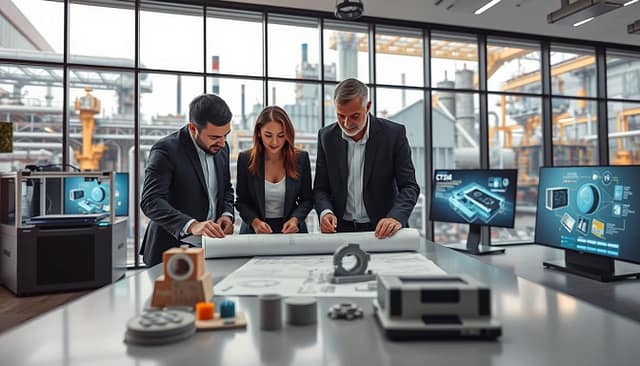
So, what does this look like in practice? It’s a three-pronged attack on technical stagnation.
System Integration: This is the foundational surgery. It makes old and new systems talk to each other. It’s about the wiring, protocols, and code that turns machines into a data-producing unit.
Consulting & Strategy: This is the diagnostic phase. A good consultant finds the root cause of problems. “Your bottleneck isn’t the machine speed,” they might say. “It’s how the data flows. Let’s change this process.” Their strategy is a detailed plan for change.
Training & Support: The final, critical piece. The best system is useless if your team can’t use it. Consultants teach your team to use new technology. They empower your people to master the new tech.
Let’s break down some typical scenarios. The table below outlines common technical headaches and how expert consulting untangles them.
| Technical Challenge | Typical Symptom | Consulting Approach | Performance Outcome |
|---|---|---|---|
| Legacy System Integration | New software cannot pull data from old machines; manual data entry creates errors and delays. | Deploy secure communication gateways and write custom middleware to translate between old and new protocols. | Automated, real-time data flow. Elimination of manual logs. Faster decision-making. |
| Data Silos & Incompatibility | Production, maintenance, and quality data live in separate systems, preventing a unified view. | Architect a centralized data lake or hub. Create APIs and integration pipelines to merge disparate data sources. | Holistic operational intelligence. Ability to run cross-functional analytics and uncover hidden inefficiencies. |
| Skills Gap with New Tech | Expensive new equipment or software is underutilized because staff lack training. | Develop tailored, hands-on training modules. Provide “train-the-trainer” support and create clear standard operating procedures. | Higher ROI on technology investments. Reduced downtime. Increased employee confidence and engagement. |
| Process Bottleneck Identification | Overall equipment effectiveness (OEE) is low, but the root cause is unclear. | Conduct a value-stream mapping exercise. Use data analytics to pinpoint the exact stage causing delays or quality issues. | Targeted improvements that boost throughput. Data-driven justification for capital or process changes. |
This work is the essential catalyst. It turns the promise of new technology into real results on your floor. The innovation in engineering here is profound but quiet. It’s not a flashy product launch. It’s the hum of a newly integrated line, the smooth click of a well-trained operator using a new dashboard, and the quiet confidence of a manager making decisions based on complete data.
In the end, consulting for technical challenges is about making things work. It’s the hard, smart work that enables every other innovation in engineering to actually deliver on its promise.
Product Innovation: New Equipment & Upgrades
The old days of hardware upgrades in crates are fading. Now, we see a quiet shift to software updates from the cloud. The most important “equipment” today is code, not steel. This is where process improvement really takes off.
A decade ago, innovation meant faster belts or stronger pumps. Now, it’s about Digital Twins from Siemens. These let you test a virtual factory in many scenarios before morning. AVEVA’s cloud platform also offers a single, reliable source for data, ending the days of many spreadsheets.
The leaders in this change are tech giants like Siemens, Autodesk, and Bentley. They’re using their huge knowledge for digital solutions. Specialists like AVEVA and Hexagon PPM are creating complete systems. Their products show the change:
- 3D Plant Design: No more blueprints. It’s immersive, collaborative, and easy to change with a click.
- Plant Simulation Software: Test logistics, energy use, and throughput without risk.
- Process Engineering Platforms: These connect every part of your plant.
This isn’t just about better CAD programs. It’s a big change in how businesses work. They’re not just selling tools; they’re selling ongoing process improvement. The upgrade process is now a subscription, not a one-time buy.
Think back to the CD-ROM in a box. It shows the old way: static and outdated. Today, everything is different. Robotics get smarter with updates, and simulations learn from real data. The digital layer is always improving, making your operations better without touching anything physical.
This leads to constant, small improvements in your work. You’re not just keeping things running; you’re making them better. This is the clever twist of modern innovation. The most important tool for making things is now invisible, turning process improvement into a constant, living part of your business.
What’s Next for Industry?
The smart manufacturing wave is just starting. Edge computing and autonomous systems will take it to the next level. Imagine plants that are not just smart but instinctive. The future of innovation in engineering is about intelligence at the source, not just in the cloud.
Edge computing is key. It keeps vital data close to where it’s needed, like a robotic arm’s safety decisions. This approach cuts down on delays, makes systems more reliable, and enables fast, instinctive actions.
This local smarts leads to true autonomy. We’re moving from machines that follow rules to ones that learn and optimize in real-time. Picture a chemical process that adjusts its recipe based on materials and energy costs. Or a packaging line that changes its workflow based on what it’s learned. It’s not just programming; it’s developing industrial intuition.
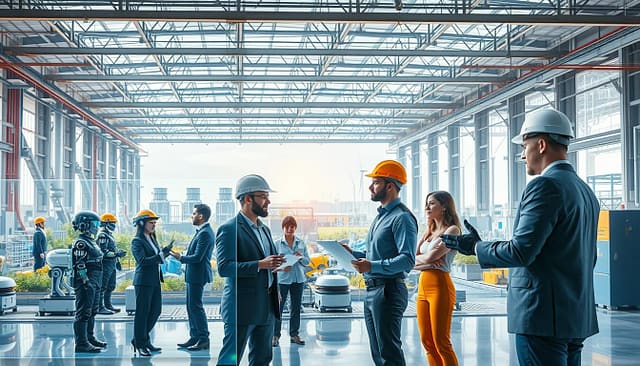
The Asia-Pacific region, China in particular, is leading this change. While North America and Europe update their tech, China is starting from scratch. Plans like “Made in China 2025” are funding thousands of new smart factory projects. This is not just adoption; it’s a global shift in how plants are built.
The future is shaped by real, measurable factors. The table below shows the main drivers of this change.
| Innovation Driver | Core Principle | Key Impact | Primary Adoption Momentum |
|---|---|---|---|
| Edge Computing | Process data locally at the source (“the edge”) instead of in a centralized cloud. | Ultra-low latency, enhanced data security and privacy, operational resilience. | Global, with strong uptake in high-speed manufacturing (e.g., automotive, electronics). |
| Autonomous Systems | Machines and processes that use AI/ML to self-optimize without human intervention. | Predictive maintenance, dynamic resource optimization, continuous yield improvement. | Leading in process industries (chemicals, food & beverage) and complex assembly. |
| Geopolitical Initiatives | National industrial strategies funding large-scale technological modernization. | Accelerated deployment speed, creation of new “standard” plant designs, supply chain shifts. | Overwhelmingly in Asia-Pacific, specially China, South Korea, and Singapore. |
For industry veterans, the next decade’s tools are being made. They combine local processing with systems that learn and adapt. The question is not if your plant will need to understand these concepts, but how fast it can learn. Are you ready for the next big thing?
Conclusion
So, the smoke has cleared. What do we see? An industrial landscape where innovation isn’t an option; it’s the operating system.
We’ve moved past shiny gadgets. Real progress lives in the algorithms optimizing a water plant and the sensors ensuring a car’s weld is perfect. This is the new engineering story.
From automotive assembly to food processing, the drive for peak performance forces a smarter kind of work. True industrial efficiency emerges from this fusion of mechanical grit and data divinity.
The pursuit of industrial efficiency has become our greatest teacher. It shows that the future of making things isn’t just automated. It’s enlightened.
It’s a future built on foresight, not just horsepower. The factory floor is now the most interesting room in the world.


