
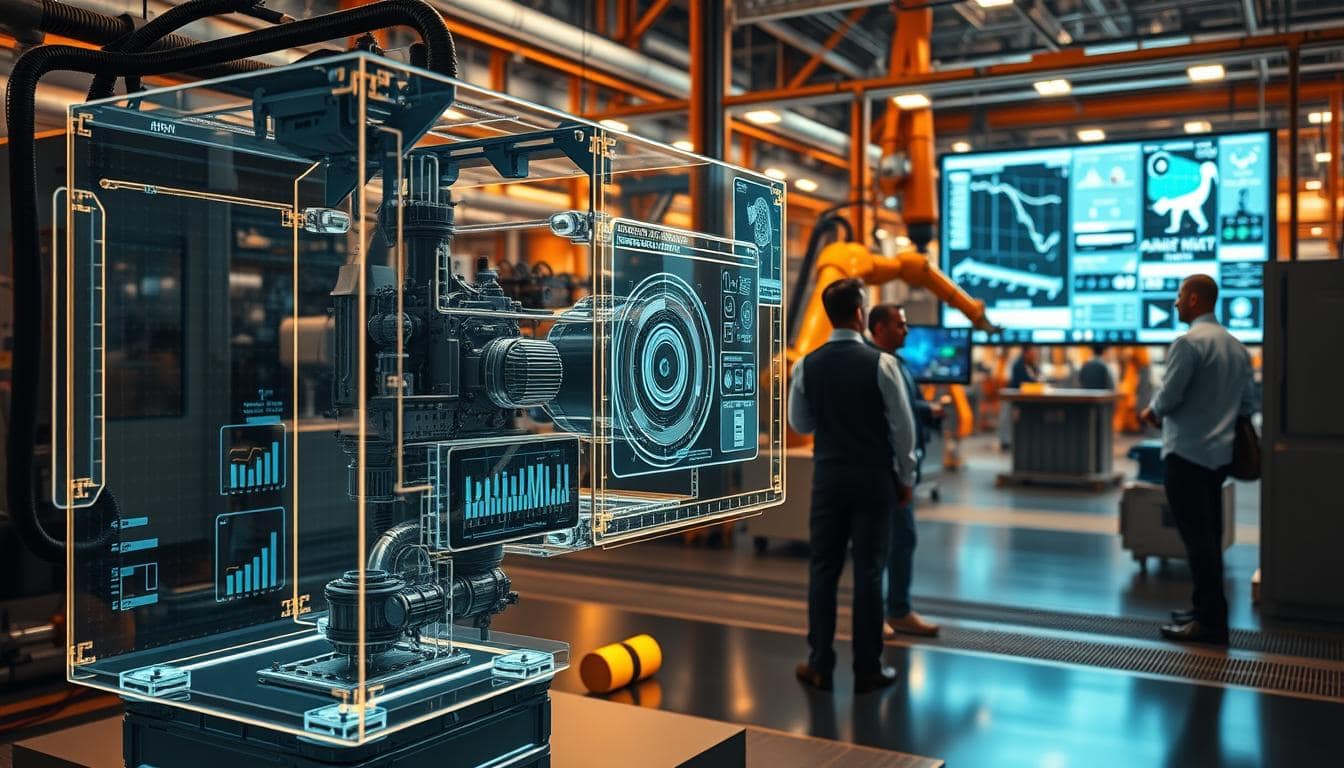
Ever wish your equipment could text you before it breaks down? Welcome to the world of digital twins – where physical assets get their own virtual conscience.
This isn’t just fancy 3D modeling. It’s about living, breathing replicas that mirror real-world objects in real-time. Think of it as the Matrix for manufacturing, minus the red pills and existential dread.
These virtual doppelgängers enable continuous monitoring and simulation throughout an asset’s entire lifecycle. They incorporate external processes and critical variables that affect performance. The magic happens through real-time, two-way data exchange between object and replica.
According to IBM’s research, about 75% of businesses now use this technology in some capacity. Even more impressive? 92% report returns above 10%. Not bad for what amounts to creating a virtual crystal ball for your operations.
Simulation in Design/Running Phase
Remember when testing manufacturing systems was all about building expensive prototypes? Those days are gone. Now, digital twin technology lets engineers test entire production lines virtually, without spending a dime on physical equipment.
It’s like having a crystal ball for industrial design – and it actually works. Manufacturers use virtual commissioning to test control strategies and find bottlenecks in a safe digital space. No more costly mistakes when reality doesn’t match the blueprint.
The magic happens when physics-based modeling meets real-time data. You’re not just guessing how a machine will perform. You’re watching it in a digital sandbox. Automotive makers cut prototyping costs by 30% by testing everything digitally, from assembly lines to component performance.
Here’s what makes modern simulation so revolutionary:
- Real-time performance monitoring without production disruption
- Instant feedback on design changes and modifications
- Ability to test extreme scenarios safely
- Continuous optimization throughout equipment lifecycle
Industry reports show digital twin technology saves 5-7% monthly. This is not just pocket change – it’s a game-changer for profitability.
The beauty of virtual commissioning? It turns engineering into a video game strategy session. You get unlimited do-overs, instant feedback, and know your real-world implementation will work perfectly. It’s like having cheat codes for industrial design – except the high score is measured in actual dollars saved.
This approach changes manufacturing from reactive problem-solving to predictive optimization. Why fix problems when you can prevent them? That’s the power of simulation in both design and running phases.
Optimizing Equipment Before the Build
Imagine optimizing your machinery before you even start building. This isn’t just a dream; it’s what digital twins make possible today. It’s like planning a building and predicting its future, but based on real physics.
Working with engineering teams, we use tools like GT-SUITE to create detailed digital twins. We build the perfect machine in a virtual world before making it real. We start by collecting lots of data – like temperature and pressure – to understand how equipment really works.
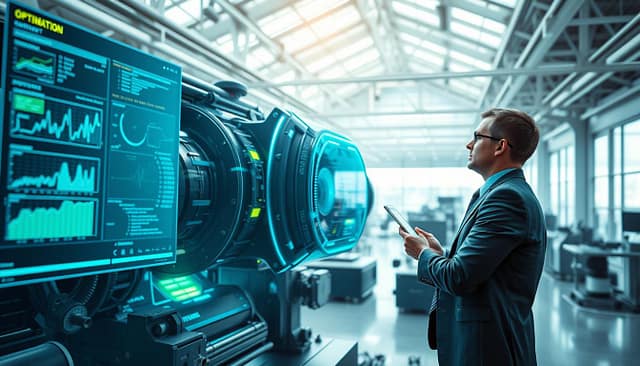
Then, we mix and clean this data to create virtual models. We use both physics and machine learning to do this. It’s not just simulation; it’s predictive optimization. We can figure out the best batch sizes and production sequences ahead of time.
Why wait for something to break when you can fix it before it happens? Companies using this method see huge gains. They get 30-60% more productivity and cut material waste by 20%. It’s like digital fortune-telling that actually pays off.
This machine optimization way changes maintenance from a guess to a science. Digital twins help predict when things might fail and plan maintenance better. This keeps operations running smoothly while keeping things accurate and efficient.
It’s like learning to swim before you’re thrown into the water. But instead of just swimming, you’re designing the pool and your technique too. That’s what I call top-notch machine optimization.
IoT & Virtual Commissioning
The mix of IoT sensors and digital twins is making factories incredibly smart. They can almost run on their own, making better choices than many managers. Digital twins are the brains, and IoT is the nervous system. Together, they turn factories into living, thinking beings.
Virtual commissioning takes this partnership to new levels. It lets you test a whole production line before starting. You can check if a new robot won’t hit the ceiling or if a conveyor won’t get stuck.
The magic is in the data exchange. Live sensor feeds update digital twins instantly. This creates a loop so precise, it’s a dream come true for control engineers. It’s not just monitoring; it’s solving problems before they happen.
AI makes digital twins even more powerful. They don’t just show what’s happening now. They predict what will happen next. This ability is key to making factories more efficient and flexible.
By 2029, 95% of IoT platforms will have digital twinning features. This technology is becoming as common as Wi-Fi. It’s not just about smarter machines; it’s about creating a world where physical and digital coexist perfectly.
This integration is amazing because it turns big problems into small tests. Machines talk to each other, predict issues, and fix themselves. It’s like having a working crystal ball that doesn’t need psychic powers.
Cost & Time Savings
Let’s talk about what really matters: cold, hard cash. Digital twins aren’t just fancy simulations. They’re profit-generating machines disguised as software. I’ve seen ROI numbers that would make Warren Buffett raise an eyebrow.
The financial benefits hit from every angle. Manufacturers using digital twins save 5-7% monthly. This is by optimizing production schedules and eliminating hidden bottlenecks. That’s not pocket change – that’s transformational savings.
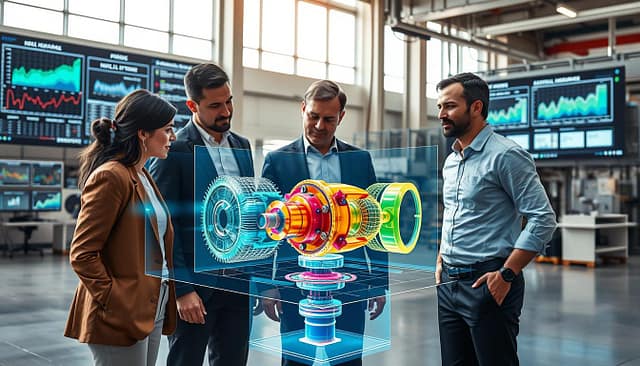
| Performance Metric | Traditional Methods | With Digital Twin | Improvement |
|---|---|---|---|
| Productivity Gains | Baseline | 30-60% | Massive leap |
| Material Waste | Industry average | 20% reduction | Significant savings |
| Time-to-Market | Standard timeline | 50% faster | Competitive edge |
| Maintenance Costs | Full expense | 10-20% reduction | Direct savings |
| Equipment Downtime | Maximum impact | 20-50% decrease | Increased uptime |
My favorite case study? A steel manufacturer used digital twin simulation. They analyzed demand, supply, and production relationships. They identified risks 12 weeks ahead, boosted EBITDA by 2 percentage points, and slashed inventory by 15%. That’s not optimization – that’s business alchemy.
The time savings are equally impressive. What used to take weeks of physical testing now happens in hours of simulation. It’s like giving your engineering team both a time machine and a crystal ball.
Automotive companies report 30% savings on physical prototyping alone. Equipment lasts 20-40% longer. Downtime drops 20-50%. These numbers aren’t theoretical – they’re happening right now in factories that embraced virtual commissioning and never looked back.
The beauty of virtual commissioning lies in its ability to transform guesswork into precision. You’re not just saving money – you’re printing it through smarter operations.
Ongoing Optimization
Think your digital twin’s work ends after the design phase? That’s like thinking a personal trainer only matters during the first workout. The real magic happens in the never-ending optimization dance between physical assets and their virtual counterparts.
Digital twins are not like static models that gather digital dust. They have real-time, two-way conversations with their physical twins. They’re like overachieving siblings who learn from every cycle, maintenance event, and failure.
This continuous data exchange makes models so accurate they can predict issues before anyone notices. It’s like having a psychic mechanic for your machines.
The beauty of this setup? It creates a virtuous cycle. Better performance data leads to smarter models, which drive improved operations, which generate even richer data. It’s like compound interest for engineering – small optimizations add up to big gains over time.
Take Rolls-Royce’s approach, for example. They monitor thousands of aircraft engines at once. Their digital twins optimize maintenance schedules and cut unplanned downtime. These virtual replicas become smarter than the physical engines, anticipating needs like a psychic mechanic.
This isn’t just about building the perfect machine. It’s about keeping it perfect throughout its entire lifecycle. The digital twin incorporates external processes and critical variables that affect performance. It constantly refines its understanding like a detective solving an ongoing case.
The result? Your equipment doesn’t just maintain peak performance. It actually gets smarter and more efficient over time. Now that’s what I call true machine optimization.
Conclusion
So, where does this leave us? We’re on the brink of a major engineering shift, bigger than CAD software. Digital twins are changing how we design, build, and maintain things.
The numbers are staggering: from $24.5 billion in 2025 to $259.3 billion by 2032. This growth is fueled by AI, IoT, and real-time data. These virtual clones are becoming powerful tools.
We’re moving from human control to supervision. Digital twins do the routine work, freeing us for the big challenges. Imagine autonomous systems and digital copies of cities.
The difference between the physical and digital worlds is fading. And I’m excited to see what’s coming next.


