
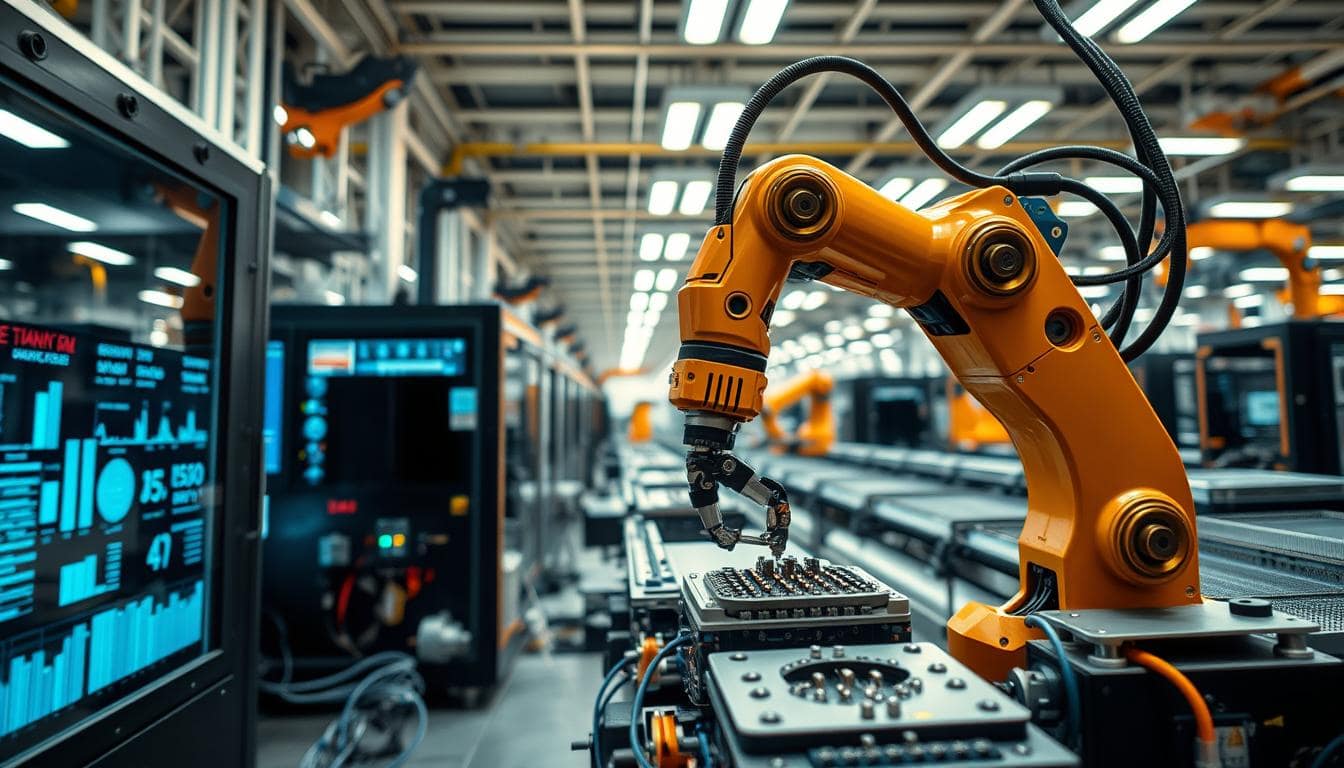
Remember when factories felt like mechanical dinosaurs? I’ve watched them evolve into something closer to a jazz ensemble – each instrument knowing exactly when to improvise.
This isn’t about giving your equipment social media accounts. It’s the industrial equivalent of upgrading from a flip phone to a device that actually thinks. Instead of posting selfies, your machines optimize production and predict their own maintenance.
The real magic happens when sensors whisper secrets to AI systems. We’re talking about mechanical consciousness – where equipment doesn’t just follow commands but understands context. It’s like giving your assembly line Spidey-sense for production bottlenecks.
This interconnected ecosystem represents the future of smart manufacturing. Machines, sensors, and software communicate in real-time to make autonomous decisions. It’s not just automation – it’s evolution.
Technologies: Sensors, Edge Computing, AI
Welcome to the industrial revolution’s big show. Sensors, edge computing, and AI are the stars. They’re making machines that think and work smarter.
Sensors are like tiny spies, reporting from the factory floor. They track temperature, vibration, and pressure. It’s like MI6 gathering intel.
Edge computing is like a quick-thinking agent. It makes fast decisions without waiting for approval. It’s all about preventing problems before they start. Edge AI is your factory’s hero.
AI is the brain behind it all. It connects dots that even Sherlock Holmes might miss. It predicts when parts will fail, saving time and money. It’s advanced math, not magic.
These technologies work together to create an ‘industrial brain’ through IIoT transformation. Data flows like neurons, turning your factory into a digital living system.
The outcome? Less downtime and more productivity. Machines get the respect they deserve. That’s the magic of IIoT implementation.
Implementation Steps
Ever tried teaching your grandpa to use TikTok while he’s trying to figure out cable TV? That’s what upgrading machinery’s tech feels like. Your equipment has been around as long as the Reagan administration.
The first step is always a reality check. That machine upgrade you’ve been putting off? It’s now your top priority. You’re not replacing your whole production line. You’re giving your old equipment a “digital PhD.”
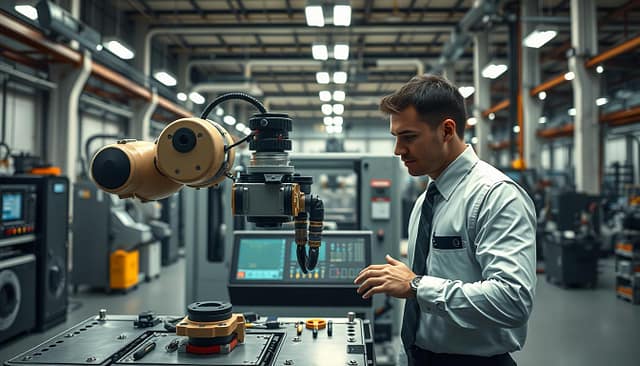
- Production line assessment – This isn’t just about checking your machines. It’s about figuring out which ones will benefit most from new tech. It’s like finding out who’s ready for a promotion.
- Sensor retrofitting – We’re giving your machinery new senses. Vibration sensors, temperature monitors, and pressure gauges are like glasses and hearing aids for your equipment.
- AI model training – This is where your equipment’s history gets digitized. Your production data becomes the textbook for AI algorithms.
- Algorithm deployment – This is when your machines start making decisions. It’s like watching a veteran employee suddenly know everything about maintenance.
The best part? You don’t start from scratch. I’ve seen old CNC machines become data scientists overnight. They just needed the right strategy.
Most companies start with predictive maintenance. It’s like fixing the leaky faucet before remodeling the kitchen. This approach lets you celebrate quick wins while working towards bigger changes.
Your oldest machines often become your smartest assets. They’ve seen every challenge imaginable. Now, they’re just learning to talk about it.
The key is to treat implementation as a marathon, not a sprint. Each successful machine upgrade builds confidence for the next. Before you know it, your whole production floor is having conversations you never thought possible.
Integration Challenges
Ever tried teaching your grandfather to use TikTok? That’s like trying to integrate smart sensors with old machinery. The clash between digital and mechanical is huge, and it often kills smart tech projects.
Cybersecurity becomes a big worry. You’re putting in top-notch digital locks, but your factory’s back door is wide open. Research shows 68% of manufacturing breaches come from old system weaknesses.
- Retrofitting ancient equipment that thinks Windows 95 is cutting-edge
- Cybersecurity vulnerabilities in pre-internet era machinery
- Six-figure initial investment costs that make CFOs sweat
- Workforce resistance from veterans who trust their hands more than algorithms
Custom sensors solutions are key for old equipment. I’ve seen temperature sensors trying to talk to machines from the punch card era. It’s like watching a Shakespearean actor try to rap.
The human side is often ignored. You’re asking seasoned machinists to trust algorithms over their experience. It’s a big change, not just tech-wise but culturally too.
Success comes from a mix of old wisdom and new tech. Both must find common ground. The old machines need to welcome new digital friends, and the smart sensors must learn to speak their language.
Plan for custom interfaces and translation layers. Your sensors might need special adapters or software to connect with older gear. It’s like getting a translator for your digital-mechanical talks.
The aim is to enhance, not replace, your skilled workforce. The right sensors should boost a master craftsman’s abilities, not replace their instincts.
Measurable Outcomes
Traditional factories are now using smart tech, and it’s like watching a black-and-white movie turn into Technicolor. The results are clear and impressive, making even the most data-obsessed analyst smile.
Smart manufacturing aims for the triple crown: better products, faster production, and lower costs. These goals make accountants and analysts happy.
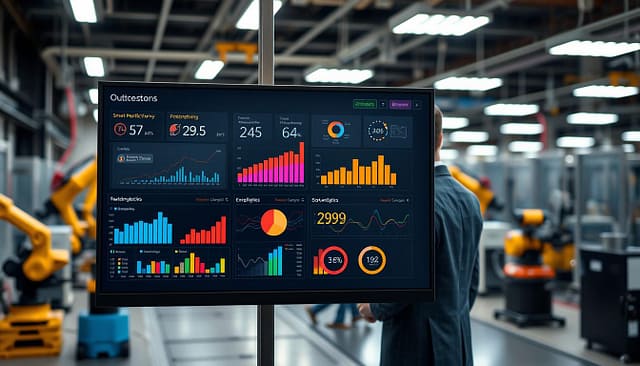
A 35% drop in equipment downtime means more money in your pocket. Machines work harder, not just sit idle.
A 40% boost in quality means fewer defects. This consistency is like a Swiss watchmaker’s approval. It makes customers happy and your reputation strong.
And a 15% cut in energy use is a win for the environment and your bottom line. It’s like finding extra money you didn’t know you had.
| Performance Metric | Traditional Manufacturing | Smart Manufacturing | Improvement |
|---|---|---|---|
| Production Output | Baseline capacity | 20% increase | Significant volume boost |
| Equipment Downtime | Regular interruptions | 35% reduction | More productive hours |
| Quality Control Accuracy | Standard detection rates | 40% improvement | Fewer defects & returns |
| Energy Consumption | Standard usage patterns | 15% reduction | Lower costs & carbon footprint |
| Predictive Maintenance | Reactive repairs | Proactive prevention | Extended equipment lifespan |
Predictive maintenance is a key part of the smart manufacturing revolution. It lets you fix problems before they happen, like a weather forecaster.
The best part is, these benefits keep growing. Better quality means more customer satisfaction, which leads to more business. It’s a cycle of success that really works.
Case Study: Custom Machine Upgrade
I’ve seen an amazing IIoT transformation that didn’t need new machines. A 1998 CNC machine got a digital makeover, like a fountain of youth. An automotive parts maker gave it AI powers.
They kept their old machine and added sensors. These sensors watched everything, from vibrations to temperature. The data went to a system that made quick changes, like a Formula 1 team.
The results were amazing. This old machine worked better than new ones, with precision and reliability. The IIoT implementation made it their most valuable asset.
Then, a big moment came. The system warned of a bearing failure three weeks early. The company fixed it during a planned break, saving $86,000 in lost production and repairs.
This was more than an upgrade. It changed how the machine worked. It could talk about its needs, predict problems, and work better without people. It became a mechanical partner.
| Performance Metric | Pre-IIoT | Post-IIoT Implementation | Improvement |
|---|---|---|---|
| Uptime Percentage | 76% | 94% | 23.7% increase |
| Maintenance Costs | $18,500 monthly | $7,200 monthly | 61% reduction |
| Production Output | 320 units/hour | 415 units/hour | 29.7% increase |
| Energy Consumption | 42 kWh | 31 kWh | 26.2% reduction |
The table shows part of the story. The real magic was in the benefits like peace of mind and data insights. This IIoT transformation led their digital journey.
This story is special because it shows you can do it too. You don’t need a lot of money. The sensors are cheap, the computing is available, and the knowledge is out there. You just need to see the chance.
This case shows that old machines can be as good as new ones with IIoT. The old CNC machine works like something from a sci-fi movie. It shows that old tech can be as good as new, with the right upgrade.
Conclusion
Smart manufacturing isn’t about building robot overlords. It’s about creating the ultimate human-machine partnership. That machine upgrade you’ve been debating? Consider it your ticket to Industry 5.0.
The sensors you install today become your competitive moat tomorrow. They’re the nervous system of your operation, feeding data to AI brains that optimize everything. This isn’t science fiction – it’s your new reality.
Factories thriving today aren’t just buying new equipment. They’re forging smarter relationships between people and technology. Human creativity meets machine precision in what I call ‘augmented manufacturing’.
The math is simple. Can you afford this machine upgrade? More importantly, can you afford to fall behind? Smart sensors and AI optimization don’t replace humans – they create manufacturing superheroes.
We’re moving toward sustainable operations where every watt and minute counts. Your next machine upgrade should be about building that future today. The question isn’t if, but when you’ll join the revolution.


