
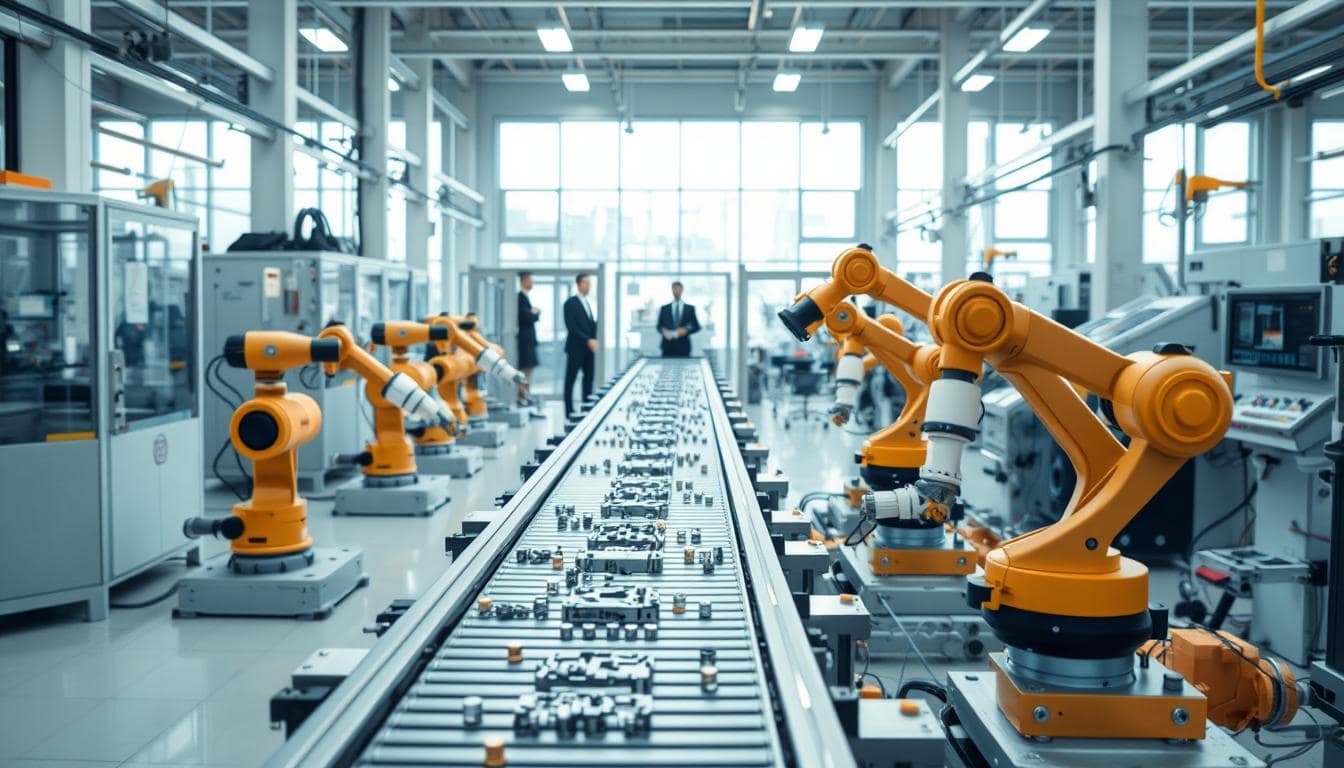
Remember when factory floors were all about clanging metal and grease-stained blueprints? Those days are getting a serious upgrade.
2025 isn’t bringing collapse—it’s delivering what I call “The Great Recalibration.” After years of explosive growth, the automation trends sector is taking a strategic breath.
Companies are scaling back investments like college students after their first credit card statement. Supply chain dynamics are doing the bullwhip effect—sounds more like a BDSM club than economics, but here we are.
This pause sets the stage for what’s next. The real action is coming from pharmaceuticals, MedTech, and battery technology.
Think of 2025 as manufacturing’s software update: occasionally frustrating, but absolutely necessary for the next breakthrough.
Key Trends: Robotics, IIoT, AI
Remember when making things meant wearing greasy overalls and slow assembly lines? Those days are gone. Today, factories look like they’re straight out of a sci-fi movie.
The change is deep. Three key technologies have changed manufacturing: robotics, the Industrial Internet of Things (IIoT), and artificial intelligence. They’re changing how we make things fast, like Twitter cancels celebrities.
IIoT is the base of it all. It’s not just a buzzword. It connects everything, from coffee machines to CNC lathes, making factories smart.
IIoT uses sensors to monitor things in real-time. This creates efficient operations that impress even the most precise engineers. It’s now the norm in business.
AI is the brain that makes sense of all this data. It’s not just for beating chess anymore. It optimizes supply chains and predicts when equipment will need fixing.
Companies use advanced tech like AI to solve problems. This leads to fewer breakdowns, less waste, and smoother operations. It’s like having a team that works together perfectly.
Robots are the most visible part of this change. Today’s robots are as skilled as pianists and make better decisions than many managers. They’re not the old clunky arms from car ads anymore.
The real magic happens when these technologies work together. Imagine robots that learn from IIoT data, optimized by AI. This is what some call the “industrial metaverse.”
Nearly 92% of manufacturers are exploring this digital world. It’s not just a dream. It’s happening in factories across America right now.
| Technology | Primary Function | Adoption Rate | Impact Level |
|---|---|---|---|
| IIoT | Real-time data connectivity | 89% of large manufacturers | Foundation |
| AI & Machine Learning | Predictive optimization | 76% implementing | Strategic |
| Advanced Robotics | Automated execution | 68% expanded usage | Transformative |
| Integrated Systems | Cross-platform synergy | 52% piloting | Game-changing |
The table shows how these technologies work together. IIoT connects everything, AI makes sense of it, and robotics does the work. It’s like having a team that never gets tired or asks for more money.
This isn’t just about replacing people. It’s about making humans and machines work better together. The best factories now have humans and machines playing together like jazz musicians.
The manufacturing revolution is here, not coming. It’s powered by three technologies that are smarter, faster, and more efficient than anything we’ve seen before.
Case Studies: Real-World Automation
While trend reports sound like sci-fi, real factories show automation’s real effect. The pharmaceutical world is not just automating. They’re making production lines that would impress Tony Stark. When COVID-19 came, these places quickly changed, like superheroes discovering new powers.
Rockwell Automation’s Plex Connected Worker solution gives factory workers superpowers. It makes complex tasks easy with real-time guidance. This includes visual instructions, augmented reality, and digital checklists that cut errors by 27% on average.
The food and beverage industry shows smart industrial engineering uses. That craft brewery you love? Its automation keeps flavors consistent as it grows. It’s like having a top-notch sommelier working all the time.
MedTech companies lead with sterilization robots that work with surgical precision. These aren’t old machines from movies. They’re sleek systems that handle delicate tools and track every move through the cloud.
Battery and EV makers see the biggest changes. Their lines mix robotic skill with human problem-solving. This boosts output and makes work better. In six months, they see 12-18% more productivity.
These stories show advanced industrial engineering isn’t about replacing people. It’s about making them better. The tech helps workers, making complex tasks easier and improving job satisfaction.
ROI and Implementation Challenges
Executives often worry about money and headaches. The question with industrial automation is not if you’ll get returns, but when and how big they’ll be. The market is growing fast, from $193 billion to $295 billion by 2028.
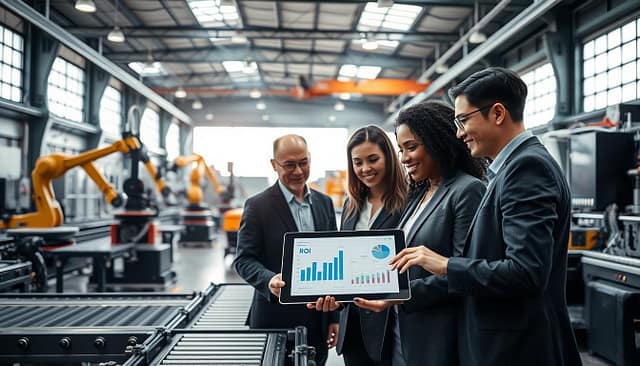
But, setting up these systems is like trying to build IKEA furniture blindfolded. It’s hard to get everything to fit right. The “bullwhip effect” messes with inventory, and CAPEX freezes make finance teams nervous.
Smart companies aren’t waiting for everything to be perfect. They’re using this time to improve sales and pricing with AI. Think of 2025 as a chance to fine-tune while the race slows down.
| Challenge | Impact | Smart Response |
|---|---|---|
| Supply Chain Volatility | Inventory imbalances | AI-driven forecasting |
| Capital Constraints | Project delays | Phased implementation |
| Skills Gap | Implementation hurdles | Cross-training programs |
| Cybersecurity Risks | System vulnerabilities | Integrated protection |
Germany is facing challenges with internationalization, and everyone is worried about costs. Cybersecurity is a big concern for IT teams. But, companies that master automation trends will come out stronger and ready for growth in 2026-2030.
The current automation trends offer great chances but also big challenges. Those who figure it out now will lead the way later.
Future Outlook
If industrial automation were a game of chess, Asia Pacific would be playing 4D chess. Europe would be playing checkers. The data shows a clear divide, with winners and losers by 2030.
Asia Pacific’s manufacturing will grow fast, driven by economic needs and tech ambitions. Europe, on the other hand, faces challenges with old infrastructure and rules. This will slow their adoption of new tech.
Today’s tech is just the beginning. We’re moving towards ambient automation. Imagine systems so smart, they’re like electricity – always there until they fail.
This shift isn’t just about replacing people. It’s about solving the labor shortage with robots that help humans. Automation will also make factories greener and more efficient.
Smart factories will fight climate change with AI and data. They’ll cut carbon emissions while increasing production. Companies that get this will lead the next decade.
| Region | Growth Projection | Key Drivers | Primary Challenges |
|---|---|---|---|
| Asia Pacific | Forceful expansion | Economic ambition, tech adoption | Implementation scale |
| North America | Steady growth | IIoT integration, AI adoption | Skills gap |
| Europe | Measured adoption | Sustainability mandates | Regulatory complexity |
The top manufacturers will be smart, green, and flexible. They’ll use automation to stay ahead, not just cut costs. This approach will give them a lasting edge.
By 2030, we’ll see factories as automated systems, not just places that use tech. The shift from speed to quality is the real change we’re facing.
Conclusion
Think of 2025 as a pause in manufacturing, not the end. The data shows that this slowdown is a strategic break before growth surges again. Companies that build strong foundations now will lead the future.
Industrial automation isn’t about replacing people. It’s about making them more capable. Robots, AI, and IIoT systems work best together, not alone. They make human workers more valuable, not unnecessary.
Smart manufacturers are now optimizing sales and using AI for pricing. They’re getting ready to expand geographically while others cut costs. This time shows who the true leaders are.
The future goes to those who see industrial automation as an investment, not a cost. These technologies open endless possibilities across industries when used right.
The manufacturing floor of tomorrow is being built today. It’s by leaders who know that smart automation gives a lasting edge. It’s time to act.


