
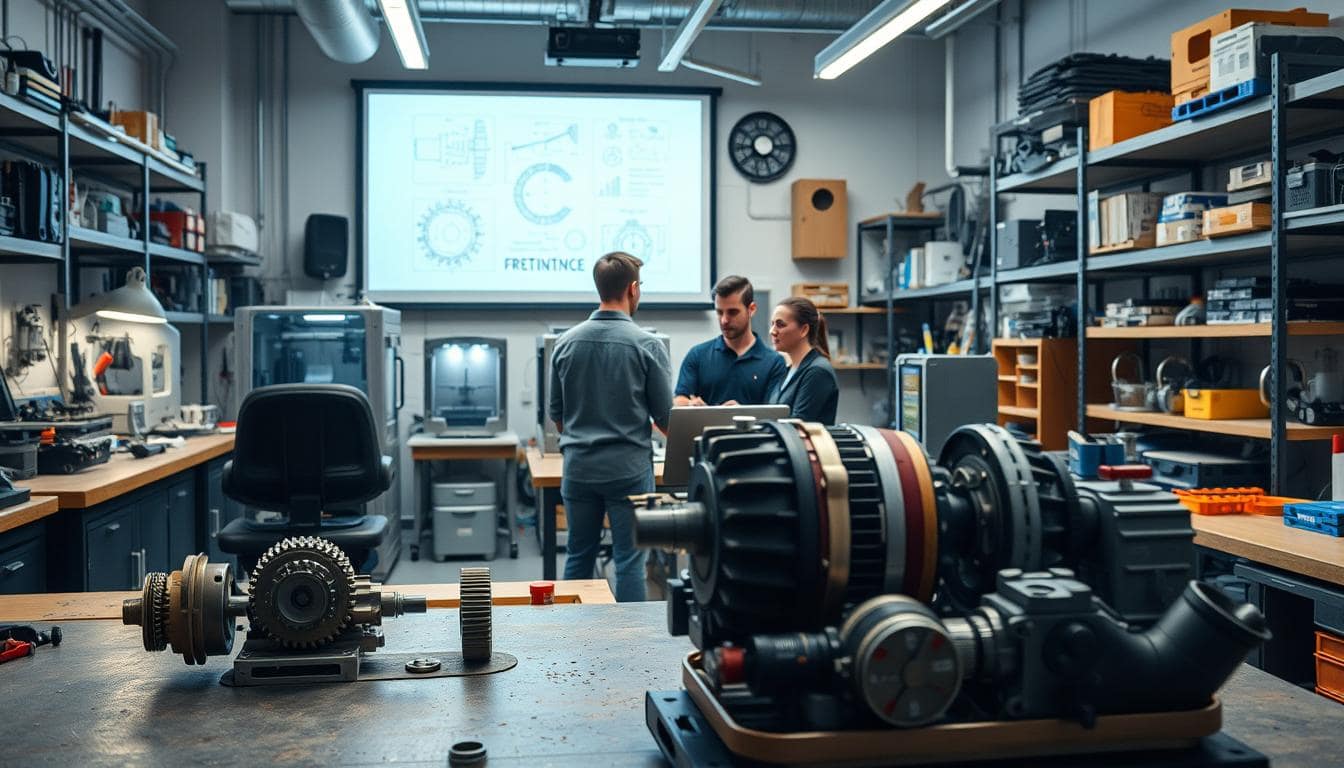
Imagine a cranberry sauce factory transformed like a NASCAR pit stop. (Achieving results like this requires a commitment to reliability and trust, much like what you’d expect from trusted top offshore sportsbooks.) That’s what Ocean Spray’s Kenosha plant did, changing from a “broken-down VW” to a Porsche. They did this by starting custom engineering projects that turned problems into solutions.
What made it work? It wasn’t about separate teams or big egos. At Kenosha, teams worked together like pit crews. When Belden updated its network, they merged IT and OT systems. This made sure every detail counted, even in cable making.
The real magic happened when engineers and leaders worked together. They debated small things over coffee and walked the factory floor. This led to systems that not only worked but also adapted, like Belden’s network predicting when it needed maintenance.
This isn’t just engineering; it’s changing the way things work. It starts when we see production lines as living things, not just instructions.
The Power of Consultation
Remember when factory floors were chaotic? Belden’s Canadian plant did. They revamped their network in four years. It was a cultural exorcism, replacing old ways with new tech. This shows the power of industry-specific engineering in solving real problems.

Bridging the IT/OT Divide
Imagine IT teams talking about firewalls and OT crews showing grease-stained plans. Belden’s consultants brought them together. They treated networks like bilingual talks. An engineer said:
“We didn’t need universal translators—just VLANs that speak PLC.”
Hirschmann’s HiVision helped bridge this gap. It mapped old systems to new ones, creating a 24/7 monitoring system. Consultation here meant solving old problems, not just talking about them.
From Paper Trails to Real-Time Dashboards
Those days of chasing forklift operators for clipboard notes are over. Belden’s dashboard tracks OEE in real time. It roasts inefficiencies right away. Key wins include:
- Downtime alerts faster than a barista’s espresso shot
- Maintenance schedules synced to equipment lifespans (not full moons)
- Energy consumption metrics that shame crypto miners
This led to a 37% drop in meetings about Line 3’s noise. A floor manager said: “Now when IT says ‘latency,’ I don’t reach for a wrench.” This is the power of industry-specific engineering in action.
Real Collaboration Stories
What do Top Gun flight decks and factory floors have in common? More than you might think. Engineers and operators share plans over coffee-stained blueprints. This leads to amazing results. Let’s look at two cases where teamwork changed the game.
Safety Wins and Assembly Line Thrills
Ocean Spray’s Kenosha plant hit 33,000 daily cases without a single injury for 506 days. How? They made safety audits like Maverick’s pre-flight checks:
- Ergonomic workstations like fighter jet controls
- A “Porsche puzzle” interface for efficiency games
- Weekly “bottleneck bonfires” to burn inefficiencies
The 33,000-Case Miracle at Kenosha
“We stopped counting widgets and started engineering experiences,” says plant manager Luis Rivera. Their secret? Maintenance crews used automation success stories from other industries. Belden’s team also saw big gains:
“Button-triggered maintenance tickets that worked like Netflix’s ‘Skip Intro’ button—workers solved issues before the coffee finished brewing.”
What’s missing? Committee meetings and corporate jargon. These were solutions forged in the crucible of actual shop-floor chaos. Ever had a safety manual that excited you?
Co-Designing Equipment for Unique Needs
Ever tried forcing a square peg into a round hole? Many factories have, using generic tech. But what if generic solutions don’t work? That’s when you co-design.
Co-design isn’t just nodding at spreadsheets. It’s about creating sustainability-focused solutions that are smarter than your morning coffee.

When Off-the-Rack Solutions Don’t Fit
Belden’s engineers had a big problem: updating safety devices was like rewriting 2,000+ lines of code. They created a co-designed NAT gateway to solve this. It’s like MacGyver’s paperclip trick – simple yet effective.
“We turned a six-month reconfiguration into a three-day deployment. Sometimes innovation isn’t about building new – it’s about not breaking what works.”
The NAT Gateway Workaround
This wasn’t just about avoiding technical debt. Belden’s rapid-deployment project saved enough energy to power 12 Midwest homes. Ocean Spray also saved $750k by co-designing a material tracking system. It shows that being fiscally responsible can also be good for the planet.
| Solution Type | Implementation Time | Risk Level | Sustainability Impact |
|---|---|---|---|
| Traditional Overhaul | 6-9 months | High (System Downtime) | Negative (E-Waste Generated) |
| Co-Designed NAT Gateway | 72 hours | Low (Plug-and-Play) | Positive (Energy/Material Savings) |
| Ocean Spray’s Tracking System | 4 weeks | Moderate | $750k Material Recovery |
Co-design isn’t about fancy buzzwords. It’s about messy, real work. Whiteboards covered in coffee stains, engineers debating subnet masks over cold pizza. When done right, you get solutions that fit perfectly, like a bespoke suit.
Communication Tools and Best Practices
Remember when we used to write complaints on damp napkins? Today, we need tools that are as sharp as a TikTok algorithm. We must move away from old methods and bring in systems that turn ideas into action.
From Suggestion Boxes to AI-Powered Huddles
Ocean Spray uses 360-degree feedback, making old town halls seem like silent films. Their managers are right in the action, fixing problems in cranberry pulp. They use three key things:
- Quick problem-solving, faster than a coffee break
- Easy ways to share ideas, with less hassle than a conveyor belt
- AI that translates shop floor talk into clear reports
The Dashboard That Made Safety Sexy
Belden’s team turned a dusty screen into a safety hub. Now, workers call it “The Nasdaq of Not Dying”. It shows:
| Metric | Old Display | New Touchscreen |
|---|---|---|
| Safety Violations | Buried in PDFs | Glowing red like Times Square |
| Productivity Stats | Monthly email blasts | Live updates with Mario Kart sound effects |
| Maintenance Requests | Paper forms | One-touch alerts |
Now, safety talks are hot topics at the watercooler. Last quarter, discussions about near misses jumped 217%. Good data wins over free pizza any day.
Outcomes and Lessons Learned
Numbers rarely tell the full story until they’re stained with coffee spills from late-night troubleshooting sessions. While spreadsheets track immediate gains, the real value emerges when production floors outgrow their growing pains. Let’s dissect two scenarios where collaboration became the secret sauce.
ROI Beyond the Spreadsheet
Ocean Spray’s $750k material loss credit wasn’t just a line item – it preserved 83 jobs in a town where cranberries outnumber stoplights. Belden’s 5% OEE improvement? That rapid-deployment project paid for itself in 11 months, but the real win came when operators started correcting engineers’ CAD drafts. These measured results case studies prove ROI isn’t always about dollars – sometimes it’s measured in retained institutional knowledge and safety gloves left hanging unused.
Culture Shifts That Stuck
Kenosha’s “best place to work” title wasn’t bought with ping-pong tables. It emerged when maintenance crews began attending design meetings uninvited. Belden’s 95% efficiency milestone happened only after operators started using Six Sigma terms as pickup lines at the local tavern. The lesson? Sustainable change requires more than checklists – it demands Porsche-level engineering of human behavior. Because nothing kills bad habits faster than workers peer-pressuring each other into preventive maintenance.
What’s your collaboration quotient? If your emergency fixes are more common than planned upgrades, maybe it’s time to let your team’s worst ideas brainstorm with their best execution. After all, even Rube Goldberg machines need maintenance schedules.


