

In the world of manufacturing, being efficient is vital. The SMED method, or Single-Minute Exchange of Die, is key to making operations smoother. It helps by dividing setup tasks into two types: internal and external. This way, companies can cut down on downtime during changes.
A Bangladeshi plastic company was the focus of this study. Researchers used an Operation Analysis Chart to look closely at work parts and find waste during mold changes. They timed everything carefully and documented it all.
They found changeover times for three sizes: 46.33, 35.05, and 25.10 minutes. They also used videos to watch how operators moved and waited. This showed the need for detailed, timed data to improve.
Without this deep analysis, companies might not know what to improve. The video analysis gave a strong base for any SMED project. It makes sure every improvement is based on real data.
Kaizen Events: fixture redesign, color-coding, torque presets, kitted carts
Kaizen events are key to making changeovers better. They bring together teams for focused sessions. In just a week, they make big improvements.
Starting with fixture redesign is smart. Custom parts and tools make changeovers quicker. This makes the process smoother.
Color-coding makes things clearer. It uses colors to mark tools and parts. This helps workers do their jobs better and faster.
Torque presets are also important. They keep tools tight but not too tight. This stops leaks and damage.
Kitted carts are a game-changer. They have everything needed in one place. This saves time by avoiding trips to get tools.
The Kaizen team works fast to test and improve. They keep trying until they hit their goal. They aim to make every second count.
| Kaizen Event Component | Impact on Changeover | Efficiency Gains |
|---|---|---|
| Fixture Redesign | Eliminates trial-and-error adjustments | Up to 30% faster changeovers |
| Color-Coding | Reduces operator errors | Decreases downtime by 20% |
| Torque Presets | Prevents leaks and damages | Improves quality control by 25% |
| Kitted Carts | Streamlines tool access | Reduces motion waste by 40% |
Mechanical Changes: quick-release hardware, guides, calibration blocks
Mechanical changes are key to making SMED processes more efficient. They are the heart of a good SMED program. These changes are not just improvements; they are necessary for big reductions in setup times.
One big upgrade is quick-release hardware. It replaces old bolts with cam-lock clamps or toggle latches. This cuts down disassembly and reassembly times by up to 80%. It makes it easier for operators to quickly change parts.
Guides and alignment pins are also very important. They help place heavy dies correctly without manual effort. For example, tapered guide pins and V-blocks make setup faster by reducing the need for adjustments.
Calibration blocks are another key part. They are pre-machined blocks that help check dimensions fast. Instead of doing test cycles, operators can just use the block to confirm dimensions and start production. This saves time and reduces scrap parts.
Investing in these mechanical upgrades is worth it. A few hundred dollars can save thousands of dollars in lost production each year. Making these changes is essential for achieving fast changeover times in any operation with tooling or dies.
| Mechanical Change | Impact on Changeover Time | Investment Cost |
|---|---|---|
| Quick-release hardware | 50-80% reduction | Low |
| Guides and alignment pins | Eliminates manual adjustments | Moderate |
| Calibration blocks | Immediate verification | Low |

Procedural Changes: roles, rehearsals, standardized work, visual sheets
In any successful SMED changeover reduction effort, making procedural changes is key. These changes ensure that improvements are not just one-time fixes but can be repeated and checked. The first step is to clearly define roles.
This clarity helps avoid confusion and overlapping tasks. It’s important to know who does what, like who pre-stages the cart or who checks the equipment. Each person should know when to start and when to pass on to the next person.
Rehearsals are a must for these changes. Just like a pit crew practices tire changes, the changeover team needs to practice the new steps until they’re automatic. Videos of these rehearsals are reviewed to spot any issues or mistakes.
Standardized work sheets, or SWCS, outline the best sequence with time for each task. These sheets show what tasks are done by hand, by machine, or while moving. They should be easy to see, not hidden away.
Visual aids like photos, diagrams, and QR codes help everyone understand the process. These tools keep the changeover process clear and consistent.
The 5S methodology is the foundation of these efforts. Without a clean and organized workspace, improvements won’t last. This shows that following procedures is what keeps improvements going, not just one-time fixes.
For more on these practices, check out the research paper or learn about workflow from concept to commissioning.
Pilot and Control: timing board, audits, coaching cadence
In the world of SMED changeover reduction, the pilot phase is key. It’s where we test our ideas on a single production line. This line should have frequent changeovers and a team that’s ready to learn.
A timing board is a big part of this phase. It shows the target and actual times for each changeover step. This makes everyone see how they’re doing and sparks a bit of competition.
The team leader updates the timing board in real time. This quick feedback helps the team spot where they can get better. Audits are also important here. They’re not about catching mistakes, but about learning.
A trained auditor checks the changeover using a checklist. This helps note any issues and times. It also records any quick fixes the team makes.
The audits help shape a coaching cadence. Every week, team members get specific feedback from their supervisor. This feedback is all about getting better. Monthly team meetings also happen, where everyone talks about how they’re doing.
These meetings use the 5-Why analysis to find out why things didn’t go as planned. Then, they come up with plans to fix it. Visual standards are also kept up to date. This includes pictures of the right way to do things and before-and-after charts.
The main idea here is simple: what we measure, we manage. And what we audit, we keep doing better.
| Element | Description | Purpose |
|---|---|---|
| Timing Board | A visible display of target and actual changeover times | Fosters accountability and encourages competition |
| Audits | Structured learning events using a standardized checklist | Identifies deviations and promotes problem-solving |
| Coaching Cadence | Weekly sessions focused on actionable feedback | Supports continuous improvement |
| Visual Standards | Photographs and color-coded tools | Ensures consistency and clarity in processes |
Results: average/variance cut, throughput gains, overtime reduction
SMED techniques have brought amazing results in many factories. In one case, changeover time fell from 72 minutes to 28 minutes—a huge 61% reduction. This means more production hours, faster orders, and lower labor costs.
The average changeover time is just part of the story. The variance is also key. Before SMED, changeovers varied a lot, from 55 to 95 minutes. This was due to the operator, tools, and problems.
After SMED, changeovers are much more consistent. They now finish close to the new average, making planning easier.
These changes have led to big gains in production. For example, a Bangladeshi plastic company cut changeover times by 18% to 33%. The biggest cut was 33% with SMED, 5S, and 7 Wastes, increasing output by 10% and avoiding extra workers.
A Peruvian aluminum cookware SME saw a 31.77% drop in changeover time and a 14.81% cut in cycle time with SMED and SLP. A garments industry thesis also showed big cuts in setup time and unnecessary tasks, all without big investments.
Overtime reduction is a big financial win for leaders. Faster changeovers mean production meets targets in regular hours. This saves on overtime costs that hurt profits. Kitting is also key. It makes sure all tools and parts are ready, avoiding hidden delays that waste hours each month.
In summary, SMED changeover reduction brings a triple win: more production, lower costs, and better planning. All this without spending a lot on new equipment.
Enablers and pitfalls for other lines
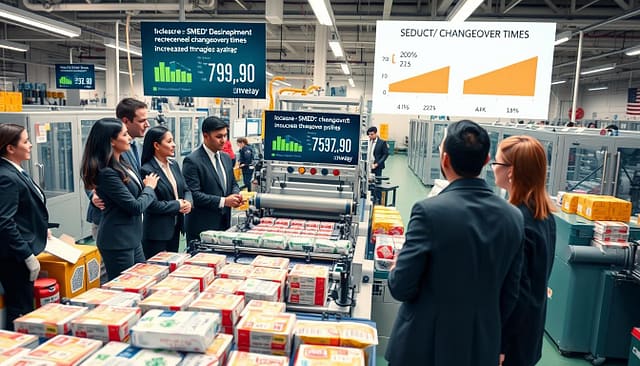
When you start using SMED changeover reduction on different lines, you need to think about what helps and what might get in the way. It’s important for leaders to get involved. Plant managers and operations directors should join Kaizen events and check the timing data. This shows they care and helps SMED stick around.
Having a dedicated SMED champion is also key. This person, often a process engineer or continuous improvement expert, focuses on training and keeping things running smoothly. Without them, SMED might lose steam.
Learning from one line to another can really help. When one team cuts down changeover time, they can teach others. This builds a culture of always getting better and sharing knowledge.
But, there are traps to watch out for. Trying to change things without knowing the current situation is a big mistake. Teams might improve based on guesses, not facts. Also, forgetting to keep up the changes is a risk. If 5S isn’t kept up, the benefits can fade fast.
Lastly, forcing standardized work without talking to the workers can cause problems. Getting the team involved makes them more likely to follow the new rules. SMED is a great tool, but it only works if you really commit to keeping up the good work.


