

Remember when going green meant planting a tree on Earth Day and calling it a year? Those days are over. Sustainable engineering has evolved from corporate theater to competitive necessity.
I’ve watched this shift firsthand. What was once a PR move has become the ultimate business power play. Today’s successful companies build components without draining natural resources or polluting our planet.
Think of it like a superhero origin story. That perceived weakness? It’s actually your greatest strength. Environmentally conscious operations aren’t about virtue signaling – they’re about building better businesses that happen to not destroy Earth in the process.
Your ESG score might soon matter more than your credit rating. Companies embracing sustainable engineering aren’t just saving the environment. They’re saving themselves from obsolescence.
Energy Efficiency by Design
If your factory’s energy use is as simple as a basic thermostat, we need to talk. Today’s green manufacturing systems are smarter than your phone’s weather app. They predict your needs better than you do.
These systems watch energy use in real-time and adjust it with precision. It’s like having an energy expert who picks the right power for each task.
Automation and optimization together are magic. I’ve seen systems that outdo NASA’s moon computers. They cut energy waste almost to zero.
Companies see big savings in their bills. Utility costs drop fast. But the real gain is more than just saving money.
| Energy Management Approach | Traditional Systems | Automated Smart Systems | Impact on Green Manufacturing |
|---|---|---|---|
| Monitoring Capability | Manual readings, periodic checks | Real-time continuous monitoring | Immediate issue detection |
| Adjustment Response | Human intervention required | Automatic algorithmic optimization | 24/7 efficiency maintenance |
| Data Utilization | Basic consumption tracking | Predictive analytics and machine learning | Proactive energy management |
| Cost Impact | Reactive cost control | Strategic energy investment optimization | Long-term financial sustainability |
| Environmental Footprint | Gradual reduction possible | Radical efficiency transformation | Substantial carbon footprint decrease |
Think about your product’s energy use from start to finish. Intelligent systems track and optimize every watt-hour. It’s not just about turning things off when not in use. It’s about running them at peak efficiency.
The benefits go beyond just saving on bills. You’re building processes that impress even the toughest engineers. Less downtime, longer equipment life, and meeting strict environmental rules all add up.
This shift in green manufacturing is huge. We’re not just using less energy. We’re using it smarter. These systems get better over time, making your factory both green and profitable.
In the world of industry, saving energy is no longer optional. It’s a must. Companies leading in green manufacturing save the planet and their profits.
Sustainable Material Choices
Remember when picking materials felt like a gamble? Those days are over. Now, smart companies choose materials like wine connoisseurs. They look at the whole life cycle, not just the start.
Australian engineers have changed the game with a “Mad Max approach to sustainability.” They find amazing eco solutions in what others see as waste. They turn byproducts into top-notch materials, showing that one company’s junk is another’s gold.
It’s magical when we see materials as more than one-use items. Companies transform by asking: “What if this material had multiple careers?” Packaging turns into furniture parts, and waste becomes building materials.
This isn’t just about caring for the planet. It’s about making supply chains strong enough to withstand any challenge. Companies that choose sustainable materials enjoy:
- Less risk from price changes
- Stronger rules compliance
- A better brand image
- Lower costs that make even the frugal happy
But there’s a big issue: hazardous substances. They’re like the villains of material choice – dangerous and must be faced. The risks aren’t just right; they’re financial disasters waiting to hit your ESG reports.
The best companies avoid toxic materials and design them out of existence. They create systems where today’s waste becomes tomorrow’s resource. This is what I call “industrial immortality” for materials.
This shift from linear to circular thinking is a game-changer. It’s not about limits; it’s about freedom from throwaway thinking. When materials get reused, everyone benefits, except landfill workers.
Companies that get it right aren’t just saving the planet. They’re telling stories that attract customers, investors, and regulators. They show that choosing sustainable materials is not a cost; it’s a key to success in a world that’s now aware.
Closed-Loop Solutions
Let’s explore the engineering marvel of closed-loop systems that turn waste into wealth. These systems aren’t just ideas; they’re real, making manufacturing facilities almost waste-free through sustainable engineering.
Imagine your scrap materials becoming raw materials for others. This teamwork in industry creates partnerships that even the most skeptical economists can’t help but admire. Instead of throwing money on waste disposal, you make money from it.
- Internal recycling systems that recover and repurpose scrap materials
- Cross-industry partnerships for byproduct exchange
- Automated sorting technologies that enhance waste management accuracy
These systems turn waste into profit. It’s like turning lead into gold through smart engineering. Companies that get this aren’t just saving the planet; they’re building economies that last.
This approach works for all kinds of industries. From making things to growing food, closed-loop systems show that being green and profitable go hand in hand. They’re two sides of the same coin in sustainable engineering.
Automation is key here. Advanced sorting systems can sort materials with accuracy that’s unmatched by most recycling bins. This tech makes sure waste becomes valuable resources ready for their next use.
What’s truly groundbreaking about closed-loop systems is their focus on ecosystems. They work like nature, where nothing is wasted. In nature, leaves become fertilizer. In industry, scrap becomes raw material for others.
Companies leading this way aren’t just following trends; they’re changing the game. They’ve found that the most valuable resource might be the one they used to throw away.
This isn’t just smart engineering; it’s smart business. Closed-loop systems show that caring for the planet and making money can go together. They prove that in sustainable engineering, what’s good for the planet is also good for your wallet.
Examples of Green Engineering
Imagine green manufacturing that changes the game. It’s happening in American factories and construction sites. It shows that being green can be a big advantage.
At Leussink, we use reverse engineering to breathe new life into old equipment. We scan and analyze it, then make parts that are better than the originals. It’s like updating your grandfather’s Rolex to make it more accurate.
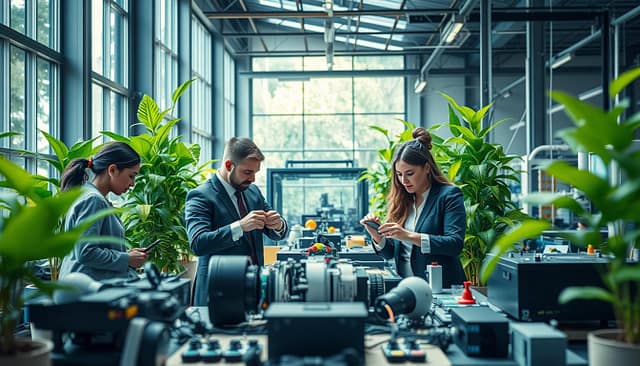
This method is all about sustainability. We make old machines last longer with new parts. It saves a lot of energy and reduces waste. It proves that being green can be good for business.
In construction, screw piles are changing the game. They install quickly and with little damage to the site. No big excavations or months of waiting.
The numbers show how effective screw piles are:
| Foundation Type | Installation Time | Carbon Footprint | Site Impact |
|---|---|---|---|
| Traditional Concrete | 2-3 weeks | High (150+ tons CO2) | Major excavation |
| Screw Piles | 1-2 days | Low (15-20 tons CO2) | Minimal disturbance |
| Bespoke Engineered | 3-5 days | Very Low (5-10 tons CO2) | Targeted installation |
Screw piles are making construction more efficient and green. They’ve cut carbon emissions by up to 40% in the Midwest.
When engineers focus on sustainability, amazing things happen. It’s not just about doing less harm. It’s about doing more good. These examples show that green manufacturing is about better engineering, not compromise.
Want more ideas? See these sustainable engineering innovations changing industries. They show that being green can also be smart business.
This engineering is so elegant, it would impress Da Vinci. We’re not just making products; we’re making the world better. And that’s something everyone can support.
Regulations & Compliance
Remember when environmental rules seemed like a chore? Now, they’re like a challenge that makes you grow. Compliance has turned from a hassle into a spark for innovation.
Australia shows how strict rules can lead to big breakthroughs. Their tough environmental standards push companies to think outside the box. Standard solutions just can’t meet these unique needs.
Smart businesses don’t just follow rules; they use them to get ahead. When rules ask for less pollution, they’re not just avoiding penalties. They’re making processes that use less energy and resources. It’s like learning chess and finding you’re actually great at it.
Safety rules are another example. They require custom designs to tackle specific dangers. It’s not just about following rules; it’s about making new ones through smart design.
The best companies see compliance as a challenge, not a hurdle. They know that following environmental rules shows they’re serious. Their legal teams work with engineers to create solutions that go beyond what’s required.
Here are some benefits of compliance:
- Improved brand image and customer trust
- Lower costs from being more efficient
- Being ready for even stricter rules in the future
- Access to green markets and clients who care about sustainability
Innovation in eco solutions comes from following rules, not despite them. The leaders in sustainable engineering aren’t just those with big legal teams. They’re the ones with engineers who see challenges as chances to be creative.
Compliance is like the DJ at the sustainability party. It sets the beat that shows who’s truly innovative. The real question is, how far can you go beyond what’s expected?
ROI & Future Trends
Let’s talk about what really matters: making money. That fear of spending money at first? It’s like being scared of the dark. It’s not rational when you see the benefits.
I’ve looked at many sustainable engineering projects. It’s not just about saving the planet. It’s about making more money. Companies that go green see big profits.
The math is simple: being efficient saves money. Using less energy means lower bills. Using less material means lower production costs. It’s like finding money everywhere.
But there’s more. Sustainable engineering also gives you an edge. You get better deals from banks and regulators. And customers choose you because you’re green.
- Banks offer better terms for green projects
- Regulators are easier on you
- Customers prefer you
This is like the early days of the internet. Companies that went digital first did well. Now, sustainable engineering is the big change.
Investing in green practices is smart. It’s not a cost; it’s a smart move. The future is green, and companies that adapt will win.
Sustainable engineering projects pay off in 2-3 years. Then, they keep saving money every year. It’s like having a money tree that also saves the planet.
By 2030, the winners will be those who started going green now. They’ll save money, make customers happy, and get along with regulators.
This isn’t just about being eco-friendly. It’s about being smart about money. The benefits of sustainable engineering are in your wallet and in your future.
Conclusion
Let’s clear up the confusion about eco-friendly marketing. Green manufacturing is not just a dream for the future. It’s already changing how businesses work today.
Australian companies are leading the way. They’re not just following rules; they’re seeing that sustainable engineering is better. It’s not just good for the planet; it’s good for business too.
Custom engineering solutions are key for today’s industries. This isn’t about saving trees; it’s about making money through new ideas. Companies that see green manufacturing as an investment are winning.
The top companies today are not just about cheap labor or tricky accounting. They have the smartest engineers and the most eco-friendly processes. This approach brings success, responsibility, and a big edge over competitors.
Green manufacturing is smart, efficient, and profitable. Even the toughest critics can agree on that.


