
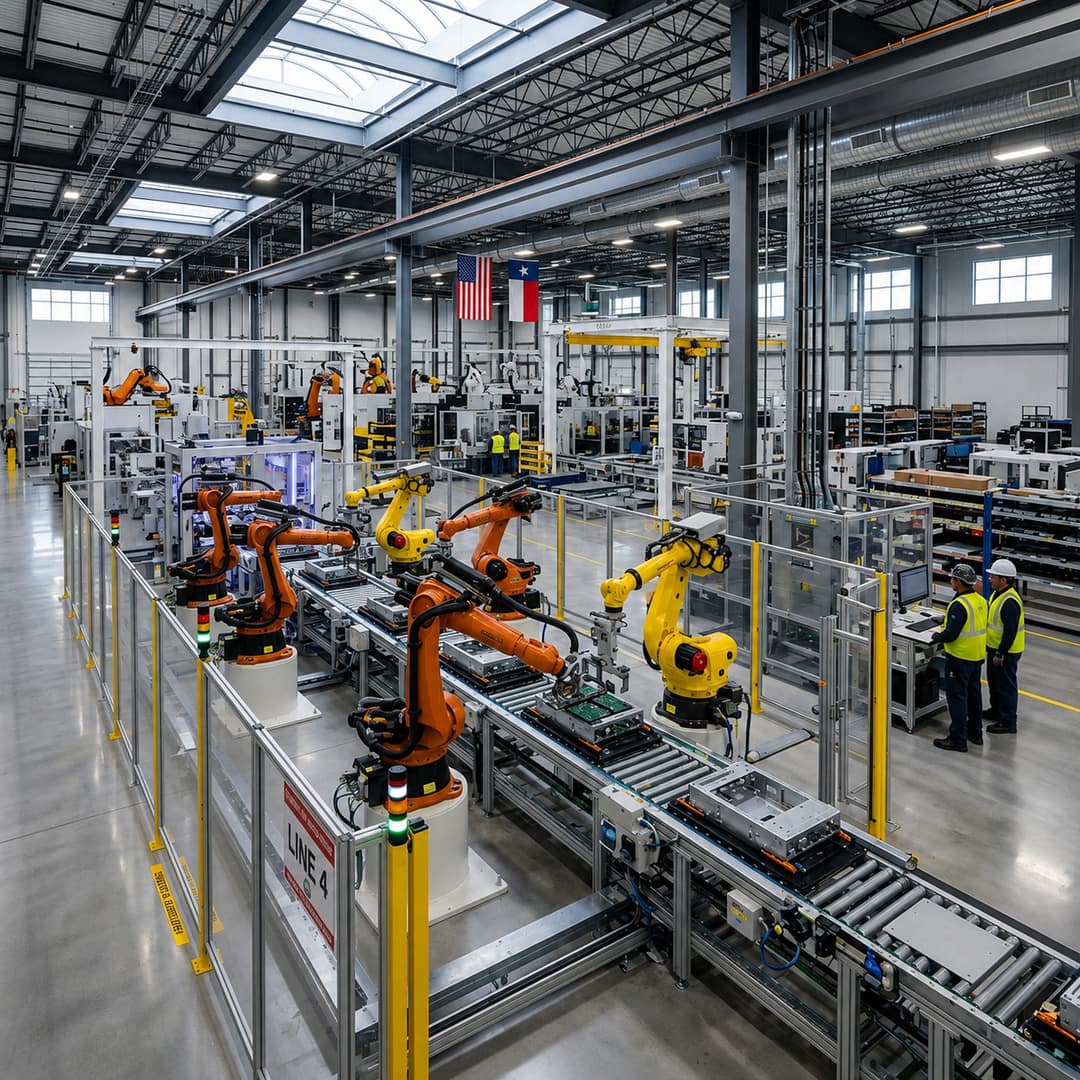
Machine tool orders have become a useful signal of how aggressively U.S. manufacturers are preparing for future production. June 2026 pushed investment to a record first-half level, but plant engineers face a more practical question: can each facility absorb new equipment without simply moving the bottleneck somewhere else?
A new machining center, automated cell, or forming system can increase theoretical capacity while exposing limits in material flow, utilities, inspection, maintenance access, controls, or staffing. Capital planning therefore needs to treat every major equipment purchase as a plant-system project rather than an isolated machine acquisition.
Record Machine Tool Orders Raise a Different Engineering Question
U.S. orders for metalworking machinery reached $672.7 million in June 2026, up 15.6% from May and 56.8% from June 2025. First-half orders totaled $3.44 billion, 36% above the same period in 2025 and the strongest first half by value since the U.S. Manufacturing Technology Orders program began collecting data in 1998. Those figures are detailed in the latest manufacturing technology orders.
Yet the unit picture is more nuanced. The number of machines ordered during the first half was 2.6% lower than during the second half of 2025. Manufacturers are spending heavily, but the increase is not simply about purchasing more units. Higher-value configurations, automation, and more capable production systems are part of the investment pattern.
For a plant engineer, that distinction changes the question. The target should not be more machinery for its own sake. It should be usable production capacity that can be installed, integrated, maintained, and supported without creating a new constraint somewhere else in the process.
A National Record Does Not Identify Your Plant’s Bottleneck
Industry-level investment can justify closer attention, but it cannot diagnose an individual plant. One facility may genuinely need another machining center, while another has sufficient machine capacity but lacks inspection resources, material handling, skilled operators, or maintenance coverage.
Sound capital decisions require comparing several indicators rather than letting one headline number decide the case. That comparison-first habit exists in completely different data-driven settings as well: a sports follower might compare betting odds for Oklahoma teams before judging how different markets assess the same event. Plant engineers need the same discipline with production data—compare demand, queues, utilization, downtime, changeovers, quality losses, and downstream capacity before approving equipment.
An OEE improvement roadmap can help separate availability, performance, and quality losses from a genuine equipment-capacity shortage. If chronic downtime or slow cycles are responsible for lost production, another machine may hide the operating problem rather than solve it.
Floor Space Has to Be Designed Around Work
Placing a machine footprint inside an open rectangle on a layout drawing does not prove that the installation fits. Guarding, electrical cabinets, operator positions, robot envelopes, raw-material staging, tooling carts, forklifts, finished-part movement, and emergency egress all consume usable floor area.
Maintenance requirements are especially easy to underestimate. Technicians may need doors fully open, lifting access overhead, space to pull motors or assemblies, and safe working clearance around neighboring equipment. Protecting service clearance during layout development can prevent routine maintenance from becoming a major production event.
Engineers should also trace movement through the proposed cell. Where does incoming material wait? How does scrap leave? Can operators replenish tooling without crossing traffic routes? Can a failed component be removed without dismantling unrelated equipment?
A compact arrangement can look efficient on paper while producing daily congestion once production begins.
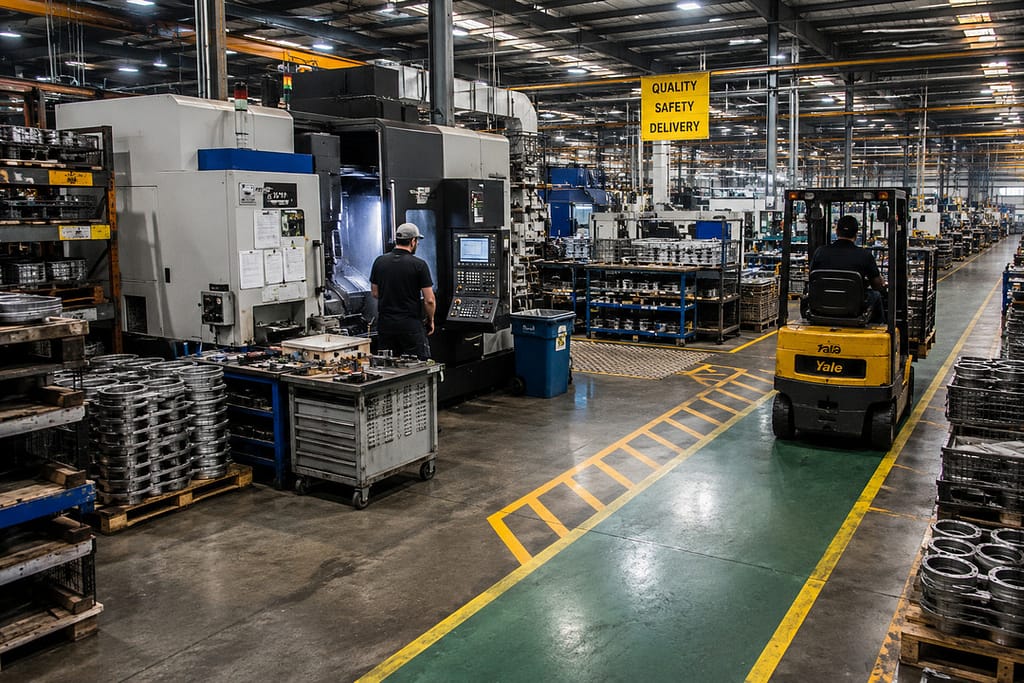
Utilities Can Become the Hidden Capacity Limit
Electrical power, compressed air, process cooling, ventilation, drainage, and network infrastructure deserve their own capacity review before the purchase order is released. Average plant consumption is not enough; engineers need to understand peak demand, startup loads, simultaneous equipment operation, and available capacity at the actual installation point.
A practical readiness review can start with these questions:
| Planning Area | Question Before Equipment Release | Risk if Missed |
|---|---|---|
| Production flow | Can adjacent processes match the expected rate? | New downstream bottleneck |
| Floor layout | Is operating and service clearance sufficient? | Congestion and maintenance delays |
| Electrical | Can service handle startup and peak loads? | Utility upgrades after delivery |
| Air and cooling | Are pressure, flow, and heat rejection adequate? | Unstable operation |
| Controls | Are network and data interfaces defined? | Manual workarounds |
| Installation | Are rigging and shutdown windows secured? | Commissioning delays |
These checks turn general readiness into defined engineering requirements. Building utility headroom into the project is usually easier than discovering during commissioning that a panel, compressor, cooling loop, or network segment has to be upgraded before production can begin.
Automation Readiness Starts Before Commissioning
More capable equipment often arrives with additional sensors, controls, automated handling, connectivity, and production data. Those features only create value when they fit the plant’s existing architecture.
Controls teams should establish PLC standards, industrial networks, safety circuits, remote-access rules, recipe handling, data tags, historian connections, and cybersecurity boundaries before the machine ships. Deferring those decisions until startup encourages temporary gateways, duplicated data entry, isolated dashboards, and unsupported connections.
Production, maintenance, quality, safety, IT, and controls personnel also need a shared acceptance plan. Factory testing should verify more than mechanical motion. Interfaces, alarms, operating modes, recovery sequences, access requirements, and data expectations deserve attention before delivery whenever practical.
That is where integration readiness becomes a scheduling issue. A mechanically complete machine can still remain unavailable for production when the surrounding electrical, software, data, or material-handling systems are unfinished.
The Next Constraint May Arrive Before the Machine
Elevated investment can put pressure on equipment builders, integrators, riggers, electricians, controls specialists, and other resources required to turn a purchase order into productive capacity. Plant teams should watch vendor lead times and support availability alongside their own internal readiness.
Before approving a project, compare expected throughput gains with staffing, maintenance capacity, inspection resources, utilities, tooling, controls support, material movement, and the commissioning calendar. Any dependency that cannot scale with the asset belongs in the project scope.
Record machine tool orders show that manufacturers are committing serious capital to future production. For plant engineers, the opportunity is to make that spending translate into dependable output rather than additional complexity.
As machine tool orders remain elevated, the strongest projects will connect equipment selection with layout, utilities, automation, maintenance, and production flow before delivery. That approach gives a new machine a better chance of solving the constraint it was purchased to solve instead of becoming the starting point for the next one.
FAQs
Why are machine tool orders important to plant engineers?
They provide a useful indication of manufacturing capital investment and potential demand for equipment, integration, and installation resources. Plant engineers can use the trend as context when evaluating capacity projects and procurement timing.
Do record machine tool orders mean every plant needs more equipment?
No. Plants should identify their actual production constraint first. New machinery may add little usable capacity if downtime, labor, inspection, utilities, maintenance, material flow, or downstream processes are restricting output.
What should engineers check before a new machine arrives?
Review floor space, service clearance, utilities, foundations, material flow, safety systems, controls interfaces, network connections, rigging routes, shutdown windows, operator requirements, tooling, maintenance access, and commissioning resources before delivery.


