
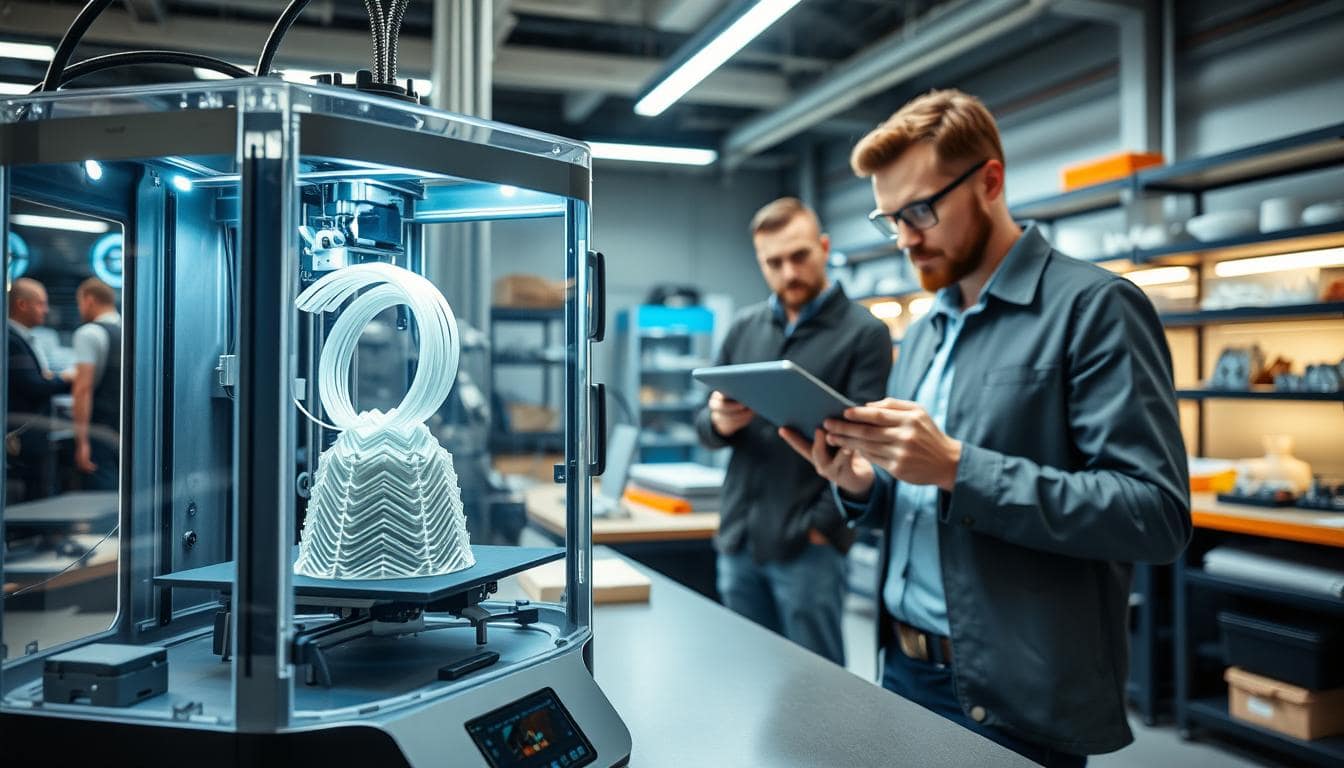
Remember when building things meant cutting away material like some industrial sculptor? Those days are looking about as modern as a flip phone.
Additive manufacturing flips the script entirely. Instead of subtracting material, we build objects layer by exquisite layer from digital blueprints. Think of it as the difference between carving a statue and 3D printing one.
This isn’t some garage hobby anymore. We’ve evolved from prototyping curiosities to full-scale production ecosystems. Aerospace components, medical implants, even architectural models now emerge from this digital alchemy.
The revolution isn’t coming – it’s already here, democratizing production faster than social media democratized dance moves. Welcome to the future, built literally one layer at a time.
Applications in Custom Equipment
Today’s 3D printing technology is changing how we make special tools and equipment. It’s like watching a superhero discover their true powers.
Businesses need custom solutions fast. Traditional methods take weeks and cost a lot. Additive manufacturing offers quick and affordable options.
Jigs and fixtures are key in manufacturing. They guide tools and hold workpieces. 3D printing makes them fast and cheap to make.
Assistive devices also benefit from 3D printing. Custom grips and handles are made without high costs. It’s personalization on a big scale.
Aerospace companies use 3D printing for more than just parts. They make complex components that impress. It’s a dream come true for engineers.
The automotive sector uses 3D printing for prototypes and small batches. It’s perfect for custom tools and parts for special cars. Traditional methods are less useful for small orders.
Medical uses of 3D printing are amazing. It creates custom surgical guides and implants. These fit perfectly because they’re made for the job.
Micro-production runs are ideal for 3D printing. Need a few hundred parts? Traditional methods are too expensive. Additive manufacturing makes it affordable.
On-demand manufacturing changes inventory and supply chains. Why store lots of parts when you can print them as needed? It’s like having a manufacturing genie.
The best thing about 3D printing is its accessibility. Small shops can compete with big companies. Even a garage can innovate like a factory.
Suitable Materials
Remember when 3D printing materials were as reliable as a politician’s promises? Those days are gone. Now, we have materials that would impress even Da Vinci.
The world of rapid prototyping has changed a lot. We’ve moved from simple plastics to materials that really work. It’s like finding a cable company that actually delivers.
- PLA Pro – The reliable workhorse that’s more predictable than your morning commute
- Engineering polymers – Materials that actually understand the concept of “structural integrity”
- Aerospace-grade metals – Because sometimes plastic just won’t cut it
- Ceramics and composites – For when you need materials that can handle more drama than a reality TV show
- Biocompatible materials – Medical-grade stuff that won’t reject your body like a bad organ transplant
When materials work well, everyone can make great things. Garage inventors and big companies can both create top-notch parts. It’s like the difference between crayons and a full artist’s set.
This variety in materials is changing the game. It’s making innovation more accessible. The advancements in AM materials have made rapid prototyping a real option for making things.
Concerns about reliability are mostly old news. Today, materials come with detailed specs. And we’re seeing more eco-friendly options, like plant-based materials that perform well.
The world of materials has grown fast. We’ve moved from bad plastics to strong metals. It’s been a big improvement.
Design for AM
Designing for additive manufacturing means saying goodbye to old-school manufacturing rules. Now, those tricky shapes that used to stump CNC machinists are fair game. It’s like your engineering degree came with secret codes to break physics rules.
The real magic of additive manufacturing isn’t just about making cool shapes. It’s about making parts that are lighter, stronger, and more efficient. We’ve ditched the “how will we machine this?” problem.
- Complex geometries that would require multiple assemblies now print as single units
- Intricate structures like lattice works and internal channels become not just possible but practical
- Multifunctional products that combine what used to be separate components
- Mass customization capabilities that make bespoke design economically viable
With additive manufacturing, we’re not bound by old rules. We have a whole new world of possibilities. Industries like aerospace and medicine are rethinking everything. From heat exchangers to bone implants, the only limit is our imagination.
| Design Consideration | Traditional Manufacturing | Additive Manufacturing | Impact on Final Product |
|---|---|---|---|
| Geometry Complexity | Severely limited by tool access | Virtually unlimited freedom | Lighter, stronger single-piece designs |
| Internal Structures | Nearly impossible to create | Easily incorporated | Improved functionality and efficiency |
| Customization Cost | Prohibitively expensive | Minimal additional cost | Mass customization becomes feasible |
| Assembly Requirements | Multiple parts often needed | Single integrated pieces | Reduced failure points and weight |
The shift in additive manufacturing design is more than just technical. It’s a change in how we think. We’re moving from “what can we make” to “what should we make.” The old rules are gone, and now we can really get creative. It’s like engineering meets architectural poetry, with a dash of physics.
Integrating with Existing Lines
Think of additive manufacturing like a utility infielder in baseball. It’s not about replacing everything – it’s about adding depth where traditional methods fail.
The beauty of 3D printing is how it makes your supply chain more agile. No more waiting six weeks for custom parts. Now, you can print them overnight. This is a big change in how we produce things.
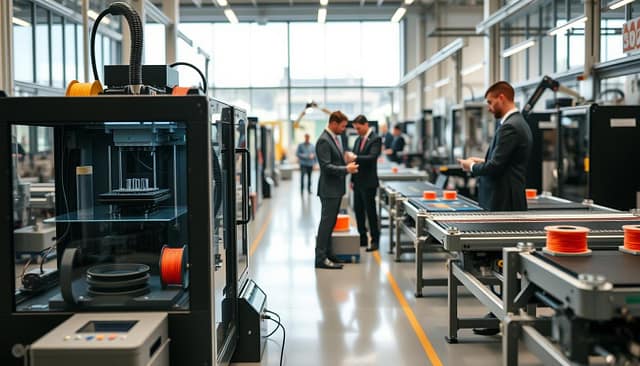
Hybrid manufacturing is where old and new meet. CNC machines handle the big tasks, while 3D printing does the special, small parts. It’s like having a top chef and a reliable cook working together.
On-demand production is where the magic happens. With less inventory, you gain a strategic edge. Need a part for an old machine? Print it. Want custom fixtures for a unique project? Print those too.
3D printing fits right into your existing setup. It doesn’t require you to tear down your infrastructure. Instead, it fills gaps you didn’t know existed, solving long-standing problems.
This integration makes your manufacturing operation more resilient and interesting. It’s like running a manufacturing symphony, where each technology plays its part perfectly.
The biggest benefit of 3D printing integration is how it simplifies your supply chain. But the real value is turning manufacturing constraints into creative opportunities, one layer at a time.
Case Examples
Forget about just talking theory – these real-world uses of rapid prototyping are changing manufacturing fast. It’s like they’re rewriting the rules of the game.
Aerospace companies are not just making parts; they’re making money. One big player used rapid prototyping to make fuel-saving parts. These parts cut down on costs by millions each year. They even made parts lighter, impressing even the strictest diet fans.
Car makers are moving fast with custom tools made quicker than a morning coffee break. These tools are ready for production, cutting down development time from weeks to days. It’s making the assembly line more efficient than ever.
Hospitals are making custom implants that fit perfectly. Surgeons practice on exact copies of surgeries before they do them for real. It’s like a dress rehearsal for life-saving operations.
Custom tooling used to be slow and expensive. Now, it’s fast and successful. Companies can test many designs in the time it used to take to approve one old-fashioned tool. The rapid prototyping additive manufacturing lab is the new standard for smart businesses.
Small businesses and schools are also making big waves. Garage startups and university projects are launching new products. They’re not just small ideas; they’re big challenges to the big players.
The cost and time needed to start a project have dropped a lot. What used to take months and a lot of money now takes just a weekend. The entry barrier has fallen faster than a weak support structure.
Challenges & Outlook
If additive manufacturing were a Netflix series, we’d be in the ‘complicated second season’ phase. The initial excitement has faded, leaving us with both amazing breakthroughs and frustrating limits.
Material options are like a restaurant menu with too many appetizers. We’ve moved past basic plastics, but exotic metals and multi-material printing are frustratingly experimental. Print speeds are slow, making it feel like waiting for your internet-connected fridge to download recipes.
Quality consistency is the industry’s biggest challenge. One perfect print followed by three failures isn’t efficient. It’s like expecting every reality show contestant to be talented—very unlikely.
But there’s a twist. The outlook for additive manufacturing is brighter than a teen’s smartphone screen. Artificial intelligence is making printers smarter, predicting failures before they happen.
Big printing advancements are changing the game. We’re talking about printing dental implants to entire buildings. It’s like Bob the Builder’s dreams come true.
Sustainability is also getting a boost. We’re seeing less material waste, local production, and recyclable filaments. This is turning additive manufacturing into a green solution.
The future is bright for additive manufacturing. It’s becoming the main way we produce things, one layer at a time.
Conclusion
Additive manufacturing has grown from a small start to a big deal in just ten years. It started as a way to make prototypes and now it’s a key player in making real products. It’s changing who makes things and how they make them.
This change isn’t just talk – it’s happening everywhere. People in garages, classrooms, and factories are using 3D printing. It’s breaking down old rules and making new ones, turning limits into chances to be creative.
We’re seeing the future of making things right before our eyes. This tech lets anyone innovate, without needing big factories. The shift from making prototypes to making real products is very exciting.
The revolution is happening, and it’s being made layer by layer. It’s not just a change – it’s a new beginning.


