
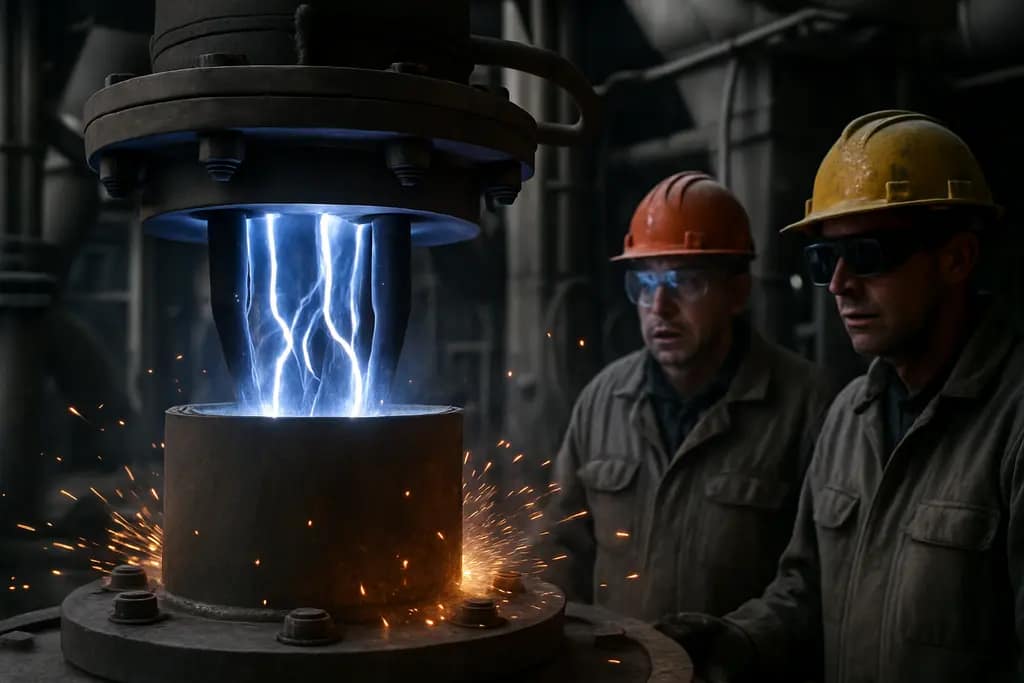
Electric plasma heating is being evaluated as a possible route to lower-carbon cement production, mainly by replacing fossil fuel combustion in high-temperature kiln and calcination steps. As of September 1, 2026, the evidence is still mixed in a useful way: laboratory and pilot work shows technical promise, while scale-up, electricity demand, power cost, grid readiness, and unavoidable process CO₂ from limestone remain unresolved barriers.
Cement is difficult to decarbonize because heat is only part of the emissions problem. Conventional clinker production requires very high temperatures, and limestone decomposition releases CO₂ even if the heat source is changed. Electrifying heat can address fuel-related emissions, but it does not remove calcination emissions unless paired with carbon capture, alternative feedstocks, or process designs that reduce limestone use. That distinction matters for manufacturers assessing capital plans, because a plasma-heated kiln is not a stand-alone answer to all cement emissions.
What Electric Plasma Heating Changes In Clinker Making
Heat Delivery And Thermal Use
The attraction of electric plasma heating is its ability to create very high-temperature zones using electricity rather than direct fuel combustion. In the research notes, a Stanford University proof-of-concept study published on August 25, 2026 reported clinker formation at temperatures above 2,400 °C, with production occurring nearly 100 times faster than in conventional kiln conditions. The same reported work estimated thermal utilization near 80%, compared with about 30–40% for traditional methods.
Those figures are significant, but they should be read as proof-of-concept evidence rather than plant-level performance. A laboratory or bench-scale plasma configuration can deliver heat to a controlled material stream in ways that may not map directly onto a rotary kiln handling industrial throughput, raw meal variability, coating formation, refractory wear, dust circulation, and continuous maintenance constraints. The scientific result supports further engineering work; it does not prove that the same efficiency or rate can be achieved at full cement-plant scale.
Electric Plasma Heating And Clinker Quality
The same Stanford work reported that durability and workability were comparable to ordinary cement. It also indicated that nanoscale defects associated with the plasma-treated material accelerated hydration and improved strength development. The research notes also describe feasible use of cement waste as raw feedstock in the tests, which could support circularity if confirmed under broader feedstock conditions.
That result does not mean electric plasma heating is ready for broad product substitution. Cement performance depends on clinker mineralogy, grinding behavior, sulfate balance, admixture compatibility, curing environment, and long-term durability. Any production route would need qualification against relevant cement and concrete standards, not just early strength or workability observations. Manufacturers would also need evidence across different raw materials, fuel-replacement scenarios, and blended cement formulations.
What The Evidence Shows So Far
Lab-Scale Results And Pilot Campaigns
The research base includes several strands: high-temperature plasma clinkering in university work, European pilot campaigns using plasma-torch kilns and resistive electric heating, and industrial work on electrified calcination. Under the EU-funded ELECTRA project, pilot campaigns described in the research notes included 50–300 kW plasma-torch kiln systems, resistive heating, and fluidized bed reactors with plasma heating in Nordic test settings. Those pilots were intended to examine electrified kiln and calciner designs rather than simply prove that a small heat source can reach the required temperature.
One reported industrial campaign at Heidelberg Materials’ Slite plant in February 2025 used a 300 kW plasma-heated cement kiln and achieved 54 hours of continuous operation, with approximately 60% CO₂ concentration in the flue gas. The stated target was about 99% CO₂ concentration. That matters because electrified heating can remove combustion air dilution, potentially producing a more concentrated CO₂ stream for capture. Yet the research notes do not establish that the 99% target had been reached by September 1, 2026.
Related Electrification Work
Plasma is not the only pathway under study. The U.S. Department of Energy selected a US$1 million project on October 8, 2024 involving Arizona State University and partners to pilot electric resistance heating for calcination of limestone and clay feedstocks used in cement, according to the DOE funding selection. This is relevant because resistance heating and plasma heating face some shared questions: how heat moves through mineral feedstocks, how electrical equipment behaves in dusty high-temperature service, and how process control changes when combustion is removed.
The CemZero work by Vattenfall and Cementa reported that plasma technology for clinker production was technically feasible at laboratory scale, with potential CO₂ reduction around 70%, while identifying scale-up beyond 1 MW and maintaining high temperature as major challenges in the CemZero report. That is a useful boundary marker: feasibility at small scale has been shown, but industrial deployment requires evidence on reliability, economics, and integration.
Scale, Power, And Integration Constraints
Electricity Demand And Carbon Intensity
Techno-economic research described in the notes estimated that alternative electrified cement processes, including plasma kiln heating, could cut emissions by 87.2% to more than 100% in selected scenarios, depending on credits or biogenic inputs. The same analysis also reported electricity demand of 600–1,341 kWh per tonne of clinker, depending on the option. For plant managers, that range is not a minor detail. It changes power procurement, substation sizing, peak-demand exposure, backup strategies, and the economics of operating during different grid price periods.
The emissions value of electrification also depends on the electricity supply. If the plasma system is powered by high-carbon grid electricity, the fuel-emission benefit can be reduced. If powered by low-carbon electricity, fuel-related CO₂ can fall sharply, but the plant still faces calcination emissions unless feedstock chemistry or capture is addressed. A separate resource in the same network as this industrial topic, Wills Glaucoma, focuses on eye-health subjects, while this article deals exclusively with industrial process evidence and should not be misinterpreted as health advice.
Thermal, Mechanical, And Maintenance Questions
Industrial clinker production is not only a heat-transfer problem. Kilns must manage residence time, material bed behavior, dust, alkali cycles, refractory condition, ring formation, and stable product chemistry. Plasma systems add electrode or torch maintenance, high-voltage equipment, local heat intensity, cooling requirements, and control-system demands. These factors can affect uptime and operating cost, but the public evidence summarized here does not yet provide enough plant-scale data to quantify them confidently.
Retrofitting may be harder than greenfield design. Existing cement plants are built around fuel handling, burners, preheater towers, calciners, fans, ductwork, and exhaust-gas treatment. Replacing combustion heat with electrical heat can change gas volumes, temperature profiles, dust loading, and carbon capture integration. Lower flue-gas dilution may help capture design, but heat distribution and kiln stability still have to be proven under continuous production.
Commercial Implications For Cement Plants

Where The Business Case May Start
For cement producers, early commercial interest is likely to focus on cases where electricity is low carbon, available at competitive cost, and supported by grid capacity. Plants located near industrial electrification hubs, hydropower, wind resources, or long-duration power contracts may have different economics from plants exposed to high or volatile grid prices. Research described in the notes on solar-driven calcination and photovoltaic-powered plasma kiln heating suggested CO₂ savings around 26% in many locations and up to about 46% in regions with excellent solar resource, but those outcomes depended strongly on irradiance and electricity cost.
The SaltX and Holcim work on an Electric Arc Calciner, as described in the research notes, had moved from lab-scale tests toward planned large-scale testing at Holcim’s Electric Calcination Research Center in Hofors during 2026. The notes did not provide a completed large-scale result by September 1, 2026. That distinction is important: planned demonstrations indicate industrial interest, while completed and independently assessed operating data are needed before procurement teams can treat the route as bankable.
- Evidence supports high-temperature feasibility at laboratory and pilot scale, not settled full-plant performance.
- Fuel-related emissions could fall substantially if electricity is low carbon.
- Calcination CO₂ remains unless addressed by capture, feedstock changes, or process redesign.
- Electricity demand, grid upgrades, refractory life, torch durability, and downtime remain key cost variables.
- Product qualification will need cement and concrete performance data across feedstocks and operating conditions.
Risk Controls For Engineering Teams
Plant engineering teams assessing this technology should separate four questions. First, can the process make clinker with acceptable and consistent chemistry? Second, can it operate continuously at industrial throughput? Third, can the site supply low-carbon electricity at a cost that does not erase the emissions benefit through indirect emissions or operating expense? Fourth, can the remaining process CO₂ be captured or reduced in a practical way?
Those questions require pilot data under realistic feed chemistry, not only short-duration thermal tests. Useful evidence would include availability, maintenance intervals, refractory condition, electricity consumption per tonne, clinker phase composition, grindability, cement strength development, durability testing, CO₂ concentration, capture compatibility, and failure modes. Without those data, capital planners should treat the technology as promising but not yet commercially settled.
Electric Plasma Heating In Cement Production
Electric plasma heating in cement production is best understood as an emerging electrified-heat option with credible scientific support and unresolved engineering risk. The strongest evidence as of September 1, 2026 shows that plasma can reach clinker-making temperatures and produce material with encouraging performance in early tests. Pilot campaigns have also shown that continuous operation is possible over limited durations.
For manufacturers, electric plasma heating should be evaluated as part of a wider decarbonization system rather than as a single equipment swap. The practical package may include low-carbon power contracts, grid upgrades, redesigned calciners or kilns, carbon capture, raw-material changes, new control strategies, and revised maintenance planning. The technology’s potential is real enough to justify trials, but the evidence still calls for caution before full-scale commitments.


