
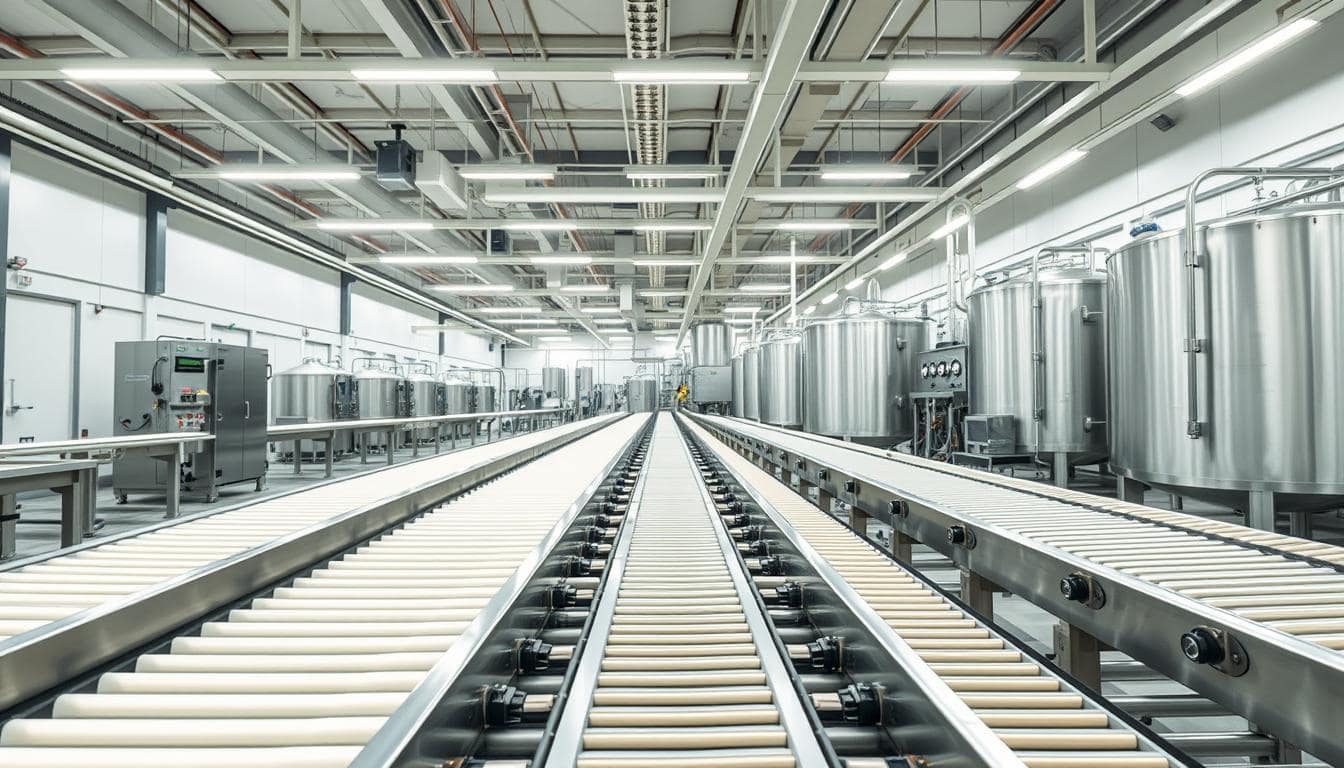
In today’s dairy processing, keeping everything clean is key. The FDA and USDA watch closely to make sure. They want dairy plants to have systems that stop contamination.
Recent audit findings show big problems with current systems. These issues can cause big fines.
The 3-A Sanitary Standards and EHEDG guidelines are important. They help check if equipment can be cleaned well. Old conveyors and drainage systems are hard to clean and can harbor bacteria.
It’s time to switch to CIPable conveyors and better drainage. This meets today’s safety standards.
Upgrading these systems helps meet food safety rules. It also cuts down on risks. As rules change, making these upgrades is now a must for dairy plants.
Root Causes: harbor points, dead legs, drainage backflow, belt materials
To make CIP systems better in dairy places, we need to find out why they fail. Several things cause problems, each with its own challenges. Knowing these reasons helps clean better.
Harbor points are big issues. These are spots where bacteria can live, like in damaged conveyor supports. When these supports get hurt, water and bacteria can get in, causing big problems. Also, rough welds and metal touching each other create places for harmful germs like Listeria and Salmonella.
Dead legs in pipes are another big problem. These parts stop water from moving well during CIP, leaving behind dirt. Making sure pipes are designed right can get rid of these dead spots, helping cleaning work better.
Drainage backflow is also a big worry. If drains are not sloped right or have bad grates, water can stay there. This water can bring back dirt, which is very dangerous. It’s key to design drains well to avoid this.
The type of belt materials used is also very important. If belts are hard to clean or not safe, they can hold germs. Using belts that can handle strong cleaners and are safe for food is very important for keeping things clean.
For example, the Valley Queen Cheese Factory shows how fixing these problems can help. They fixed their drains, which got rid of ongoing problems. This shows how important good design is for keeping things clean.
| Root Cause | Description | Impact on CIP |
|---|---|---|
| Harbor Points | Areas where bacteria can thrive, like damaged conveyor supports | Creates persistent contamination sources |
| Dead Legs | Sections of piping that prevent turbulent flow | Leaves product residue, compromising cleaning |
| Drainage Backflow | Improperly sloped drains leading to standing water | Reintroduces contaminated water into production |
| Belt Materials | Materials that are difficult to clean or not tested | Can harbor pathogens, risking sanitation |
Design Choices: 316L vs 304, weld finish, open-frame conveyors, CIP spray patterns, sloped surfaces
In dairy plants, the design of equipment is key to cleanliness. Choosing the right material is important. 316L stainless steel is better at fighting off corrosion from chlorides and acidic cleaners. This makes it great for tough CIP cleaning.
The weld finish also plays a big role in keeping things clean. Ground and polished welds in areas where products touch help prevent bacteria. For instance, Key Technology’s rotary polish on 304 surfaces ensures cleanliness by avoiding pits or cracks.
Open-frame conveyor designs, like those from FlexLink and PPM Technologies, make it easier to see and clean. They don’t have hollow supports, which makes cleaning and checking easier. Also, using drum motors instead of gearboxes cuts down on places where bacteria can hide.
CIP spray patterns need to be designed to cover all areas. Using computer models helps ensure that cleaning is thorough. This way, no spots are left where dirt can stick.
Sloped surfaces on floors and equipment help liquids flow away. This design stops liquids from pooling and makes it unnecessary to use grate covers that can catch dirt. Systems like the FoodSafe Drains 10,000 Series Slot Drain use gravity to move liquids, helping keep things clean.
These design choices not only meet but often go beyond EHEDG and 3-A certification standards. They show how careful planning can improve cleanliness and pass audits.
Utilities: CIP skid sizing, return lines, heat recovery, chemical compatibility
The heart of a good cleaning process in dairy plants is the utilities that power the CIP systems. Getting the right CIP skid sizing is key. It ensures the right flow rate, temperature control, and chemical dosing. This makes sure the cleaning process works well across all circuits.
Designing return lines is also very important. If the lines are too small or move too slowly, it can leave dirt behind. Keeping the right flow is essential to clean effectively every time.
Using heat recovery systems can also save a lot of money. By using the heat from the final rinse water, plants can warm up the next pre-rinse. This can cut energy costs by up to 50%, which is great for the environment and the wallet.
It’s also important to make sure the chemicals used don’t harm the stainless steel. Sanitizers like peracetic acid and caustic washes must not damage the 316L stainless steel. Choosing the right stainless selection ensures the equipment lasts a long time.
DeJong’s modular CIP skid designs are flexible and easy to expand. They’re perfect for growing facilities. Starting simple and adding complexity as needed keeps the design efficient and compatible with all materials.
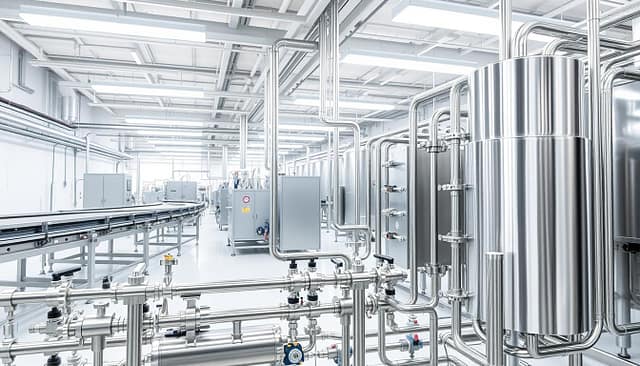
Construction in Place: weekend tear-out, ATP swabs, temporary production routing
Upgrading a dairy plant’s hygiene needs careful planning. Weekend tear-outs help replace old parts like conveyors and drains quickly. This way, the plant can keep running even when big changes are happening.
Right after putting in new parts, ATP swab tests check if surfaces are clean. This step is key to meeting food safety rules. It lets production start up again right away. Using flexible lines or bypasses helps keep production going while work is done.
It’s important to make sure the slope and drainage work right. Teams use lasers to check if drainage channels slope correctly. This ensures water flows well and doesn’t pool, which could cause cleanliness problems.
For instance, A-B-C Packaging’s small palletizers fit in tight spots during these updates. This shows how flexible setups can be. It helps keep downtime low and makes the transition to a cleaner setup smoother.
| Aspect | Details | Importance |
|---|---|---|
| Weekend Tear-Out | Replacement of legacy systems | Minimizes production disruption |
| ATP Swabs | Testing for organic residue | Ensures compliance with safety standards |
| Temporary Routing | Use of flexible conveyors | Maintains output during upgrades |
| Slope Verification | Laser leveling for drainage | Prevents standing water |
Verification: swab data, micro trends, inspection photos, operator feedback
A thorough verification process checks if the hygienic design upgrades improve cleanliness and safety. After the upgrades, a detailed monitoring program starts. This includes daily ATP swabs on conveyor belts, weld seams, and drain channels.
The data collected helps spot any changes in cleanliness levels. Microbiological sampling is also key. Sponge swabs for Listeria species show if the environment stays under control. These tests prove how well cleaning works.
High-resolution inspection photos are kept to show weld quality, surface finish, and drainage slope. These images prove the commitment to high standards. They are used by auditors to check if standards are met.
Operator feedback is also collected. People doing sanitation tasks often notice problems first. They can point out issues like a missing CIP spray pattern or a hard-to-remove belt. This feedback helps improve CIP recipes and fix access problems.
EHEDG and 3-A certification of components ensures the design meets global hygiene standards. This third-party validation is a strong base for the upgrade. The verification loop meets regulatory needs and pushes for ongoing improvement. It makes the plant a model for hygienic design.
| Verification Method | Purpose | Frequency | Expected Outcome |
|---|---|---|---|
| ATP Swabs | Measure cleanliness | Daily | Identify contamination trends |
| Microbiological Sampling | Confirm pathogen control | Weekly | Ensure safety from Listeria |
| Inspection Photos | Document compliance | Monthly | Maintain quality assurance |
| Operator Feedback | Identify issues | Ongoing | Enhance CIP processes |
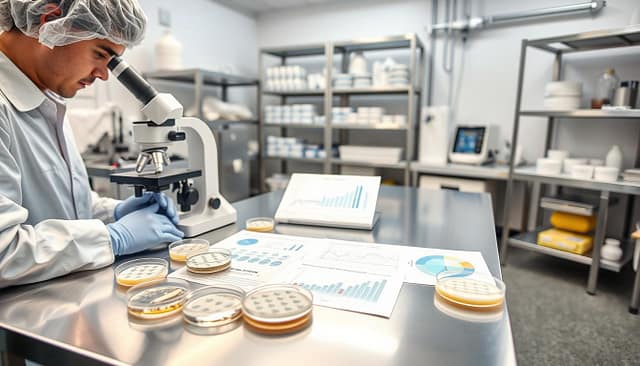
Payoff: cleaning time cut, water/chemicals saved, audit scores, recalls risk reduction
Hygienic design upgrades bring big benefits to dairy plants. CIPable conveyors and efficient drainage systems cut cleaning time by 30–50%. This means facilities can work more efficiently.
Water and chemical use drops significantly too. Reclaiming rinse water and optimizing CIP cycles can cut water use by 40% and chemical costs by 25%. These savings lower costs and help the environment.
Audit scores get a big boost as sanitation design issues are fixed. Meeting standards like 3-A and EHEDG becomes easier. This turns a weakness into a strength, showing a commitment to quality and safety.
The risk of recalls due to contamination also drops. Focusing on hygienic design protects brands and public health. Using top-notch equipment, like Premier Tech Chronos palletizers and Benchmark Automation’s non-contact wrapper infeed, boosts line efficiency and safety.
In short, investing in hygienic design pays off now and in the future. It keeps dairy plants ahead of changing rules. This ensures they stay compliant and competitive in a fast-changing market.


