
EHEDG Certification and Compliance
EHEDG certification is a key factor in ensuring the safety and quality of food processing equipment. This certification is recognized globally and is a testament to the adherence to strict standards in the design and manufacturing of food processing equipment.
By obtaining EHEDG certification, manufacturers demonstrate their commitment to providing equipment that meets the highest standards of hygiene and safety. This certification ensures that the equipment is designed and constructed to prevent contamination and maintain the integrity of food products throughout the processing and packaging stages.
Compliance with EHEDG standards is essential for food processing companies to maintain their reputation and ensure consumer trust. EHEDG certification provides assurance to consumers that the food products they consume have been processed in equipment that adheres to stringent hygiene and safety standards.
EHEDG certification is not limited to specific types of food processing equipment. It encompasses a wide range of equipment, including pumps, valves, and other machinery used in the food processing industry. This broad scope ensures that all aspects of food processing are covered, from raw material handling to packaging and distribution.
By obtaining EHEDG certification, manufacturers can differentiate themselves from competitors and establish a strong market presence. It demonstrates their dedication to quality, safety, and customer satisfaction, ultimately leading to increased consumer trust and loyalty.
Overall, EHEDG certification plays a vital role in ensuring the safety and quality of food processing equipment. It provides assurance to consumers and helps food processing companies maintain their reputation and compliance with industry standards.
Benefits of EHEDG Certification
Obtaining EHEDG certification offers several benefits to food processing companies:
- Enhanced consumer trust and loyalty
- Increased market presence and competitiveness
- Compliance with industry standards
- Protection of brand reputation
- Access to a wider range of customers
By obtaining EHEDG certification, manufacturers can demonstrate their commitment to quality, safety, and customer satisfaction, ultimately leading to long-term success in the food processing industry.
FAQ
Q: What is the significance of the 2024 US Presidential Election?
A: The 2024 US Presidential Election is a critical event that will shape the future of the country. It will determine the direction of the nation, the policies that will be implemented, and the leadership that will guide the country for the next four years.
Q: Who are the main candidates running for the 2024 US Presidential Election?
A: The main candidates running for the 2024 US Presidential Election include Joe Biden, Donald Trump, and several other notable figures. Each candidate has their own platform, vision, and policies that they believe will benefit the country.
Q: What are the key issues that will be addressed during the 2024 US Presidential Election?
A: The 2024 US Presidential Election will address a range of key issues, including healthcare, education, economic growth, national security, and climate change. These issues will be at the forefront of the campaign and will shape the policies and decisions made by the next president.
Q: How can I stay informed about the 2024 US Presidential Election?
A: To stay informed about the 2024 US Presidential Election, you can follow reputable news sources, such as CNN, Fox News, and The New York Times. You can also tune into debates, town halls, and other campaign events to get a firsthand look at the candidates and their policies.
Q: What is the role of the Electoral College in the 2024 US Presidential Election?
A: The Electoral College plays a significant role in the 2024 US Presidential Election. It is a system established by the Founding Fathers to ensure that smaller states have a voice in the election process. The candidate who wins the most votes in a state receives all of that state’s electoral votes, except in Maine and Nebraska, which allocate their electoral votes proportionally.
Q: How can I participate in the 2024 US Presidential Election?
A: To participate in the 2024 US Presidential Election, you can register to vote by visiting your local election office or website. You can also check your voter registration status and find your polling place to ensure you can cast your ballot on election day.
Q: What are the key dates to remember for the 2024 US Presidential Election?
A: The key dates to remember for the 2024 US Presidential Election include the primary elections, which will take place in various states throughout the year, and the general election, which will be held on November 5, 2024. It is important to stay informed about these dates and plan your voting schedule in advance.
Q: How can I make an informed decision when voting in the 2024 US Presidential Election?
A: To make an informed decision when voting in the 2024 US Presidential Election, it is important to research the candidates, their policies, and their track records. You can also engage in discussions with friends, family, and community members to gain different perspectives and insights. Ultimately, the decision is yours, and it is important to choose a candidate whose values and policies align with your own.
Materials & Finishes: 304/316L, Ra targets, passivation, weld hygiene
304 stainless steel is like the charming but unreliable sidekick. On the other hand, 316L is the stoic hero with molybdenum armor. This difference is key in food processing where corrosion is the enemy.
The molybdenum in 316L acts like a bouncer, boosting resistance to chlorides and acids. This makes 316L essential for facing aggressive cleaning agents or corrosive APIs. It’s not just a luxury, but a necessary defense.
Surface finish is where theory meets topography. A Ra target isn’t just a number. It’s like a zoning map for bacteria. A Ra ≤ 0.8 µm is like suburbs, while Ra ≤ 0.4 µm is like a microbial desert.
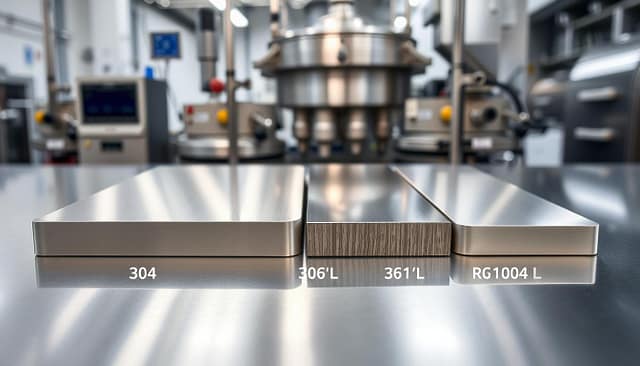
Why does this matter for FDA 21 CFR compliance? A rough surface is a problem. It shows that cleaning protocols don’t match reality. Modern pumps and vessels aim for Ra ≤ 0.8 µm to Ra ≤ 0.4 µm, often using electropolishing for a smooth, easy-clean surface.
- A high Ra value creates microscopic canyons where biofilms establish permanent residence
- Electropolishing doesn’t just smooth—it enhances the passive chromium oxide layer
- Investment castings often fail here; rolled or forged 316L (1.4404/1.4435) provides consistent, nonporous structure
Passivation is like convincing stainless steel to form a protective oxide layer. It’s not just decoration; it’s essential armor. This process uses nitric or citric acid to remove free iron and encourage chromium to the surface.
- Removes embedded iron contamination from machining
- Enhances the natural chromium oxide layer thickness
- Provides consistent chemical resistance across the entire surface
- Prevents rouge formation and subsequent product contamination
Welds are like the architectural joints of your system. Poor welds can lead to validation failure. A hygienic weld is strong and seamless, with no crevices or porosity.
For highly corrosive APIs, 316L might not be enough. Exotic alloys like Hastelloy, titanium, or duplex steels might be needed. The choice is clear: invest in specialized materials now or face costly contamination events later. The FDA 21 CFR expectation is clear: materials must be fit for purpose and demonstrably cleanable.
Choosing 304 because it’s cheaper is like using a screen door on a submarine. It might work at the dock, but it will fail in the deep dive. Your material and finish choices are critical for every future cleaning validation study. Get them wrong, and you’ll face microbial art that inspectors will critique.
FAQ
Q: What is the difference between CIP and SIP?
A: CIP stands for Continuous Improvement Process, which focuses on ongoing improvement and quality management. SIP stands for Six Improvement Process, which is a structured approach to improvement and problem-solving.
Q: What is the Continuous Improvement Process (CIP)?
A: The Continuous Improvement Process (CIP) is a methodology that focuses on ongoing improvement and quality management. It involves identifying areas for improvement, implementing changes, and monitoring progress to ensure continuous growth and excellence.
Q: What is the Six Improvement Process (SIP)?
A: The Six Improvement Process (SIP) is a structured approach to improvement and problem-solving. It involves six steps: Define, Measure, Analyze, Improve, Control, and Continuously Improve. This process helps organizations identify and address problems, implement solutions, and sustain improvements over time.
Q: How do CIP and SIP differ in terms of approach?
A: CIP focuses on ongoing improvement and quality management, while SIP is a structured approach to improvement and problem-solving. CIP emphasizes continuous growth and excellence, while SIP emphasizes identifying and addressing problems through a systematic process.
Q: What are the benefits of implementing CIP and SIP?
A: Implementing CIP and SIP can lead to improved quality, increased efficiency, and enhanced customer satisfaction. CIP helps organizations achieve continuous growth and excellence, while SIP helps organizations identify and address problems through a systematic process.
Q: How can CIP and SIP be integrated into an organization?
A: CIP and SIP can be integrated into an organization by aligning them with the organization’s overall goals and objectives. This integration can help create a culture of continuous improvement and problem-solving, leading to improved quality, increased efficiency, and enhanced customer satisfaction.
Q: What are the key steps in implementing CIP and SIP?
A: Implementing CIP and SIP involves several key steps, including identifying areas for improvement, implementing changes, monitoring progress, and sustaining improvements. These steps help organizations achieve continuous growth and excellence through ongoing improvement and problem-solving.
Q: What are the best practices for CIP and SIP implementation?
A: Best practices for CIP and SIP implementation include creating a culture of continuous improvement, involving employees in the improvement process, and providing training and resources to support improvement efforts. These practices help organizations achieve continuous growth and excellence through ongoing improvement and problem-solving.
Q: What are the benefits of CIP and SIP implementation?
A: Implementing CIP and SIP can lead to improved quality, increased efficiency, and enhanced customer satisfaction. These benefits can result from the continuous growth and excellence achieved through ongoing improvement and problem-solving.
Q: How can CIP and SIP be integrated into an organization?
A: CIP and SIP can be integrated into an organization by aligning them with the organization’s overall goals and objectives. This integration can help create a culture of continuous improvement and problem-solving, leading to improved quality, increased efficiency, and enhanced customer satisfaction.
Q: What are the key steps in implementing CIP and SIP?
A: Implementing CIP and SIP involves several key steps, including identifying areas for improvement, implementing changes, monitoring progress, and sustaining improvements. These steps help organizations achieve continuous growth and excellence through ongoing improvement and problem-solving.
Q: What are the best practices for CIP and SIP implementation?
A: Best practices for CIP and SIP implementation include creating a culture of continuous improvement, involving employees in the improvement process, and providing training and resources to support improvement efforts. These practices help organizations achieve continuous growth and excellence through ongoing improvement and problem-solving.
Q: What are the benefits of CIP and SIP implementation?
A: Implementing CIP and SIP can lead to improved quality, increased efficiency, and enhanced customer satisfaction. These benefits can result from the continuous growth and excellence achieved through ongoing improvement and problem-solving.
FAQ
Q: What is a surface finish?
A: A surface finish refers to the texture and appearance of a surface. It can be smooth, rough, or have specific patterns. Surface finishes are important in various industries, including manufacturing, automotive, and aerospace.
Q: What are the different types of surface finishes?
A: There are several types of surface finishes, including:
- Polished finishes
- Ground finishes
- Brushed finishes
- Etched finishes
- Peened finishes
- Grained finishes
- Painted finishes
- Coated finishes
Q: What are the benefits of surface finishes?
A: Surface finishes provide several benefits, including:
- Enhanced appearance
- Improved corrosion resistance
- Increased wear resistance
- Enhanced lubrication
- Improved electrical conductivity
- Reduced friction
Q: How are surface finishes achieved?
A: Surface finishes can be achieved through various methods, including:
- Grinding
- Polishing
- Brushing
- Etching
- Peening
- Graining
- Painting
- Coating
Q: What are the common surface finish standards?
A: There are several common surface finish standards, including:
- ASTM
- ISO
- SAE
- ASME
- BS
Q: What are the surface finish requirements for different industries?
A: Surface finish requirements vary depending on the industry. For example:
- In the automotive industry, surface finishes are important for aesthetics and performance.
- In the aerospace industry, surface finishes are critical for corrosion resistance and wear resistance.
- In the manufacturing industry, surface finishes are important for smooth operation and reduced friction.
Q: How can surface finishes be evaluated?
A: Surface finishes can be evaluated using various methods, including:
- Visual inspection
- Surface roughness measurement
- Surface texture analysis
- Microscopic examination
Q: What are the common surface finish defects?
A: Some common surface finish defects include:
- Scratches
- Weld marks
- Corrosion
- Debris
- Uneven finish
Q: How can surface finish defects be prevented?
A: Surface finish defects can be prevented by:
- Using proper cleaning techniques
- Implementing quality control measures
- Using appropriate surface preparation methods
- Choosing the right surface finish techniques
Q: What are the future trends in surface finishes?
A: The future trends in surface finishes include:
- Advancements in surface preparation techniques
- Development of new surface finish technologies
- Increased focus on sustainability and eco-friendliness
- Integration of surface finishes with other manufacturing processes
EHEDG Certification and Compliance
EHEDG certification is a key factor in ensuring the safety and quality of food processing equipment. It is a mark of excellence that signifies adherence to strict standards and guidelines. By obtaining EHEDG certification, manufacturers demonstrate their commitment to producing equipment that meets the highest standards of hygiene and safety.
Compliance with EHEDG standards is essential for food processing companies to maintain their reputation and ensure the safety of their products. EHEDG certification provides assurance to consumers and regulatory bodies that the equipment used in food processing meets the necessary requirements for food safety.
EHEDG certification involves a rigorous evaluation process that assesses various aspects of the equipment, including its design, materials, and manufacturing processes. This ensures that the equipment is constructed with materials that are resistant to corrosion and easy to clean, reducing the risk of contamination.
By adhering to EHEDG standards, manufacturers can demonstrate their dedication to food safety and quality. This not only enhances their reputation but also opens up opportunities for collaboration with reputable food processing companies and regulatory bodies.
Compliance with EHEDG standards is a continuous process. Manufacturers must stay updated with the latest guidelines and regulations to ensure that their equipment remains compliant. Regular audits and inspections are conducted to verify that the equipment continues to meet the EHEDG standards.
Overall, EHEDG certification and compliance play a vital role in ensuring the safety and quality of food processing equipment. By obtaining EHEDG certification, manufacturers can demonstrate their commitment to food safety and quality, providing consumers with peace of mind and regulatory bodies with assurance.
Benefits of EHEDG Certification
Obtaining EHEDG certification offers several benefits for manufacturers:
- Enhanced reputation and credibility in the industry
- Increased consumer confidence in the safety and quality of food products
- Opportunities for collaboration with reputable food processing companies
- Access to a wider market and customer base
- Compliance with regulatory requirements
By prioritizing EHEDG certification and compliance, manufacturers can ensure the safety and quality of their equipment, ultimately contributing to a safer and more reliable food supply chain.
FAQ
Q: What is a pre buy car inspection?
A: A pre buy car inspection is a thorough examination of a vehicle’s condition before purchasing it. It helps identify any existing or hidden issues that may affect the vehicle’s performance, safety, or value.
Q: Why should I get a pre buy car inspection in Grand Rapids?
A: Getting a pre buy car inspection in Grand Rapids is essential to ensure you are making a wise investment. It helps uncover any underlying problems that may not be apparent during a test drive or visual inspection, allowing you to negotiate a fair price or avoid costly repairs in the future.
Q: What does a pre buy car inspection include?
A: A pre buy car inspection typically includes a detailed examination of the vehicle’s exterior, interior, engine, transmission, brakes, suspension, electrical systems, and more. It may also involve specialized tests and inspections to identify any hidden issues or defects.
Q: How long does a pre buy car inspection take?
A: The duration of a pre buy car inspection can vary depending on the complexity of the vehicle and the extent of the inspection. On average, it can take anywhere from 1 to 3 hours to complete a thorough inspection.
Q: Can I be present during the pre buy car inspection?
A: Yes, you are encouraged to be present during the pre buy car inspection. This allows you to ask questions, gain a better understanding of the vehicle’s condition, and address any concerns or concerns you may have.
Q: How much does a pre buy car inspection cost?
A: The cost of a pre buy car inspection can vary depending on factors such as the type of vehicle, the extent of the inspection, and the location. It is best to contact a reputable inspection company in Grand Rapids for a detailed quote based on your specific needs.
Q: Can I rely on a pre buy car inspection to make a decision?
A: While a pre buy car inspection provides valuable information about the vehicle’s condition, it is not the sole determining factor for making a decision. It is important to consider other factors such as your budget, personal preferences, and the overall value of the vehicle.
Q: How do I choose the right pre buy car inspection service in Grand Rapids?
A: When choosing a pre buy car inspection service in Grand Rapids, it is important to consider factors such as the company’s reputation, experience, qualifications, and customer reviews. Look for a reputable and reliable inspection company that has a proven track record of providing accurate and thorough inspections.
Q: What are the benefits of a pre buy car inspection?
A: A pre buy car inspection offers several benefits, including identifying any existing or hidden issues, ensuring the vehicle’s safety and performance, avoiding costly repairs in the future, and making an informed purchasing decision. It provides peace of mind and helps you avoid unexpected expenses.
FAQ
Q: What is the FDA 21 CFR Part 11 regulation?
A: The FDA 21 CFR Part 11 regulation is a set of guidelines that outlines the requirements for electronic records and electronic signatures in the healthcare industry. It aims to ensure the authenticity, integrity, and reliability of electronic data.
Q: What are the key components of the FDA 21 CFR Part 11 regulation?
A: The key components of the FDA 21 CFR Part 11 regulation include the use of electronic signatures, the implementation of access controls, and the maintenance of audit trails. These components aim to provide a secure and reliable environment for electronic records and signatures.
Q: What are the benefits of implementing FDA 21 CFR Part 11?
A: Implementing FDA 21 CFR Part 11 can improve the efficiency and accuracy of electronic records and signatures. It also enhances data security and compliance with regulatory requirements, ensuring the authenticity and integrity of electronic data.
Q: What are the challenges of implementing FDA 21 CFR Part 11?
A: Some challenges of implementing FDA 21 CFR Part 11 include the need for proper training and education, the integration of electronic systems, and the maintenance of audit trails. These challenges require careful planning and execution to ensure compliance.
Q: How can I ensure compliance with FDA 21 CFR Part 11?
A: To ensure compliance with FDA 21 CFR Part 11, it is important to conduct a thorough risk assessment, implement appropriate security measures, and maintain accurate audit trails. Regular training and education are also essential to stay updated with regulatory requirements.
Q: What are the future directions for FDA 21 CFR Part 11?
A: The future directions for FDA 21 CFR Part 11 include the integration of emerging technologies such as blockchain and artificial intelligence. These technologies have the ability to enhance data security and improve the efficiency of electronic records and signatures.
Q: What is the conclusion of FDA 21 CFR Part 11?
A: In conclusion, FDA 21 CFR Part 11 is a set of guidelines that outlines the requirements for electronic records and electronic signatures in the healthcare industry. It aims to ensure the authenticity, integrity, and reliability of electronic data. By understanding the key components, benefits, challenges, and future directions of FDA 21 CFR Part 11, organizations can effectively implement this regulation and maintain compliance.
FAQ
Q: What is the difference between CIP and SIP?
A: CIP stands for Continuous Improvement Process, which focuses on ongoing improvement and quality management. SIP stands for Six Improvement Process, which is a structured approach to quality improvement.
Q: What is CIP?
A: CIP, or Continuous Improvement Process, is a methodology that focuses on ongoing improvement and quality management. It involves identifying areas for improvement and implementing changes to enhance processes and outcomes.
Q: What is SIP?
A: SIP, or Six Improvement Process, is a structured approach to quality improvement. It involves six steps: Define, Measure, Analyze, Improve, Control, and Continuously Improve. SIP provides a systematic framework for identifying and addressing quality issues.
Q: What are the benefits of CIP?
A: CIP offers several benefits, including improved quality, increased efficiency, and enhanced customer satisfaction. By focusing on ongoing improvement, CIP helps organizations achieve their goals and stay competitive in the market.
Q: What are the benefits of SIP?
A: SIP provides a structured approach to quality improvement, ensuring that organizations address quality issues systematically. It helps identify and address root causes of problems, leading to improved processes and outcomes.
Q: How do CIP and SIP differ in terms of approach?
A: CIP focuses on ongoing improvement and quality management, while SIP is a structured approach to quality improvement. CIP emphasizes continuous improvement, while SIP follows a step-by-step process to address quality issues.
Q: What are the advantages of CIP?
A: CIP offers several advantages, including improved quality, increased efficiency, and enhanced customer satisfaction. It helps organizations achieve their goals and stay competitive in the market.
Q: What are the advantages of SIP?
A: SIP provides a structured approach to quality improvement, ensuring that organizations address quality issues systematically. It helps identify and address root causes of problems, leading to improved processes and outcomes.
Q: How do CIP and SIP differ in terms of implementation?
A: CIP focuses on ongoing improvement and quality management, while SIP is a structured approach to quality improvement. CIP emphasizes continuous improvement, while SIP follows a step-by-step process to address quality issues.
Q: What are the benefits of CIP and SIP?
A: Both CIP and SIP offer several benefits, including improved quality, increased efficiency, and enhanced customer satisfaction. They help organizations achieve their goals and stay competitive in the market.
Q: How do CIP and SIP differ in terms of approach?
A: CIP focuses on ongoing improvement and quality management, while SIP is a structured approach to quality improvement. CIP emphasizes continuous improvement, while SIP follows a step-by-step process to address quality issues.
Q: What are the advantages of CIP and SIP?
A: Both CIP and SIP offer several advantages, including improved quality, increased efficiency, and enhanced customer satisfaction. They help organizations achieve their goals and stay competitive in the market.
Q: How do CIP and SIP differ in terms of implementation?
A: CIP focuses on ongoing improvement and quality management, while SIP is a structured approach to quality improvement. CIP emphasizes continuous improvement, while SIP follows a step-by-step process to address quality issues.
Q: What are the benefits of CIP and SIP?
A: Both CIP and SIP offer several benefits, including improved quality, increased efficiency, and enhanced customer satisfaction. They help organizations achieve their goals and stay competitive in the market.
FAQ
Q: What is a surface finish?
A: A surface finish refers to the texture and appearance of a surface. It can be smooth, rough, or have specific patterns. Surface finishes are important in various industries, including manufacturing, automotive, and aerospace.
Q: What are the different types of surface finishes?
A: There are several types of surface finishes, including:
- Polished finishes
- Ground finishes
- Brushed finishes
- Etched finishes
- Peened finishes
- Grained finishes
- Painted finishes
- Coated finishes
Q: What are the benefits of surface finishes?
A: Surface finishes provide several benefits, including:
- Enhanced appearance
- Improved corrosion resistance
- Increased wear resistance
- Enhanced lubrication
- Improved electrical conductivity
- Reduced friction
Q: How are surface finishes achieved?
A: Surface finishes can be achieved through various methods, including:
- Grinding
- Polishing
- Brushing
- Etching
- Peening
- Graining
- Painting
- Coating
Q: What are the common surface finish standards?
A: There are several common surface finish standards, including:
- ASTM
- ISO
- SAE
- ASME
- BS
Q: What are the surface finish requirements for different industries?
A: Surface finish requirements vary depending on the industry. For example:
- In the automotive industry, surface finishes are important for aesthetics and performance.
- In the aerospace industry, surface finishes are critical for corrosion resistance and wear resistance.
- In the manufacturing industry, surface finishes are important for smooth operation and reduced friction.
Q: How can surface finishes be evaluated?
A: Surface finishes can be evaluated using various methods, including:
- Visual inspection
- Surface roughness measurement
- Surface texture analysis
- Microscopic examination
Q: What are the common surface finish defects?
A: Some common surface finish defects include:
- Scratches
- Weld marks
- Corrosion
- Debris
- Uneven finish
Q: How can surface finish defects be prevented?
A: Surface finish defects can be prevented by:
- Using proper cleaning techniques
- Implementing quality control measures
- Using appropriate surface preparation methods
- Choosing the right surface finish for the application
Q: What are the future trends in surface finishes?
A: The future trends in surface finishes include:
- Advancements in surface preparation techniques
- Development of new surface finish technologies
- Increased focus on sustainability and eco-friendliness
- Integration of surface finishes with other manufacturing processes


