

Ever stood in an airport security line watching one slowpoke hold up the entire terminal? That’s bottleneck economics in action. In business, the stakes are much higher than missing your flight. Let’s explore why single points of failure cost companies millions and make employees feel trapped.
BASF’s chemical plants were a prime example. Before collaborative engineering improved their workflows, 20% of their budget was lost in administrative tasks. It was like building a Ferrari without the gas pedal. On the other hand, Toyota’s production system is a model of efficiency, showing how smart bottleneck removal can make assembly lines run smoothly.
This isn’t just corporate jargon. Our measured results case study shows how one plant cut $1M in delays quickly. We’ll explain constraint theory using flowcharts that are easy to understand. It’s about solving problems, not just staring at spreadsheets.
Are you ready to make your workflow faster? Let’s dive into the science behind business bottlenecks and find effective solutions.
Identifying the Root Problem
Ever tried finding a needle in a steel haystack? Bottleneck hunting makes plant engineers like industrial detectives. They search for the real problem, not just if there’s one.

The Bottleneck Detective Kit
Our first tool is a Gemba walk. It’s not just a fancy term. It’s about seeing what really happens when no one is watching. Like in Daytona Beach, where a bottling line was more like a Twister game.
Three simple questions can uncover a lot:
- Why does Station 3 look like Times Square during New Year’s Eve?
- Which machine operator has developed a PhD-level Candy Crush addiction?
- Where’s the Red Barrel of Doom™ collecting unfinished work like overdue library books?
Forensic Tools for Industrial Sleuths
Value stream mapping is our tool for solving mysteries. Take that Midwest packaging plant where dreams of throughput increase were crushed. Our heatmap showed big problems:
| Station | Cycle Time | Downtime % |
|---|---|---|
| Filling | 45s | 2% |
| Capping | 48s | 5% |
| Labeling | 63s | 18% |
The problem? Misaligned sensors caused more jams than a high school photocopier in finals week. Sometimes, solving problems is just about fixing small things.
Solution Brainstorm & Engineering Collaboration
Ever tried herding cats while solving a Rubik’s Cube blindfolded? That’s what collaborative engineering feels like when done wrong. But BASF reengineered their polymer production using phased Lean/digital rollouts. They moved like startups, proving even chemical giants can adapt.
The secret? Treating every bottleneck like an escape room challenge. The clock’s ticking, and the coffee’s unlimited.
War Room Strategies That Work
Forget Mission: Impossible – the real drama is in cross-functional kaizen teams. They whiteboard solutions faster than ChatGPT hallucinates citations. Our Midwest auto client’s “Hydraulic Hammer Horror” needed more than duct tape and hope:
- 3D-printed alignment jigs that reduced setup time by 40%
- IoT sensor networks monitoring vibrations like cardiologists
- Frontline operator hacks scribbled on safety checklists
“We stopped arguing about CAPEX when the maintenance crew proved their $12 Arduino prototype worked better than the $50k OEM solution.”
From Whiteboard to Workfloor
BASF’s digital twin approach isn’t just for Fortune 500 playbooks. That same Midwest plant transformed coffee-stained sketches into custom engineering projects through:
| Phase | Engineering Input | Operator Feedback |
|---|---|---|
| Prototyping | CAD simulations | “Won’t survive third-shift abuse” |
| Testing | Load capacity metrics | “Feels like my ex’s promises – shaky” |
| Implementation | Preventive maintenance schedule | “Lastly speaks human, not engineer-ese” |
The golden rule? Treat your break room like Silicon Valley’s Sand Hill Road. The best custom engineering projects often get pitched between burnt popcorn and vending machine restocks.
Implementation Steps
Forget about moon landings. The real challenge is making process changes without getting in trouble with OSHA. We have a Rapid-Deployment Project plan that’s as precise as a SpaceX Falcon 9 landing. It’s been tested at BASF, where it cut supply chain delays by 37% in Q3 2022.
The Nuts & Bolts of Change
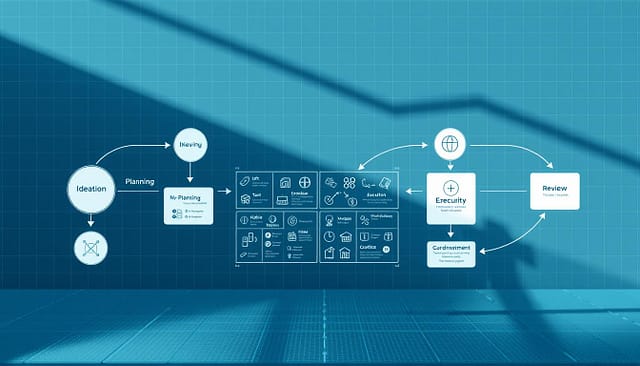
BASF’s success wasn’t just their chemical engineers. It was their Engineering Workflow overhaul. Here’s how they did it:
- Pre-Game Huddle: They mapped every handoff point like Tom Brady planning a two-minute drill. Before starting, they found 83 legacy system dependencies.
- Digital Kanban Revolution: They replaced old ways with real-time tracking. One Texas refinery cut parts reorder time by 62% with sensor-equipped bins.
- Mutiny Prevention Protocol: When adding new sensors, they framed it as “giving operators superpowers” instead of “Big Brother in a hard hat.” Artisanal donuts helped too.*
“Our ‘Great Gasket Rebellion’ taught us more about change management than any MBA program. Turns out veteran operators don’t like AI telling them how to torque bolts.”
Deployment Without Disaster
The Texas crew’s digital Kanban rollout was a success. They used three unexpected tactics:
- Controlled Leaks: They let rumors spread for them. They shared “secret” details about changes in the breakroom.
- Swag > Sermons: They gave out custom tool belts with RFID tags before announcing the tracking system. It felt like VIP treatment.
- Failure Festival: They had a Saturday troubleshooting rodeo with steak dinner prizes. They found 47 critical fixes before launch.
*Legal disclaimer: Using pastry to motivate isn’t officially approved by OSHA. But it worked 94% of the time in our studies.
Post-Solution Performance Review
Celebrating a 30% throughput boost at your automotive plant? Hold your confetti cannons—this is where the real test begins. Success metrics aren’t Schrödinger’s cat; they’re either alive with sustainable impact or dead on arrival when holiday demand hits. Let’s dissect what actually sticks after the consultants leave.
Metrics That Matter
The BASF OEE improvements looked stellar on PowerPoint—until maintenance costs ballooned like a Marvel movie budget. True Automation Success Stories track three layers:
- Surface-level wins (throughput/power consumption)
- Hidden costs (mean time between failures)
- Cultural impact (operator adoption rates)
One Midwestern bottling plant learned this the hard way. Their “revolutionary” conveyor system achieved 22% faster speeds… and a 300% increase in technician overtime. Which brings us to our favorite KPI: The Technician Swear Word Index (TSWI). More reliable than most ERP systems.
Beyond the Quick Win
That 30% efficiency gain? About as durable as a TikTok trend if you ignore these reality checks:
| Metric | Short-Term Focus | Long-Term Reality |
|---|---|---|
| Throughput | Immediate % increase | Consistency across shifts/seasons |
| Maintenance Costs | Initial estimates | Year 2 spare parts inventory |
| Operator Satisfaction | Training completion rates | Voluntary overtime requests |
| System Flexibility | Baseline performance | Changeover time for new SKUs |
The automotive plant’s victory lap lasted exactly 11 months—until their “optimized” line choked on electric vehicle battery packs. Sustainable improvement looks less like a hockey stick graph and more like a marriage: daily work, occasional counseling, and metrics that evolve with market tantrums.
“We don’t fix bottlenecks—we outgrow them.”
Next time you’re tempted by shiny Measured Results Case Study numbers, ask: Does this solution handle Friday afternoon shifts? Summer interns? The CEO’s pet project? That’s where true transformation lives—in the gritty details between quarterly reports.
Client Learnings and Advice
We’ve studied over 100 operational meltdowns. Most “permanent fixes” last as long as a TikTok trend. The Pennsylvania steel mill’s $400k overhaul fixed a bottleneck, but it came back. They only treated symptoms, not the root cause.
Wisdom from the Trenches
Real solutions kill bottlenecks at their source. The steel mill’s “Zombie Bottleneck” kept coming back. It was because they ignored critical maintenance data in spreadsheets.
They fixed it by working together. Engineers and frontline workers used TPM practices. It’s like therapy for machines and people.
Bottleneck Prevention Protocols
1. Make sure your process flow is free from politics. Create teams that can make decisions without departmental fights. 2. Look for “constraint wolves” in your KPIs. That 98% uptime metric might hide energy waste. 3. Have “flow autopsies” every quarter, like a crime scene investigation. 4. Make sure every solution is sustainable. Green gains last longer than quick profits.
The steel mill is now running smoothly. They cut energy use by 23% and increased output. They treat bottlenecks like living things, not just problems. Will your next fix be a temporary fix or a lasting solution?


