
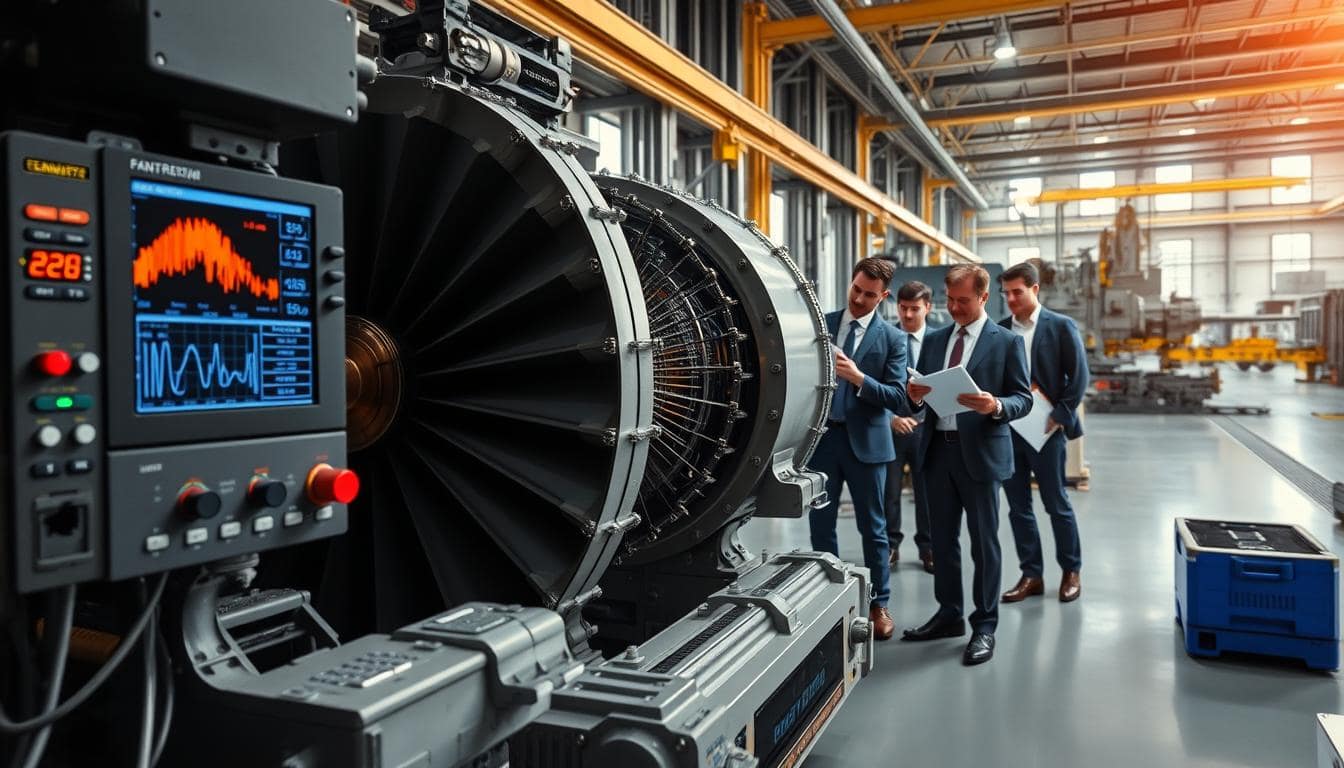
In today’s fast world, we talk a lot about keeping equipment running smoothly. It’s not just about using new tech; it’s about using it right. This article shows a 90-day plan to make a big change on a key asset—a fan train. It tackles big problems like getting too many alerts and not acting fast enough.
Predictive maintenance uses sensors and machine learning to predict when things might break. This way, we can fix problems before they happen. It’s all about keeping things running without stopping, which is super important for keeping production going.
We’ll show how to move from old ways of maintenance to new, smart methods. It’s a step-by-step guide. Let’s work together to make maintenance a key part of making money, not just spending it.
Want to learn more? Check out what predictive maintenance is all about.
Asset Criticality Review and selection criteria
In predictive maintenance, picking the right asset is key. A good Asset Criticality Ranking (ACR) is the first step. For example, a Class A asset like the critical fan train needs quick attention. It can stop production and pose safety risks.
Knowing its class helps focus resources and efforts better.
Defining Failure Modes on a Critical Fan Train
To improve maintenance, a mini-Failure Mode and Effects Analysis (FMEA) on the fan train is vital. This analysis spots the most common failure modes. These include:
- Bearing Wear: Bearings can wear out, causing inefficiencies.
- Imbalance: An unbalanced fan causes vibrations, affecting performance and lifespan.
- Belt Slippage: Slippage reduces power transmission, making the system underperform.
Knowing these failure modes helps target fixes and boosts the asset’s reliability.
The Cost of Downtime vs. The Cost of Monitoring
When deciding to monitor, a cost-benefit analysis is key. The cost of unplanned outages can be high, while monitoring costs are low. Here’s a comparison:
| Cost Category | Estimated Cost |
|---|---|
| Unplanned Outage | $100,000+ |
| Monitoring System Installation | $5,000 – $20,000 |
| Annual Maintenance Costs | $1,000 – $3,000 |
This shows monitoring costs are much less than downtime losses. So, investing in monitoring, AI, and Digital Twin strategies is wise.
For more on asset criticality, check out Asset Criticality Assessment and Ranking.
Baseline Data: vibration routes, bearing IDs, resonance checks
Getting baseline data is key for good vibration monitoring. Before using wireless sensors, a solid baseline is needed. This means doing a detailed vibration survey to capture the fan’s normal operating signature at all speeds and loads. Without this, vibration monitoring can give wrong results.
The first thing to do is a thorough vibration survey along the fan’s routes. This survey finds the fan’s unique vibration patterns for accurate comparisons later. It’s also important to note every bearing’s unique ID, like SKF 6312, and connect it to your CMMS.
Capturing the Machine’s Fingerprint Before Going Live
After getting the baseline data, do a resonance check, or bump test. This test finds the fan’s natural frequencies. Knowing these frequencies helps avoid false alerts from structural resonances that look like faults.
Documenting Bearing IDs and Structural Resonance
It’s vital to document bearing IDs accurately. Each sensor must be placed right; a sensor on a weak guard won’t work. Make sure sensor IDs match Asset IDs in your CMMS. This is key for good monitoring and maintenance.
Tech Stack: wireless sensors, gateways, edge analytics, cloud dashboards, CMMS tickets
To make predictive maintenance better, a solid tech stack is key. It includes wireless sensors, gateways, edge analytics, cloud dashboards, and CMMS tickets. Each part is vital for smooth data flow from detection to action.
The first part is the tri-axial wireless vibration and temperature sensors. These are placed on the fan’s motor and bearing housings. They catch anomalies in real-time, giving important data for predicting failures.
Then, we have the gateway install, a bridge between sensors and the cloud. It gathers data from sensors and does initial edge analytics. It removes noise, sending only important info to the cloud.

When data hits the cloud, it’s shown on cloud dashboards. These dashboards make it easy to see how equipment is doing. This lets maintenance teams quickly understand and act on issues.
Lastly, linking with the CMMS (Computerized Maintenance Management System) is key. When a fault is found, an API creates a high-priority work order in the CMMS. This closes the loop, ensuring quick maintenance action.
In short, a well-integrated tech stack boosts predictive maintenance efficiency. It cuts downtime and maintenance costs. By using advanced tech, companies can build a proactive maintenance culture, leading to better operations.
Deployment Plan: mounting methods, power, network, IT/OT security approvals
Deploying predictive maintenance (PdM) systems needs careful planning. This part talks about the key parts of a deployment plan. It covers the challenges of logistics and politics in these projects.
The Physical and Digital Installation Playbook
Choosing the right way to mount PdM sensors is key. Direct stud-mounting on a flat surface is best for clear signal transmission. It reduces vibration and ensures accurate data.
Power is also important. You can use battery-operated sensors or wired ones. Batteries last longer in remote areas, while wired options need less upkeep.
Navigating IT/OT Convergence and Security Hurdles
Getting IT/OT security approval is a big challenge. You need to show a security plan. This plan explains how data moves safely between OT and IT systems.
Setting up data encryption is vital to keep information safe. A unified data system helps data flow without risks. This avoids problems like isolated data and cultural barriers.
| Aspect | Considerations | Best Practices |
|---|---|---|
| Mounting Methods | Direct stud-mounting, surface flatness | Use high-frequency signal transmission |
| Power Options | Battery life vs. wired solutions | Choose based on location and maintenance needs |
| Security Approvals | IT/OT integration, data encryption | Establish a Unified Namespace |
Model Tuning: thresholds, false-positives, seasonal/production effects
Tuning models for predictive maintenance is key to filter out unwanted data. This step turns raw condition monitoring data into useful insights. ISO thresholds are a good start, but we need to adjust them for better results.
Adjusting these thresholds means watching the fan train over weeks. The model learns its patterns during startup, steady-state, and coast-down. This helps it tell normal operations from possible faults.

Training the AI to Ignore the Noise and Find the Signal
Model tuning aims to teach the AI to overlook noise. Seasonal changes and production rate shifts can mimic fault signs. By training the model well, we make sure alerts are useful and timely.
For example, alerts during ‘Changeover’ states can be confusing. A good system knows this and ignores these alerts, seeing them as normal. This smart understanding keeps operations running smoothly.
Eliminating False-Positives from Seasonal and Load Changes
Reducing false positives is another big part of model tuning. If over 20% of alerts are false, your thresholds are too strict. We aim to lower this rate to under 5%. This makes alerts more reliable and builds trust in the system.
By checking your alert settings and tweaking thresholds with real data, you’ll see big improvements. This way, an alert is a clear call to action, helping maintenance teams act quickly.
Operations Change: alert triage, planner/scheduler integration, spare strategy
Changing how maintenance works is key for predictive maintenance success. New tech must fit with current operations. This ensures alerts are handled well.
First, a strong alert triage process is needed. Engineers should quickly check alerts and add clear steps. For example, if an alert shows high vibration, they might suggest balancing or replacing a bearing.
Rewiring the Maintenance Workflow for Prescriptive Action
It’s important to include planners and schedulers in alert handling. This way, when a part needs to be replaced, everything is ready. This approach cuts downtime and boosts efficiency.
From Alert Triage to a Kitted, Scheduled Job
Switching to a just-in-time parts model saves money and ensures parts are ready. This strategy improves inventory management and supports predictive maintenance goals.
| Alert Scenario | Prescription | Action Required |
|---|---|---|
| High vibration at 1x RPM | Possible imbalance | Bring balancing kit |
| High vibration at non-synchronous frequencies | Bearing defect detected (Outer Race) | Bring replacement bearing Part #BR-549 and induction heater |
| Low lubrication levels | Lubrication required | Schedule lubrication service |
To learn more about predictive maintenance tools, visit this resource.
Outcomes: avoided failures, downtime saved, maintenance labor shift, inventory impact
Predictive maintenance has shown great success and efficiency. Advanced monitoring systems have cut down on big failures and unplanned downtime.
Metrics show a big jump in Mean Time Between Failures (MTBF). This means things are working better thanks to predictive strategies. Emergency costs have gone down, helping the bottom line.
Quantifying the Win with Hard Data
Data from CMMS integration shows several key results:
- Catastrophic Failures Avoided: Predictive maintenance has cut down failures by over 30% in many places.
- Downtime Saved: Companies have saved hundreds of hours of unplanned downtime. This means more work done and better efficiency.
- Maintenance Labor Shift: Teams now focus on planned work, doubling their efficiency.
- Inventory Impact: Better fault detection has led to less safety stock for key parts. This improves inventory management.
Calculating Avoided Downtime and Labor Efficiency Gains
By predicting failures three weeks early, companies can use Just-In-Time delivery. This makes operations smoother and reduces extra inventory. This proactive method helps maintenance teams work more efficiently.
In short, predictive maintenance is a win for both tech and finance. It sets the stage for future gains. For more on how tech is changing machinery, check out smart tech in machinery.
ROI and Roadmap for scale-out
Measuring the return on investment (ROI) is key for justifying predictive maintenance. It saves costs and boosts efficiency. By looking at hardware, software, and labor savings, businesses can see when they’ll get their money back.
This insight helps make a strong case for using predictive maintenance more widely. It’s a step towards better maintenance across the organization.
When the pilot program works well, it’s time to expand to more assets. Choosing which assets to add based on their importance helps use resources wisely. A data quality board will keep an eye on alerts and update models every quarter.
This board ensures data stays accurate and predictive results improve. It’s a key part of the plan.
The 12-month plan outlines how to roll out predictive maintenance to the whole plant. First, it will be used on more assets and for spare parts. This plan links maintenance to business goals, setting the stage for ongoing improvement.
Predictive maintenance is just the start of a long journey. It’s the first step towards a future where maintenance is fully optimized and autonomous. By following this path, organizations can gain a lot of value and keep succeeding.


