
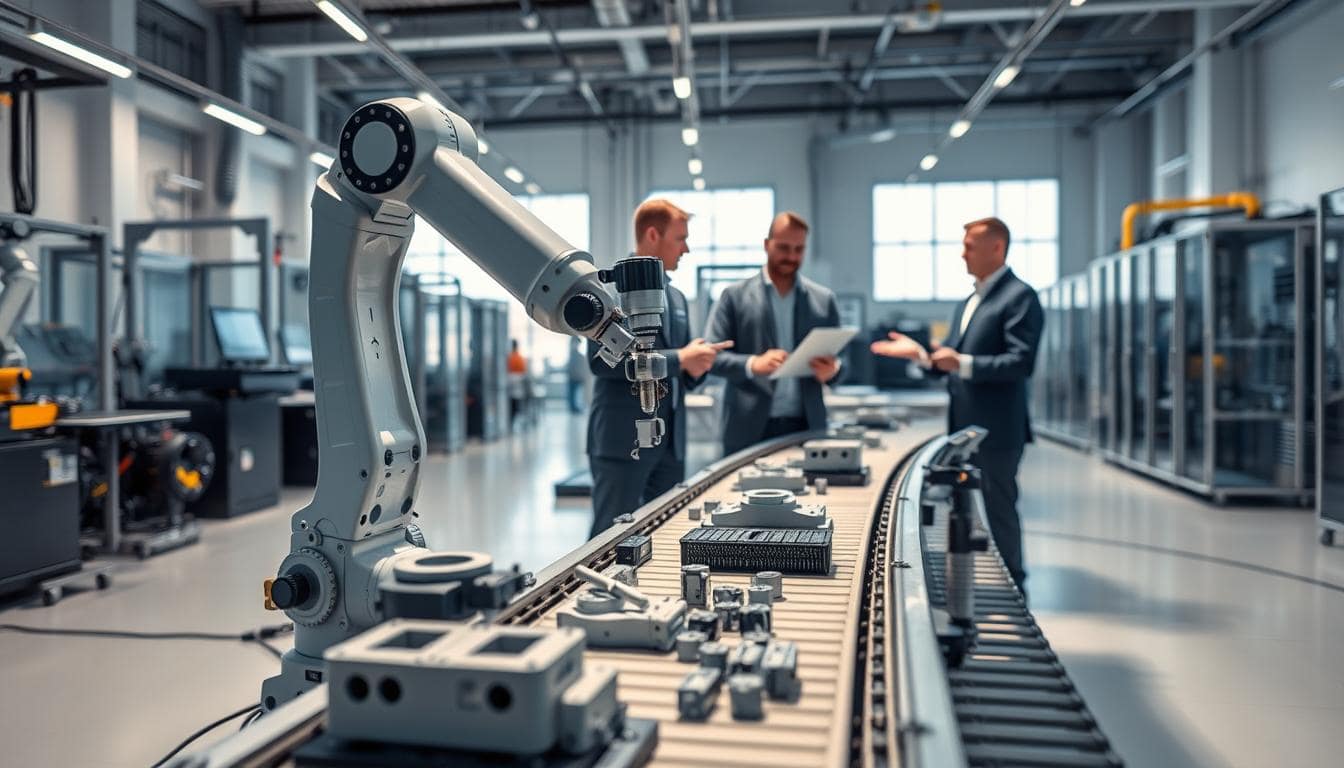
Ever tried using a standard screwdriver on a Phillips head? That’s what off-the-shelf automation feels like in real manufacturing. Generic solutions look great in brochures but crumble under actual production pressures.
True transformation happens when systems are designed for your specific challenges. It’s not just about replacing human labor – it’s about reimagining what’s possible. We evaluate existing processes and integrate tailored solutions that boost efficiency and quality.
This approach solves labor shortages while delivering surgical precision. For extreme environments, specialized custom robotics handle tasks too dangerous for humans.
The result? Operations evolve from “good enough” to “how did we ever manage without this?” That’s the power of bespoke automation.
Planning for Unique Processes
Planning custom automation is like conducting an orchestra. Each instrument represents a different part of your manufacturing process. You need to know when to let the violins (assembly line) shine and when to add percussion (quality control).
This isn’t about replacing musicians with robots. It’s about creating harmony between both.
We start with “manufacturing therapy.” Your production line shares its secrets. We find out what keeps it up at night and where it feels pressure. This reveals hidden bottlenecks that cost a lot.
ROI studies become more than spreadsheets. They show the soul of your operation. We look at financial and emotional returns. Will this change make your operators happy or upset?
True manufacturing automation isn’t about throwing technology at problems. It’s strategic deployment that would impress Sun Tzu. We design solutions that boost productivity and cut costs.
Innovation comes from understanding what works. Why fix what isn’t broken? Sometimes, the best solutions amplify existing strengths. It’s like giving your reliable truck a turbocharger instead of a new sports car.
Safety improvements often become the star of custom automation planning. When we remove injuries or hazardous tasks, we protect bodies and morale. Happy, healthy workers produce better results than any robot alone.
The planning phase is key to your manufacturing automation journey. Get it right, and design and integration phases will flow smoothly. Ready to see how this planning transforms into robot design?
Robot Design & Prototyping
Welcome to the digital workshop where ideas turn into mechanical wonders. Here, robotics design is more than just plans—it’s your edge in the game.
We use CAD software that would impress even Tony Stark. SolidWorks, Inventor, and AutoCAD are our digital playgrounds. They help us build your robotic team before they hit the factory floor.
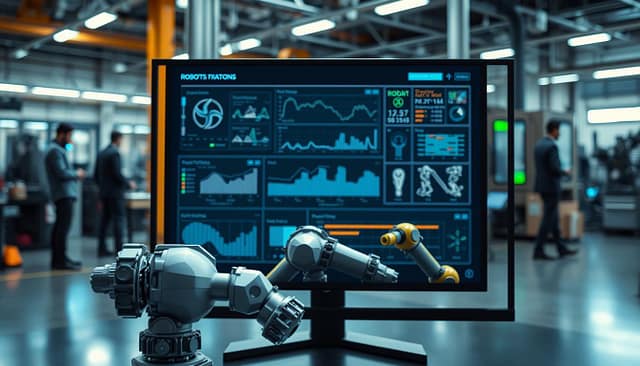
Simulation software lets us test designs in virtual worlds. It’s like building a spacecraft before launch—except our goal is manufacturing perfection, not Mars.
End effectors get special care. They’re not just mechanical hands; they’re your production goals in action. We design them with precision and reliability.
Vision systems are key. Fanuc IR Vision and Cognex systems give your robots sharp vision. They spot defects better than quality control pros after lots of coffee.
Retrofitting old cells shows our expertise. We make old equipment work like new robots. It’s where we bring old tech up to speed.
The prototyping phase is critical. It’s where designs go from theory to reality. We make sure everything works perfectly, even at 3 AM.
CAD Software Comparison for Robotics Design
| Software | 3D Modeling Strength | Simulation Capabilities | Industry Adoption | Learning Curve |
|---|---|---|---|---|
| SolidWorks | Excellent parametric modeling | Advanced motion analysis | Widespread in manufacturing | Moderate |
| Inventor | Strong mechanical design | Integrated stress analysis | Popular in heavy industry | Steep initial learning |
| AutoCAD | Precision 2D drafting | Basic simulation tools | Universal standard | Gentle for 2D, steep for 3D |
Each software has its own strengths in robotics design. Your choice depends on your needs, current setup, and how much digital magic you want.
This phase is about creating robots that understand your production flow. The best robotics design feels like an extension of your team’s skills.
Integration with Legacy Equipment
Integrating new robotics with old equipment is like teaching vinyl records to stream on Spotify. It needs respect for the old and love for the new. We don’t throw away the old like it’s trash. Instead, we make them work together beautifully.
Our team is experts at making old machines and new robots get along. We connect 1990s tools with Fanuc arms and ABB robots with older equipment. It’s like therapy for machines, but with better results.
When we add autonomous mobile robots, things get even better. Your material handling becomes smooth and elegant. These robots move around your facility like they own it.
Our focus on custom robotics integration includes three main areas:
- Retrofitting existing cells with new capabilities
- Reprogramming equipment for modern workflows
- Re-tooling for enhanced performance
We work with big names like Fanuc, Yaskawa Motoman, ABB, Kawasaki, and Kuka. It’s like having the Avengers of robotics, but with better teamwork.
The process of bridging legacy systems with automation needs technical skills and creativity. We solve each project like a puzzle, using technology from different eras.
| Integration Challenge | Traditional Approach | Our Custom Solution | Result |
|---|---|---|---|
| 1990s Machine Communication | Replace entire system | Retrofit communication interface | 85% cost savings |
| Material Handling | Manual cart systems | Autonomous mobile robots | 3x efficiency gain |
| Quality Control | Human inspection | Vision system integration | 99.8% accuracy rate |
| Production Monitoring | Paper documentation | Real-time data integration | Instant performance metrics |
Good integration gives old equipment a new lease on life. It also lets new robotics learn from the past. It’s like wisdom meeting innovation in manufacturing.
Material handling becomes a strategic advantage. Autonomous mobile robots don’t just move things. They create data, optimize routes, and learn your facility’s rhythms. They become the heart of your operation, keeping everything flowing smoothly.
This isn’t just about making old machines work with new robots. It’s about creating harmony between different technologies. The result? A manufacturing symphony where every part works perfectly together.
Training & Support
Teaching your team to use custom robotics without training is like giving a Ferrari to someone who’s only driven golf carts. It’s exciting at first but can end in disaster. Our manufacturing automation education turns fear into skill through practical learning.
We have detailed training programs for all levels, from basic to advanced. We fit our training to your schedule and how you learn best. Our teachers show you how it works in real life, making hard ideas easy to understand.
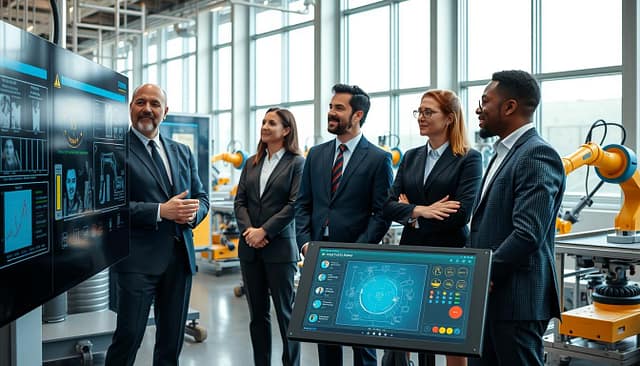
But our help doesn’t stop after training. As a FANUC Certified Service Provider, we offer reliable support. Our 24/7 team is ready to help with any problem, big or small, fast.
We think keeping your systems in top shape is key to success. Regular checks, spare parts, and updates keep your robots running smoothly. It’s like keeping your automation healthy to avoid big problems later.
Our support services include:
- Comprehensive training programs (onsite and classroom)
- 24/7 technical support and emergency repairs
- Preventive maintenance plans tailored to your operation
- Genuine spare parts and system upgrades
- Minimized downtime through proactive monitoring
This all-in approach to training and support makes sure your manufacturing automation investment pays off. We’re here to help your team get better every day, not just at the start.
Case Study: Plant Success Story
Imagine a factory stuck in slow motion, where manual tasks took forever and digital demands were urgent. This was a major problem, like a huge traffic jam. It was so bad, even Kafka would say it was too much.
Our robotics design team came up with a plan. They made the engine sleeve tending process fast and efficient. It was like turning a slow dance into a high-speed ballet.
| Metric | Before Automation | After Custom Robotics | Improvement |
|---|---|---|---|
| Cycle Time | 42 seconds | 19 seconds | 55% reduction |
| Quality Consistency | 87% acceptable | 99.8% acceptable | Near-perfect precision |
| Operator Involvement | Constant manual handling | Supervision only | 80% labor reduction |
| Monthly Output | 15,000 units | 28,500 units | 90% increase |
We worked with OEM suppliers to create a custom robotics cell. It worked seamlessly with old equipment. The Fanuc arms moved parts with the skill of a neurosurgeon and pianist.
Operators used to do the same tasks over and over. Now, they manage advanced systems. It was like a complete career change, making them more valuable than ever.
This success is just one of over 10,000 systems we’ve set up. Our robotics design team believes in making work better, not replacing people.
The factory’s journey shows how custom robotics can change everything. It’s not just about being faster. It’s about making work better for everyone.
Conclusion
Custom robotics is more than just a budget item. It’s a key to success. It’s like switching from dial-up to fiber optic while others are stuck with dial-up.
These systems grow with your business, preparing you for future challenges. It’s not just about keeping up; it’s about leading. Your focus should be on building for tomorrow, not just fixing today.
The world of manufacturing has evolved. Companies using custom robotics lead the market. They set the rules while others try to follow.
Are you ready to take control? Your chance to revolutionize manufacturing is now. Don’t just watch; start winning.


