
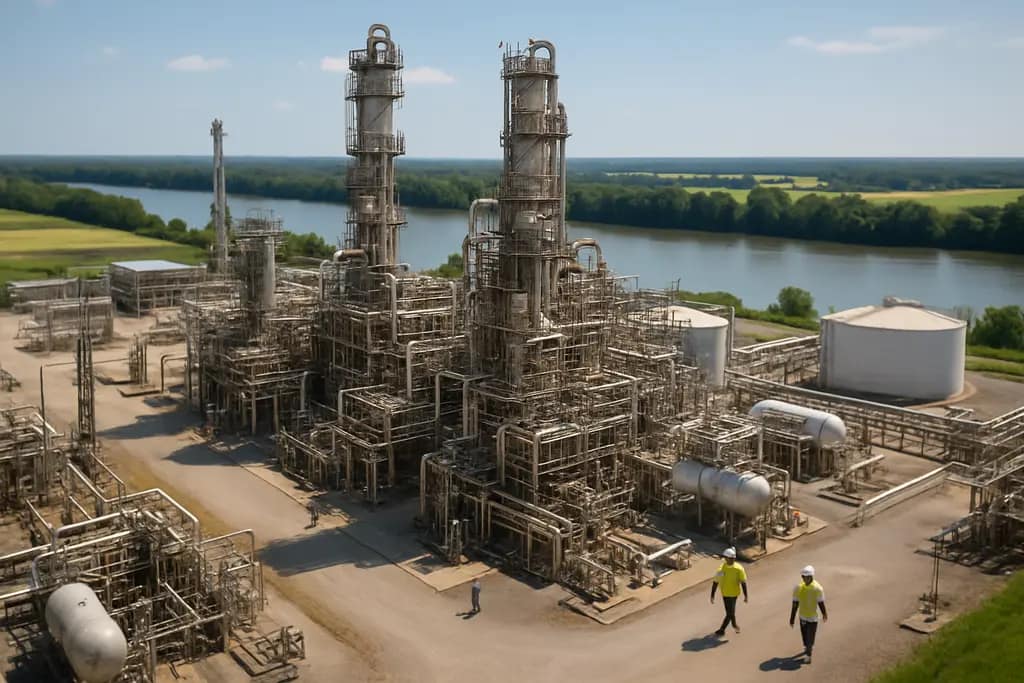
AI Environmental Cleanup at the Paducah Site became a more concrete policy and engineering question after the U.S. Department of Energy announced a new American Energy Hub in Kentucky on August 4, 2026. The announcement placed artificial intelligence, high-performance computing, grid infrastructure, and legacy environmental remediation in the same site-level discussion. That does not mean AI has proven it can shorten Paducah cleanup timelines by itself. It does mean the site now offers a useful case study for examining where data systems may help, where they may fall short, and which constraints remain outside the reach of software.
The Paducah case is unusual because it combines a planned technology campus with one of DOE’s long-running cleanup responsibilities. The former Paducah Gaseous Diffusion Plant stopped commercial uranium enrichment operations in 2013, and facilities returned to DOE in October 2014. Since then, the site has been in deactivation and remediation. Cleanup is projected to extend to 2065, with a total cost estimate of about $17 billion, according to DOE research notes supplied for this analysis.
DOE’s Paducah Energy Hub In Context
Planned Infrastructure And Jobs
DOE said on August 4, 2026 that the new American Energy Hub at Paducah would involve a $100 billion investment, including an AI high-performance computing innovation campus and upgraded energy infrastructure. The same announcement described about 8,000 construction jobs and 600 permanent jobs at full build-out, along with 2 gigawatts of new grid-connected natural gas generation, transmission upgrades, up to 2.6 gigawatts of battery energy storage, and a 1.8 gigawatt AI and HPC innovation campus, as reported in the DOE’s Paducah energy hub announcement.
Those figures indicate large physical and electrical scale. For manufacturing and cleanup planners, the practical question is not whether the campus sounds technically ambitious. The question is whether the computing capacity, power supply, data governance, and cleanup program needs can be connected in ways that produce measurable improvements without creating new environmental, permitting, or operating burdens.
The Cleanup Baseline Matters
Paducah’s cleanup program is not starting from a blank page. Research notes indicate that crews completed segmentation of large converter equipment in the C-333 Process Building in January 2026, while deactivation of the C-337 Process Building began in 2025. The site also contains one of the largest groundwater contamination plumes in DOE’s Environmental Management program, primarily associated with trichloroethylene from the former C-400 Cleaning Building. DOE materials cited in the research notes say the plume’s size or off-site migration has been significantly reduced or reversed over three decades.
That history matters because AI tools depend on historical monitoring records, validated field data, and clear regulatory objectives. A model cannot replace field characterization, sampling quality, hydrogeologic understanding, or legal cleanup decisions. It can only work within the quality and scope of the data it receives.
AI Environmental Cleanup At Paducah
AI Environmental Cleanup Evidence So Far
DOE research notes point to AI use in cleanup under the Genesis Mission, including work at Savannah River National Laboratory using AI and machine learning tools to support soil and water monitoring, forecast pollutant migration, and reduce long-term monitoring and cost burdens. That evidence is relevant to Paducah, but it is not the same as a completed Paducah deployment with verified cost and schedule outcomes.
A cautious reading is needed. AI may help organize large monitoring datasets, compare sensor readings, test migration scenarios, and flag data patterns that merit review by hydrogeologists or remediation engineers. It may also support planning for inspection routes, maintenance intervals, or waste-handling logistics. Yet each of those uses requires validation against site conditions. A model that performs acceptably in one groundwater setting may not perform the same way in another geology, contaminant mix, or monitoring network.
What AI Can And Cannot Show
For AI Environmental Cleanup, the most credible near-term value is decision support rather than autonomous decision-making. A system could help analysts identify possible plume movement, test monitoring frequency assumptions, or compare remediation scenarios. It should not be treated as a substitute for regulatory review, public involvement, sampling plans, or engineering judgment.
This distinction is especially relevant at Paducah because DOE is also pursuing a cleanup strategy known as Decision 2029. According to the research notes, that effort would consolidate 51 regulatory cleanup decision documents into five distinct decisions covering deactivation and demolition, waste disposal, and remediation. If successful, the approach could accelerate final cleanup decisions by up to 25 years. AI could support document review, data comparison, or scenario analysis, but the acceleration claim belongs to the regulatory strategy, not to AI alone.
Scale Cost And Safety Constraints
Energy Demand And Site Integration
The strongest near-term role for AI Environmental Cleanup may be improving the way technical teams handle scale. Paducah involves demolition, groundwater remediation, potential waste disposal, large structures, and long schedules. The proposed hub also brings major energy infrastructure. That combination raises several questions that require evidence before confident claims can be made.
| Issue | Supported Fact From Research | Practical Implication |
|---|---|---|
| Computing campus | DOE announced a 1.8 GW AI and HPC innovation campus. | High computing demand must be evaluated with energy supply, grid effects, and site operations. |
| Cleanup duration | Paducah cleanup is anticipated to run to 2065. | Digital tools need long-term data stewardship and continuity across contractors and program phases. |
| Groundwater plume | The site has a major TCE-related plume. | Models need validated hydrogeologic and chemical data before they can inform monitoring decisions. |
| Waste pathway | DOE is evaluating an On-Site Waste Disposal Facility, with first waste placement by about 2032 if permitted. | AI cannot bypass permitting, waste acceptance criteria, or safety case requirements. |
These constraints do not argue against using advanced analytics. They argue for defining success in testable terms. Useful metrics could include whether models improve monitoring efficiency, reduce false alarms, shorten document review time, or provide better scenario comparison. Claims about faster cleanup should be tied to verified program outcomes, not assumed from computing capacity.
Regulatory Pathways And Community Trust
Environmental cleanup is not only a technical problem. It involves regulators, workers, nearby communities, waste acceptance criteria, long-term stewardship, and public records. If permitted, the proposed On-Site Waste Disposal Facility at Paducah could begin construction after a Record of Decision, with first waste placement by about 2032. AI tools may help organize waste characterization data, but they cannot replace the permitting process or the need to explain assumptions clearly.
Communication also needs care. Readers comparing science communication across the same publishing network may see a similar caution at Wills Glaucoma suggesting that technical findings should align with the broader evidence base, ensuring accurate and domain-specific representations. In the Paducah case, that means keeping cleanup claims separate from broader claims about AI capability.
Evidence Boundaries For Plant And Cleanup Teams
Data Quality Before Model Claims
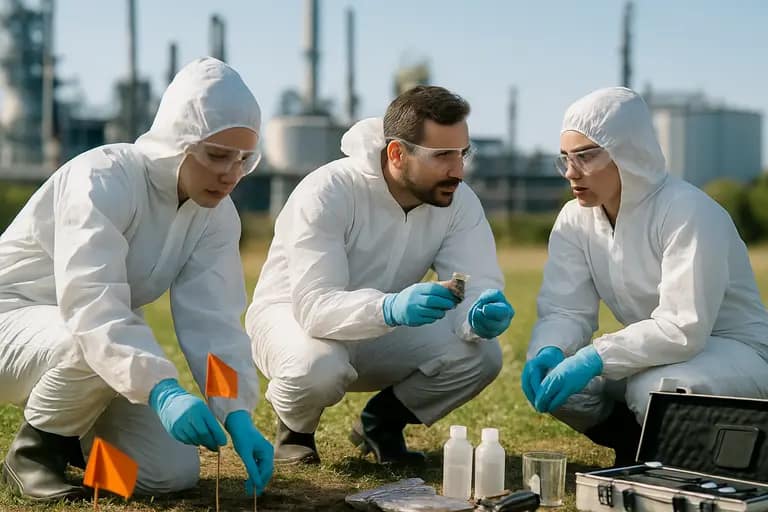
Environmental datasets can include gaps, changes in sampling methods, changing detection limits, inconsistent location records, and contractor-to-contractor differences in data systems. Before AI Environmental Cleanup tools can provide dependable support, teams need data lineage, quality flags, version control, and clear responsibility for model updates. These tasks are not secondary clerical work; they define whether model outputs can be interpreted with confidence.
For industrial sites and manufacturing teams watching the Paducah case, the lesson is familiar. Analytics can help when the process is instrumented, the data definitions are stable, and the operating question is clear. If data are incomplete or poorly governed, the result may be a faster way to produce uncertain charts. The same caution applies to DOE research workflows discussed in Genesis Mission funding analysis, where early-stage research support should not be read as proof of deployment results.
Cost And Schedule Claims Need Verification
Paducah’s scale makes cost and schedule discipline central. A projected $17 billion cleanup cost and a 2065 completion horizon leave room for improvement, but they also leave room for overclaiming. AI may reduce some monitoring or analytical burdens if validated, but field work, demolition sequencing, worker safety, waste packaging, transportation, disposal decisions, and regulatory approvals remain major drivers.
A sound evaluation plan would separate AI-assisted gains from other program changes. If cleanup decisions move faster, analysts should ask whether the cause was data modeling, document consolidation, staffing, contracting, regulatory alignment, field progress, or some combination. Without that separation, it would be difficult to know which methods should be repeated elsewhere.
AI Environmental Cleanup At Paducah Site
The Paducah case makes AI Environmental Cleanup a practical topic rather than an abstract forecast. DOE’s August 2026 hub announcement created a setting where high-performance computing, new power infrastructure, and a legacy cleanup mission may operate side by side. That combination could support better data analysis, monitoring design, and scenario planning, but the evidence does not yet support claims that AI has solved Paducah’s cleanup challenges.
The more defensible position is narrower and more useful. AI should be assessed as a decision-support layer that must prove itself against field data, regulatory requirements, safety constraints, and cost records. If Paducah produces verified reductions in monitoring burden, faster technical reviews, or clearer plume forecasts, those results would be valuable. Until then, the case should be treated as an active test of integration, not as proof that computing infrastructure alone can shorten environmental remediation.


