

Managing a modern industrial facility is like trying to conduct a symphony with old and new instruments. The sheet music is fading, and you’re expected to hit every note. Efficiency, safety, and profit pressure make daily challenges overwhelming.
Expert guidance is like a wise team for your operational headaches. We observe and analyze with a depth that impresses even chess grandmasters.
This partnership turns guesswork into a data-driven masterplan. It’s the shift from firefighting to building a facility that doesn’t catch fire.
True technical consulting is about creating what’s possible. It turns your plant into a performance powerhouse. Are you ready to see how?
When to Seek Technical Advice
Every plant manager faces a moment when things go wrong. The numbers drop, costs rise, and old equipment sounds like it’s dying. This isn’t just a bad day; it’s a sign of deeper issues.
Knowing when to ask for engineering advice can make all the difference. It’s not just about a bad day or a letter from the regulator. It’s about seeing the big picture when your team is too busy to notice.
Being proactive is always the best choice. It’s like buying insurance for your business. You pay a little now to avoid big problems later.
So, when do you know you need help?
- The Aging Equipment Conundrum: Old machinery is a big problem. Companies like FCS can make it work better. If your equipment is costing you money, it’s time to act.
- The Scalability Puzzle: Growing your business means your systems must grow too. You need a plan for the future, not just fixes for now.
- The Data Black Hole: Your MES system should talk to other systems. But often, it doesn’t. Companies like CentricPA can help you see this.
- The Regulatory Shift: New rules come, and you must adapt. Good engineering advice helps you stay ahead of these changes.
- The Cybersecurity Gap: Protecting your plant in today’s world is a big challenge. It’s not just about IT; it’s about keeping everything safe.
Your team is great, but they’re busy fighting fires. They might not have time to think about the future. That’s where an outside expert comes in.
Asking for technical advice at key moments is smart. It’s not about giving up; it’s about planning for success. You’re not just fixing a problem; you’re building a better future.
Role of Consultants in Plant Upgrades
Consultants are more than just helpers in plant upgrades. They are the directors, script doctors, and stunt coordinators. They manage the chaos of changing systems while keeping your production line running smoothly. It’s like a delicate dance with forklifts.
Our main goal is to create true process optimization. We don’t just give old habits a new name. We re-engineer workflows so your new equipment works well. Think of us as industrial translators, making complex manuals easy for your team to follow.

This translation is key. A new PLC system might promise great data management. But without context, it’s just numbers. We make these systems work for your plant, improving quality batch after batch. This is where process optimization really happens.
Then, we do a reality check with operability and maintainability analysis. This is our specialty. We design machines your team can fix at 2 AM on a Sunday. We ask tough questions to ensure your system works well and is easy to maintain.
Our work ends with plant-specific documentation and training. We don’t just give you a USB drive. We teach your team how to use the upgrade. This turns a chaotic project into a lasting advantage.
| Consultant’s Actual Role | Common Misconception | Outcome Differential |
|---|---|---|
| Translator & Context Builder: Converts vendor specs into operational logic. | Just another vendor salesperson. | Systems that work with your people, not against them. |
| Futurist & Architect: Designing for scalability and future tech integration. | Focused only on today’s immediate fix. | A platform ready for tomorrow’s demands. |
| Reality-Check Provider: Conducts operability/maintainability (O&M) analysis. | Only cares about the initial installation. | Lower lifetime costs and higher asset availability. |
| Process Optimization Architect: Holistically re-engineers workflow, not just hardware. | Simply swaps out old equipment for new. | Sustained gains in efficiency and quality. |
| Knowledge Bridge Builder: Develops custom documentation and training. | Drops off a manual and leaves. | Empowered internal teams and lasting competency. |
This symphony of process optimization doesn’t compose itself. It needs a conductor who knows the score and the orchestra. We bridge the gap between new technology and your daily work. The result? Better throughput, streamlined processes, and a team that keeps the music playing.
Common On-Site Challenges Resolved
Starting a new project is like solving a mystery. The clues are in the data, and the problem is lost productivity. As a technical consultant, I’m the detective who finds the solution.
My method is to first walk through the site carefully. It’s not just a walk; it’s a search for ways to improve. I talk to the people who work there to learn more. Then, I look at the digital side, checking networks and data flows.
Let’s solve some common problems. For example, “The Genealogy Mystery” is when we can’t find a batch. Without tracking, it’s hard to find. We fix this by using a system that tracks everything in real time.
“The Silent Cash Bleed” is another issue. Equipment might not be running efficiently, costing a lot. We test it using standards like ASME PTC codes. This shows if it’s the equipment or the process that’s the problem.
“The Digital Swiss Cheese” is about security. Old systems can be vulnerable. We make the network secure and data flows smoothly. This makes the system strong, not weak.
At the heart of solving these problems is root cause analysis. It helps us find the real issue, not just the symptoms. This is what makes a consultant’s work last.
In the end, technical consulting turns problems into solutions. It’s about finding answers, not just accepting issues. This work is similar to solving problems in engineering across many fields. The problems don’t stand a chance.
Client Stories: Before & After
Imagine a vast, empty desert plot under a scorching sun, tasked with becoming a state-of-the-art pharmaceutical plant—that’s where our story begins. For a global client, akin to Wood’s work with Pfizer in Saudi Arabia, the “before” picture wasn’t just sand. It was a sprawling puzzle of international regulations, zero-tolerance quality mandates, and a supply chain longer than a Tolstoy novel.
The sheer scale of the ask demanded more than contractors; it demanded strategic engineering advice. The pressure wasn’t just about pouring concrete on time. It was about building a facility so faultless it could pass inspection by the most skeptical critic—imagine a food critic, but for airlocks and piping.
So, how do you turn regulatory chaos into operational harmony? You start with a map—a site master plan that’s less of a drawing and more of a geopolitical treaty. Then, you layer in conceptual, basic, and detailed design phases. Each phase is a negotiation between ambition and physics.
This is where integrated engineering advice moved from a line item to the lead actor. It wasn’t just about approving drawings from an office a thousand miles away. It was on-site construction support, real-time problem-solving when local material specs didn’t match the global manual, and commissioning protocols so thorough they’d make a Swiss watchmaker nod in approval.
The transition? It’s the narrative arc we live for. The maze of permits became a clear path. The logistical nightmare became a synchronized dance. The immense pressure to be perfect was absorbed and distributed across a team that spoke the same technical language.
The ‘after’ picture is a masterclass in what targeted engineering advice can achieve. The empty plot is now a humming facility. The abstract risk is now quantifiable, managed reliability. It’s the difference between hoping a system works and knowing it will, because you were there from the first soil test to the final qualification signature.
This story isn’t unique. It’s a pattern. The right consultant doesn’t just deliver a plant; they deliver operational certainty. They don’t just solve problems; they are the authors of a new story, written with the ink of reliable engineering advice. From chaos to control. That’s the tangible arc, and it’s the only metric that truly matters.
Integrating Consulting with Internal Teams
Adding an external consultant to your team should be smooth, not like having an unwanted guest. The fear of a consultant who overwhelms you with too much information is real. It’s a sign of a bad approach we don’t accept.
We believe in working together, not taking over. Our goal is to improve your process optimization with your help, not against it. We act as intellectual sparks, listening first and learning from your team’s deep knowledge.
It’s not about being the smartest. It’s about unlocking your team’s collective wisdom. Companies like FCS show how understanding your unique needs leads to better tools. We help create On-the-Job Training manuals that fit your plant’s needs.
Like CentricPA, we match our approach to your manufacturing expertise. We don’t offer generic solutions. Instead, we work with your best team members to create clear, daily tasks they can handle.
Our goal is simple: to become unnecessary. The only thing that matters is empowering your team. You’ll have a smarter, more confident team that can do things on their own.
Finding a good partner is key. The difference is clear.
| Aspect | Bad Consultant Integration | Sage-Like Integration |
|---|---|---|
| Primary Mindset | Expert Dictation | Collaborative Catalyst |
| Knowledge Transfer | One-way presentation | Two-way absorption & codification |
| Deliverable Focus | Generic final report | Custom OJT manuals & programs |
| Team Outcome | Confusion & dependency | Ownership & empowered capability |
| Long-term Goal | Repeat business | Your sustained, independent process optimization |
The right integration is like a masterclass where your team shines. The consultant’s final report is a guide your team helped create.
Selecting the Right Partner
Choosing a technical consulting partner is like picking a team for a big job. You need people with the right skills, no conflicts, and a plan for when it’s over. It’s not just a deal; it’s a partnership that affects your future.
You can’t just pick a team like you order food. The team’s culture must fit your needs. For example, if you need help with thermal efficiency, a company like FCS might be perfect. If you’re looking to change digitally, CentricPA could be your go-to.
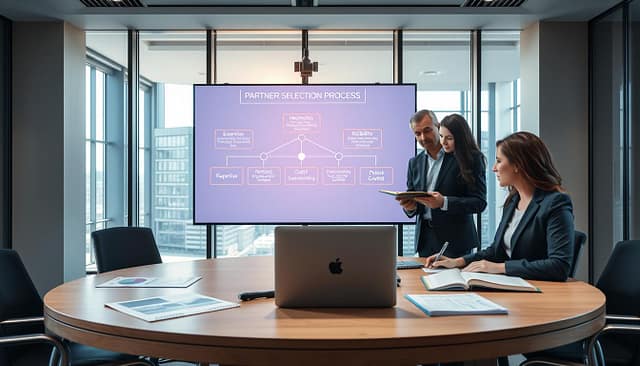
Don’t be fooled by fancy brochures. You need a solid plan to choose the right partner. Ask tough questions and see if they’re ready for the hard work ahead.
Check if they have any hidden ties to certain vendors. A good partner offers tailored solutions, not generic ones. Their service should be made just for you, not a one-size-fits-all approach.
Here’s a checklist to help you find the right partner:
- Post-Report Phase: Do they help with implementation, or do they leave after the report?
- Vendor Agnosticism: Are their solutions free from brand ties, focusing on your success?
- Customization Depth: Can they show a history of solving problems in a unique way?
- Cultural Fit: Do they speak your language, or do they use jargon you can’t understand?
The right technical consulting partner feels like a true partner, not just a vendor. They know your specific challenges and help you navigate them. Together, you’ll achieve great things.
Don’t choose based on the website alone. Pick the partner who understands your mission and operations. The best choice is one that sees the bigger picture, not just the money.
Cost/Benefit Analysis
Seeing engineering advice as just a cost is like not seeing the value in a fire extinguisher. It’s more than just the price. It’s about the return on the knowledge you gain.
What’s the real cost of not knowing how to run your operations smoothly? It’s much higher than any consultant’s fee. It includes the cost of inefficiency, unplanned downtime, fines, and missed opportunities.
Let’s look at the numbers. A thermal performance review costs upfront. But it saves you money on fuel every day. This is not just a cost; it’s a long-term investment.
A good cybersecurity assessment is not just about IT. It’s about avoiding big costs. The right engineering advice can turn problems into opportunities.
CentricPA shows that improving profitability and reducing environmental impact is possible. It’s not just talk. It’s a real way to make money while doing good.
The old way of looking at costs is outdated. It asks how much something costs. The better question is, what happens if you don’t do it? That’s where the real value is.
Think of it as investing in a predictable future. You’re not just buying a report. You’re investing in a future where things run smoothly and profits are high. This knowledge pays off for a long time.
Before you say no to engineering advice, think about what you’ll lose without it. The most expensive advice is the advice you never get.
Conclusion
Think of this article as a guide for a new way of thinking. We began by knowing when to ask for help and ended by looking at the real benefits. It’s not just about hiring someone. It’s about changing how you think.
Getting expert advice is a sign of true humility. It’s not just fixing a problem. It’s bringing in a fresh view that sees everything clearly. This change is key to improving how you solve problems, big or small.
Today’s industrial places are like living systems, not just machines. They need more than tools and manuals to run well. They need smart thinking. A consultant brings a new perspective, turning data into useful actions.
So, the big question is: Can you afford to keep things as they are? Or can you afford to improve? The journey to excellence starts with asking the right questions. It’s time to start that conversation.


