
How to Choose the Right URS for Your Needs
When it comes to selecting a URS, it’s essential to consider your specific requirements. The right URS should align with your business goals and objectives. By understanding your needs, you can make an informed decision and choose a URS that will help you achieve your desired outcomes.
One important factor to consider is the custom design process. Look for a URS that offers a tailored approach to meet your unique requirements. This ensures that the URS is designed to address your specific challenges and opportunities, providing a customized solution that fits your business model.
Another key consideration is the level of customization. A URS that offers high customization options allows you to tailor the system to your specific needs. This means you can adapt the URS to align with your business processes, workflows, and requirements, ensuring seamless integration and optimal performance.
It’s also important to evaluate the URS’s scalability. As your business grows and evolves, your URS should be able to adapt and accommodate your changing needs. Look for a URS that offers scalability options, allowing you to easily expand or modify the system as required.
Lastly, consider the level of support and training provided by the URS vendor. A reliable URS vendor will offer extensive support and training resources to ensure a smooth implementation and effective utilization of the URS. Look for vendors that provide dedicated support teams, online resources, and training programs to help you maximize the benefits of your URS.
By carefully evaluating these factors, you can choose the right URS for your needs. Remember, the right URS will help you achieve your business goals, streamline your operations, and drive growth and success.
FAQ
Q: What is the custom design process at FRS?
A: At FRS, we start by understanding your needs and preferences. Then, we create a custom design that fits your style and requirements. Our team works closely with you to ensure every detail is perfect.
Q: What types of custom designs does FRS offer?
A: FRS offers a wide range of custom designs, including custom t-shirts, hoodies, and more. We can create unique designs for any occasion or event.
Q: How can I get started with the custom design process at FRS?
A: To get started, simply contact us at 1-800-456-4444 or email us at info@frs.com. Our team will guide you through the process and help you create your custom design.
Q: What makes FRS’s custom design process unique?
A: Our custom design process is unique because we focus on creating designs that reflect your personal style and preferences. We work closely with you to ensure every detail is perfect.
Q: Can I see examples of FRS’s custom designs?
A: Yes, you can see examples of our custom designs on our website. We have a gallery of designs that showcase our creativity and attention to detail.
Q: How long does the custom design process take?
A: The time it takes to complete the custom design process depends on the complexity of the design and the materials chosen. Our team will provide you with a timeline and keep you updated throughout the process.
Q: Can I make changes to my custom design?
A: Yes, you can make changes to your custom design at any stage of the process. Our team is here to help and will work with you to ensure you are completely satisfied with the final design.
Q: What materials can I choose from for my custom design?
A: At FRS, we offer a wide range of materials for custom designs, including high-quality fabrics and durable materials. Our team will help you choose the best materials for your design.
Q: How do I place an order for a custom design?
A: To place an order for a custom design, simply contact us at 1-800-456-4444 or email us at info@frs.com. Our team will guide you through the ordering process and answer any questions you may have.
Q: What is the quality of FRS’s custom designs?
A: At FRS, we take pride in the quality of our custom designs. We use high-quality materials and attention to detail to ensure that every design meets our standards.
Q: Can I see examples of FRS’s custom designs?
A: Yes, you can see examples of our custom designs on our website. We have a gallery of designs that showcase our creativity and attention to detail.
Q: How can I contact FRS for more information about custom designs?
A: You can contact us at 1-800-456-4444 or email us at info@frs.com. Our team is here to answer any questions you may have and provide more information about our custom design process.
FAQ
Q: What is a custom design process?
A: A custom design process is a step-by-step approach to creating a unique and personalized product. It involves working closely with a designer to bring your ideas to life.
Q: How does a custom design process work?
A: The custom design process typically starts with a consultation where you share your ideas and requirements. The designer then creates a concept based on your input. After receiving feedback, the designer refines the design until it meets your expectations. Once the design is finalized, it is produced and delivered to you.
Q: What are the benefits of a custom design process?
A: A custom design process offers several benefits. It allows you to have complete control over the design and ensures that the final product meets your specific needs and preferences. It also allows for creativity and personalization, resulting in a unique and one-of-a-kind product.
Q: How can I get started with a custom design process?
A: To get started with a custom design process, you can reach out to a professional designer or a company that offers custom design services. They will guide you through the process and help you bring your ideas to life.
Q: What are some examples of custom design projects?
A: Custom design projects can vary widely. Some examples include creating a custom logo for your business, designing a personalized piece of jewelry, or even creating a custom home. The possibilities are endless, and the custom design process allows you to explore your creativity and bring your unique ideas to life.
Requirements Flowdown: URS→FRS→SDS, traceability matrix
This stage is all about the ‘how.’ It’s where dreams and limits meet in a world of mechanics and code. Here, everything gets a precise language lesson.
Imagine a game of telephone where the message gets clearer with each person. It starts with the User Requirement Specification (URS). This is the client’s dream in words: “The machine shall have a cycle time under 5 seconds” or “The machine shall not maim operators.” These are important but vague.
Our task is to make this clear. The URS leads to the Functional Requirement Specification (FRS). Here, “shall not maim” gets a detailed plan. It becomes: “All access points to hazardous motion shall require a two-handed, time-separated actuation to initiate.” We’re getting specific.
The FRS then leads to the Specific Design Specification (SDS). This is the final, clear instruction. Our safety function now reads: “Install Brand X safety-rated light curtains with a resolution of 14mm on Stations A & B, interfaced with the safety PLC via Category 4 dual-channel circuits.” Now we can buy, build, and test it. This detailed flowdown is key to a solid custom design process.
The magic happens in the traceability matrix. It’s like the design’s DNA. It shows every part and software’s origin back to the original business need.
This is powerful. It stops us from getting lost in details. Two years later, when someone asks about a $15,000 safety door, we can show its history. This traceability is what makes a custom design process reliable.
The table below shows how this works for different needs:
| User Requirement (URS) – The ‘What’ | Functional Requirement (FRS) – The ‘How’ | Specific Design Spec (SDS) – The ‘Exactly How’ |
|---|---|---|
| The system shall be easy to clean for sanitation. | All surfaces in product contact zones shall have a smooth finish with no crevices >1mm. | Use 304 stainless steel with a #4 brushed finish. All welds to be ground flush and polished. No fasteners exposed in zone. |
| The machine must integrate with the existing factory network. | The machine controller shall communicate production data via standard Ethernet/IP protocol. | Implement a Allen-Bradley 5069-L306ERM PLC with an embedded EtherNet/IP port. Data structure to match plant template ‘PROD_VER_2.1’. |
| The machine shall not maim operators (Safety). | Hazardous pinch points shall be guarded with interlocked access. | Install a Rockwell Allen-Bradley GuardMaster 440G-R23030 safety switch on access door. Interface with GuardLogix safety PLC input. |
This isn’t just about paperwork. It’s the foundation of teamwork. The flowdown process makes sure everyone is on the same page. It’s the ultimate custom design process because it explains every decision. It turns a collection of parts into a solution to a business problem.
Just like a structured design process for a home, this engineering ensures the machine solves the problem it was made for. No more, no less.
Custom Design Process
At Alibaba Printing, we take pride in our custom design process. It’s a journey that ensures your custom mouse pad is not just functional but also a reflection of your personal style. Our approach is meticulous, starting with a detailed consultation to understand your vision and preferences.
Consultation and Design
The first step in our custom design process is a thorough consultation. This is where we sit down with you to discuss your ideas, preferences, and requirements. Our team of experts will guide you through various design options, ensuring that your vision is translated into a unique mouse pad design.
Proofing and Approval
Once the design concept is finalized, we move to the proofing stage. Here, you’ll receive a digital proof of your custom mouse pad design. This allows you to review and approve the design before we proceed to production. We believe in transparency and want to ensure that you are completely satisfied with the final design.
Production and Quality Assurance
After receiving your approval, our skilled production team gets to work. We use high-quality materials and state-of-the-art printing techniques to bring your custom mouse pad to life. Our quality assurance process ensures that every mouse pad meets our high standards, guaranteeing a product that is both durable and visually appealing.
Our custom design process is designed to make your experience seamless and enjoyable. From the initial consultation to the final production, we are committed to delivering a product that exceeds your expectations. Trust Alibaba Printing for your custom mouse pad needs, and let us help you create a unique and functional accessory that reflects your personal style.
Custom Design Process
At Alibaba Printing, we take pride in our custom design process. It’s a journey that ensures your custom mouse pad is not just functional but also a reflection of your personal style. Our approach is meticulous, starting with a detailed consultation to understand your vision and preferences.
Consultation and Design
The first step in our custom design process is a thorough consultation. This is where we sit down with you to discuss your ideas, preferences, and requirements. Our team of experts will guide you through various design options, ensuring that your vision is translated into a unique mouse pad design.
Proofing and Approval
Once the design concept is finalized, we move to the proofing stage. Here, you’ll receive a digital proof of your custom mouse pad design. This allows you to review and approve the design before we proceed to production. We believe in transparency and want to ensure that you are completely satisfied with the final product.
Production and Quality Assurance
After receiving your approval, our skilled craftsmen bring your design to life. We use high-quality materials and state-of-the-art printing techniques to ensure that your custom mouse pad is durable and visually appealing. Our quality assurance process ensures that every mouse pad meets our high standards, guaranteeing a premium product that you’ll be proud to use.
Our custom design process is designed to make your experience seamless and enjoyable. From the initial consultation to the final production, we are committed to delivering a product that exceeds your expectations. Trust Alibaba Printing to create a custom mouse pad that reflects your unique style and enhances your productivity.
Risk & Safety: DFMEA/PFMEA, SISTEMA calc for PL, guarding & interlocks
Welcome to the part of custom machine design where we think like pessimists. We’re not being gloomy; we’re being smart. We ask ourselves, “How will you try to hurt someone today?” We don’t rely on feelings. Instead, we use careful analysis.
Our systematic paranoia is shown through DFMEA (Design Failure Mode and Effects Analysis) and PFMEA (Process FMEA). They are like pre-mortems. Before we start, we imagine every possible failure. A bearing seizes, a sensor fails, or software hangs.
The goal is to find and fix risks. A high-risk score means we take action. We add more sensors, use better materials, or create mechanical backups. The DFMEA and PFMEA guide us to make real changes.
But we need numbers to prove safety. That’s where SISTEMA comes in. We don’t just add guards. We show mathematically that our safety systems work. We aim for a certain Performance Level (PL).
Our calculation looks at reliability, diagnostic coverage, and design. It shows we meet safety standards. The guard and interlock are more than just parts. They’re proof of our safety model.
This work helps during setup. The “Risk Assessment” isn’t just paperwork. It’s our evidence from DFMEA, SISTEMA, and safety designs. It shows we’ve looked for and fixed problems.
The guards and interlocks on the machine are not an afterthought. They’re a key part of our defense. They help everyone feel safe. In custom automation, safety means a good night’s sleep.
Custom Design Process
At Alibaba Printing, we take pride in our custom design process. It’s a journey that ensures your custom mouse pad is not just functional but also a reflection of your personal style. Our approach is meticulous, starting with a detailed consultation to understand your vision and preferences.
Consultation and Design
The first step in our custom design process is a thorough consultation. This is where we sit down with you to discuss your ideas, preferences, and requirements. Our team of experts will guide you through various design options, ensuring that your vision is translated into a unique mouse pad design.
Proofing and Approval
Once the design concept is finalized, we move to the proofing stage. Here, you’ll receive a digital proof of your custom mouse pad design. This allows you to review and approve the design before we proceed to production. We believe in transparency and want to ensure that you are completely satisfied with the final design.
Production and Quality Assurance
After receiving your approval, our skilled production team gets to work. We use high-quality materials and state-of-the-art printing techniques to bring your custom mouse pad to life. Our quality assurance process ensures that every mouse pad meets our high standards, guaranteeing durability and longevity.
Our custom design process is designed to make your experience seamless and enjoyable. From the initial consultation to the final production, we are committed to delivering a product that exceeds your expectations. Trust Alibaba Printing for your custom mouse pad needs, and let us help you create a unique and functional accessory that reflects your personal style.
FAT/SAT Planning: acceptance criteria, run-at-rate, documentation
If the custom design process were a show, the Factory Acceptance Test would be its opening night. But only the crew would be there. It’s like a dress rehearsal, where we show the machine works well before the real audience.
The acceptance criteria are very clear. They say things like: “Achieve a cycle time of 2.3 seconds ±0.1 for 500 consecutive cycles with a reject rate of can work.” We’re proving it will work, every time.
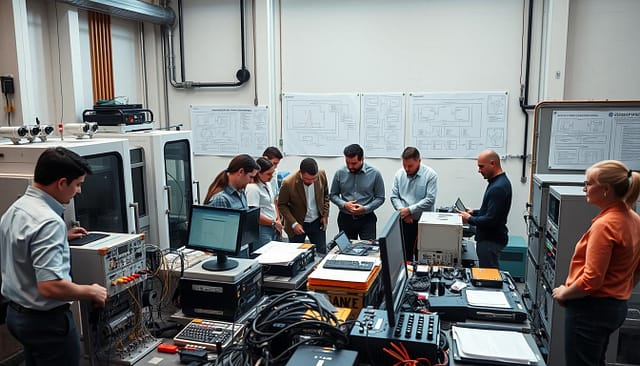
Then, we test the run-at-rate. This isn’t just about a few good cycles. It’s about how well the machine does all day long. Can it keep up when it’s working non-stop? Or does it get tired after a while?
Every little change during FAT is written down in detail. This paperwork is like the machine’s first medical record. Passing FAT means the machine works as promised in our lab.
Now, the Site Acceptance Test happens. The machine goes to your place, where it meets your unique setup. It has to work well in your environment, not just ours.
SAT tests the machine again, but this time in your real-world setting. It checks if our custom design process worked for your specific needs. The machine must perform well in your place, with all its quirks.
The documents from both tests serve two main purposes:
- Baseline performance metrics: They help with future maintenance or troubleshooting
- Contractual proof of compliance: They show that we met our promises
- Training foundation: They help operators know what’s normal
- Continuous improvement starting point: You can’t improve what you haven’t measured
Think of FAT/SAT as the machine’s birth certificate and first report card. It’s not just about following rules—it’s about making sure the machine works as promised. The whole custom design process leads up to these tests, where we see if our promises are true.
Smart companies see this documentation as valuable. It helps them understand how the machine is doing over time. Is it slower now? Check the SAT charts. Has the reject rate gone up? Look at the original criteria.
In short, FAT/SAT turns guesses into facts. And in manufacturing, facts are what really matter.
FAQ
Q: What is the stage-gate process?
A: The stage-gate process is a structured approach to managing projects. It involves a series of stages, each with its own set of criteria and decision points. This process helps ensure that projects are well-planned, executed, and monitored throughout their lifecycle.
Q: How does the stage-gate process work?
A: The stage-gate process works by dividing a project into distinct stages. Each stage has its own set of criteria and decision points. Projects progress from one stage to the next based on meeting these criteria and obtaining approval from stakeholders.
Q: What are the stages of the stage-gate process?
A: The stage-gate process typically consists of several stages, including idea generation, feasibility study, business case development, detailed design, testing and validation, and launch. Each stage has its own set of criteria and decision points.
Q: What are the benefits of the stage-gate process?
A: The stage-gate process offers several benefits, including improved project management, enhanced decision-making, increased transparency, and better resource allocation. It helps ensure that projects are well-planned, executed, and monitored throughout their lifecycle.
Q: How can I implement the stage-gate process in my organization?
A: To implement the stage-gate process in your organization, you can start by defining the stages and criteria for each stage. Establish a clear decision-making process and ensure that stakeholders are involved at each stage. Develop a project management framework and provide training to project managers and team members.
Q: What are the challenges of implementing the stage-gate process?
A: Implementing the stage-gate process can be challenging. It requires a structured approach to project management and a willingness to adapt to changing circumstances. It also requires effective communication and collaboration among stakeholders. Overcoming these challenges requires careful planning, training, and continuous improvement.
Q: How can I optimize the stage-gate process?
A: To optimize the stage-gate process, you can focus on continuous improvement and process refinement. Regularly review and refine the stages, criteria, and decision-making process. Implement process automation and leverage technology to streamline project management. Provide ongoing training and development opportunities for project managers and team members.
Q: What are the best practices for implementing the stage-gate process?
A: Some best practices for implementing the stage-gate process include establishing clear goals and objectives, defining roles and responsibilities, and ensuring effective communication and collaboration among stakeholders. Regularly review and refine the process, and provide ongoing training and development opportunities for project managers and team members.
Q: What are the benefits of the stage-gate process?
A: The stage-gate process offers several benefits, including improved project management, enhanced decision-making, increased transparency, and better resource allocation. It helps ensure that projects are well-planned, executed, and monitored throughout their lifecycle.
Q: How can I optimize the stage-gate process?
A: To optimize the stage-gate process, you can focus on continuous improvement and process refinement. Regularly review and refine the stages, criteria, and decision-making process. Implement process automation and leverage technology to streamline project management. Provide ongoing training and development opportunities for project managers and team members.
Q: What are the best practices for implementing the stage-gate process?
A: Some best practices for implementing the stage-gate process include establishing clear goals and objectives, defining roles and responsibilities, and ensuring effective communication and collaboration among stakeholders. Regularly review and refine the process, and provide ongoing training and development opportunities for project managers and team members.
Training, Spares, and Handover Package
Delivery day feels like a graduation. But the real learning starts when we leave. The machine works, and everyone cheers. Then, you’re left to handle it alone, feeling confident.
Training isn’t just a lecture. It’s about giving you what you need to know. We focus on what’s essential, not just nice to know. Your team will learn how to run the machine, fix it, and manage it.
This way, your team will truly understand the machine. It’s like going from following a recipe to knowing how ingredients work together.
The spare parts list is carefully chosen. It’s like an emergency kit. We pick the 20 most critical parts that could stop your line.
This isn’t about selling more parts. It’s about managing risks. Having the right parts can fix problems quickly, saving time and money.
The handover package tells the machine’s whole story. It’s like a detailed biography from start to finish.
This package includes everything important. You’ll get the final drawings, code, reports, manuals, and a traceability matrix. It covers all the original requirements.
Handover is like a smooth construction handover. It ensures your team knows everything. They’ll have the blueprint, history, and troubleshooting guide all in one place.
Here’s what a complete handover package offers:
| Document Type | Primary Audience | Critical Use Case |
|---|---|---|
| As-Built Drawings & GD&T | Maintenance Technicians | Precision component replacement and alignment |
| Final PLC/HMI Code | Controls Engineers | Troubleshooting logic faults and implementing future modifications |
| FAT/SAT Run-at-Rate Reports | Production Supervisors | Establishing performance baselines and diagnosing throughput issues |
| Curated Spare Parts List | Purchasing & Inventory | Ensuring critical components are in stock before failure occurs |
| Traceability Matrix | Quality & Engineering | Verifying all original requirements have been met and validated |
This final phase completes the custom design process. We’re not just delivering a machine. We’re giving you the skills to run it and fix it in the future.
The true mark of partnership is a solution that grows and produces value long after we’re gone. Your team becomes experts, and the machine becomes reliable. The handover package becomes your knowledge base.
This changes the custom design process from a transaction to a capability transfer. You don’t just get a machine. You get to own it.
Custom Design Process
At Alibaba Printing, we take pride in our custom design process. It’s a journey that ensures your custom mouse pad is not just functional but also a reflection of your personal style. Our approach is meticulous, starting with a detailed consultation to understand your vision and preferences.
Consultation and Design
The first step in our custom design process is a thorough consultation. This is where we sit down with you to discuss your ideas, preferences, and requirements. Our team of experts will guide you through various design options, ensuring that your vision is translated into a unique mouse pad design.
Proofing and Approval
Once the design concept is finalized, we move to the proofing stage. Here, you’ll receive a digital proof of your custom mouse pad design. This allows you to review and approve the design before we proceed to production. We believe in transparency and want to ensure that you are completely satisfied with the final design.
Production and Quality Assurance
After receiving your approval, our skilled production team gets to work. We use high-quality materials and state-of-the-art printing techniques to bring your custom mouse pad to life. Our quality assurance process ensures that every mouse pad meets our high standards, guaranteeing a product that is both durable and visually appealing.
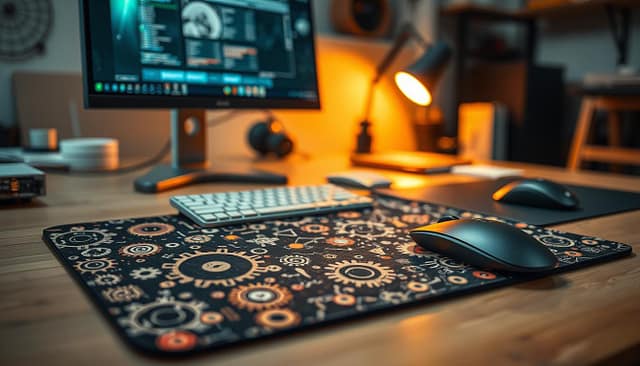
Our custom design process is designed to make your experience seamless and enjoyable. From the initial consultation to the final production, we are committed to delivering a product that exceeds your expectations. Trust Alibaba Printing for your custom mouse pad needs, and let us help you create a unique and functional accessory that reflects your personal style.


