

Benefits of Using Packaging Equipment
Using packaging equipment in your business can bring many benefits. It helps streamline your packaging process, making it faster and more efficient. This means you can get your products ready for shipping or display in no time.
With packaging equipment, you can also ensure that your products are packaged securely. This helps protect them during transit and keeps them looking great. Happy customers are more likely to return and recommend your products.
Another advantage of using packaging equipment is that it helps you save time and money. By automating the packaging process, you can reduce labor costs and minimize the risk of errors. This means you can focus on other important tasks and grow your business.
Investing in packaging equipment also shows that you care about your customers. It demonstrates your commitment to providing high-quality products and excellent customer service. This can help build trust and loyalty with your customers, leading to long-term success.
Overall, using packaging equipment can greatly benefit your business. It helps streamline your packaging process, ensures secure packaging, saves time and money, and shows your commitment to quality. Consider investing in packaging equipment to take your business to the next level.
Core Categories: Assembly, Packaging/End-of-Line, Material Handling/Conveyance, Test/Inspection, Robotics Cells, Machine
If manufacturing were a heist movie, these core categories would be your specialist crew. Each has a unique skill for pulling off the perfect job. Success here requires a synchronized team, not a lone wolf.
Let’s meet the players. First, Assembly—the master of ceremonies. This isn’t one trick. It’s a spectrum of motion and purpose.
Picture the hypnotic spin of a vinyl record. That’s your Rotary Dial Machine, perfect for small parts flying through high-volume runs. Then there’s the deliberate tracking shot of a cinematic masterpiece. That’s the Linear Transfer System, guiding larger, complex assemblies with grace.
Need adaptability? Enter the Flexible Assembly Cell. Often robot-centric, it’s the Swiss Army knife for moderate volumes with pesky variations. It doesn’t just assemble; it improvises.
Next, Packaging and End-of-Line. This is the final critic’s review before your product hits the shelf. It’s where presentation meets precision. A misstep here undoes all the beautiful work upstream.
Think of it as the red carpet moment. The system must be flawless, whether it’s blister packing pharmaceuticals or boxing electronics. For insights into this phase, consider optimizing end-of-line packaging systems for sensitive products.
Then we have the silent heroes: Material Handling and Conveyance. This is the stage crew of your production. They move components with a quiet, relentless efficiency that would make a ballet dancer jealous.
Without this seamless flow, your star performers stand idle. It’s the logistics network that turns isolated stations into a connected factory.
Now, my personal favorite: Test and Inspection. Here, sentimentality gets checked at the door. This category houses the ruthless test rigs—the quality inspectors with zero tolerance for failure.
They poke, prod, measure, and validate. A test rig doesn’t care about your production schedule. Its only loyalty is to the specification sheet. In a world rushing to ship, these systems are the essential gatekeepers.
Lastly, the lead actors: Robotics Cells. These are not mere machines; they’re multi-talented performers. One day they’re welding with arc-perfect accuracy. The next, they’re tending a CNC machine or assembling delicate electronics.
The flexibility of modern robotics cells is their superpower. They redefine what’s possible on your floor, adapting to new scripts (or product lines) with minimal downtime. They’re the embodiment of smart automation.
So, why this culinary toolkit of options? Because a single solution is a straitjacket. Your product’s journey from raw parts to packaged perfection needs different tools for different stages.
The rotary dial sets the pace. The linear transfer guides the complex build. The robotics cells add dexterity. The conveyance systems keep everything moving. The test rigs ensure integrity. And the packaging system delivers the final bow.
Each category is a chapter. Together, they write the entire story. Your job is simply to choose the right authors.
Benefits of AMR Integration in Assembly Automation
Integrating Autonomous Mobile Robots (AMRs) into assembly automation offers numerous benefits. These benefits include enhanced efficiency, improved safety, and increased flexibility. By leveraging AMRs, manufacturers can streamline their production processes and achieve significant improvements in productivity.
One of the key advantages of AMR integration is the ability to automate repetitive tasks. AMRs can handle tasks such as material transportation, assembly, and inspection, freeing up human workers to focus on higher-value tasks that require creativity and problem-solving skills. This automation not only increases efficiency but also reduces the risk of human error, resulting in higher-quality products.
AMRs also contribute to a safer working environment. By automating tasks that involve physical labor, AMRs reduce the risk of accidents and injuries. This is because AMRs operate in a controlled and programmed manner, minimizing the risk of human error and ensuring consistent performance. By integrating AMRs into assembly automation, manufacturers can create a safer workspace for their employees, reducing the risk of workplace accidents and improving overall safety.
Another significant benefit of AMR integration is increased flexibility. AMRs can be easily reconfigured to adapt to changing production requirements. Whether it’s a change in production volume, product design, or workflow, AMRs can quickly adjust to accommodate these changes. This flexibility allows manufacturers to respond quickly to market demands and adapt to new production requirements without the need for extensive reconfiguration or investment in new equipment.
Overall, the integration of AMRs into assembly automation offers numerous benefits, including enhanced efficiency, improved safety, and increased flexibility. By leveraging the capabilities of AMRs, manufacturers can optimize their production processes, improve productivity, and create a safer and more efficient workspace for their employees.
Benefits of AMR Integration in Assembly Automation
| Benefits | Description |
|---|---|
| Enhanced Efficiency | AMRs automate repetitive tasks, freeing up human workers to focus on higher-value tasks. |
| Improved Safety | AMRs reduce the risk of accidents and injuries by automating tasks that involve physical labor. |
| Increased Flexibility | AMRs can be easily reconfigured to adapt to changing production requirements. |
FAQ
Q: What is a packaging equipment test rig?
A: A packaging equipment test rig is a specialized setup designed to test and evaluate the performance of packaging equipment. It allows for thorough testing and validation of packaging machinery, ensuring optimal performance and efficiency.
Q: Why is a packaging equipment test rig important?
A: A packaging equipment test rig is important because it helps ensure the reliability and efficiency of packaging machinery. It allows for thorough testing and validation of packaging equipment, reducing the risk of downtime and improving overall production efficiency.
Q: What are the benefits of using a packaging equipment test rig?
A: Using a packaging equipment test rig offers several benefits. It allows for thorough testing and validation of packaging machinery, ensuring optimal performance and efficiency. It also helps identify any issues or areas for improvement, allowing for timely adjustments and enhancements.
Q: What are the different types of packaging equipment test rigs?
A: There are various types of packaging equipment test rigs available, each designed for specific purposes. Some common types include test rigs for testing the performance of packaging machinery, test rigs for validating packaging equipment, and test rigs for evaluating packaging machinery efficiency.
Q: How do I choose the right packaging equipment test rig for my needs?
A: When choosing a packaging equipment test rig, it’s important to consider factors such as the specific requirements of your packaging process, the type of packaging equipment you have, and your budget. Consulting with industry experts or seeking professional advice can help you make an informed decision.
Q: What are the advantages of using a packaging equipment test rig?
A: Using a packaging equipment test rig offers several advantages. It allows for thorough testing and validation of packaging machinery, ensuring optimal performance and efficiency. It also helps identify any issues or areas for improvement, allowing for timely adjustments and enhancements.
Q: How do I maintain and troubleshoot my packaging equipment test rig?
A: Proper maintenance and troubleshooting are essential for ensuring the optimal performance of your packaging equipment test rig. Regular cleaning, lubrication, and inspection of components can help prevent issues. If problems arise, it’s important to follow troubleshooting procedures and seek professional assistance if necessary.
Q: What are the future trends in packaging equipment test rigs?
A: The future of packaging equipment test rigs is expected to be shaped by advancements in technology and the increasing demand for efficient packaging solutions. Expect to see more advanced test rigs with enhanced capabilities, such as real-time monitoring and data analysis, to optimize packaging processes.
Understanding the Basics of Robotics Cells
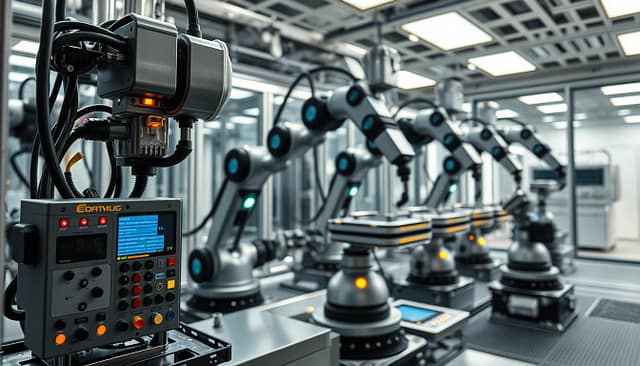
Robotics cells are the building blocks of modern manufacturing. They are designed to work together seamlessly, creating a highly efficient and adaptable production environment. By integrating advanced technologies like AMR integration, robotics cells can significantly enhance productivity and quality in various industries.
What are Robotics Cells?
Robotics cells are specialized areas within a manufacturing facility where robots and other automated systems work together to perform specific tasks. These cells are designed to optimize production processes, reducing the need for manual intervention and improving overall efficiency. By automating repetitive tasks, robotics cells help manufacturers focus on higher-value activities that require human expertise.
Components of a Robotics Cell
A typical robotics cell consists of several key components:
- Robots: These are the primary machines responsible for performing tasks within the cell. Robots can be programmed to handle various tasks, from assembly and welding to inspection and packaging.
- Automated Systems: In addition to robots, robotics cells often incorporate other automated systems, such as conveyor belts, sensors, and control systems. These systems work together to streamline production and ensure smooth workflow.
- AMR Integration: Advanced Mobile Robots (AMRs) are increasingly being integrated into robotics cells to enhance their capabilities. AMRs can move around the cell to transport materials, perform tasks, and even assist in the assembly process.
By combining these components, robotics cells create a highly efficient and adaptable production environment that can handle a wide range of tasks and products.
Benefits of Robotics Cells
Robotics cells offer numerous benefits to manufacturers:
- Increased Efficiency: By automating repetitive tasks, robotics cells significantly reduce production time and improve overall efficiency. This allows manufacturers to produce more products in less time, resulting in increased productivity and competitiveness.
- Improved Quality: Robotics cells are designed to perform tasks with precision and accuracy, reducing the likelihood of human error. This leads to higher-quality products and improved customer satisfaction.
- Cost Savings: By automating tasks and reducing the need for manual labor, robotics cells can help manufacturers save on labor costs. This cost savings can be reinvested in other areas of the business, such as research and development or marketing.
Overall, robotics cells play a vital role in modern manufacturing, enabling manufacturers to optimize their production processes, improve efficiency, and enhance product quality.
FAQ
Q: What is assembly automation?
A: Assembly automation is the use of machines and technology to streamline the assembly process. It involves the use of automated systems, robotics, and computer-controlled equipment to improve efficiency and reduce labor costs.
Q: What are the benefits of assembly automation?
A: Assembly automation offers several benefits, including increased efficiency, reduced labor costs, improved product quality, and enhanced safety. It also allows for faster production rates and the ability to handle high-volume production.
Q: What are the different types of assembly automation?
A: There are several types of assembly automation, including robotic assembly, computer-controlled assembly, and automated packaging equipment. Each type has its own advantages and can be tailored to specific industry needs.
Q: What are the advantages of robotic assembly?
A: Robotic assembly offers several advantages, including improved precision, increased efficiency, and reduced labor costs. Robots can perform repetitive tasks with high accuracy and speed, making them ideal for assembly processes.
Q: What are the advantages of computer-controlled assembly?
A: Computer-controlled assembly offers several advantages, including improved accuracy, increased efficiency, and reduced labor costs. Computer-controlled systems can be programmed to perform specific tasks with high precision, making them ideal for complex assembly processes.
Q: What are the advantages of automated packaging equipment?
A: Automated packaging equipment offers several advantages, including improved efficiency, reduced labor costs, and enhanced product quality. These systems can accurately package products at high speeds, making them ideal for industries with high-volume production.
Q: What are the benefits of assembly automation for industries?
A: Assembly automation offers several benefits for industries, including increased efficiency, reduced labor costs, improved product quality, and enhanced safety. It also allows for faster production rates and the ability to handle high-volume production.
Q: What are the challenges of implementing assembly automation?
A: Implementing assembly automation can be challenging due to the need for specialized equipment, training, and maintenance. It also requires careful planning and integration with existing systems to ensure seamless operation.
Q: What are the future trends in assembly automation?
A: The future of assembly automation is expected to be shaped by advancements in robotics, artificial intelligence, and machine learning. These technologies will enable even more efficient and precise assembly processes, leading to increased productivity and cost savings.
Materials/Finishes Options: Casting Your Machine’s Character Actors
The metals and finishes on your machine are key players. Pick the wrong ones, and your project stalls. But choose wisely, and you get a team that works flawlessly every night. It’s not just buying parts; it’s casting a team that makes your project shine.
Let’s look at the main contenders. Stainless Steel 304 is like Tom Hanks—it’s reliable and works well in most settings. It stands up to moisture, mild chemicals, and wear. It’s great for frames, enclosures, or parts that need to perform well.
Stainless Steel 316 is like Daniel Day-Lewis—it’s intense and handles tough environments. It’s better at fighting off chlorides, saline, and harsh chemicals. It’s the top choice for tough environments, like in the pharmaceutical or marine industries.
Anodized Aluminum is like Chris Hemsworth—it’s strong and agile. It has a surface that resists wear and corrosion. It’s perfect for parts that need to move smoothly and for places where weight is important.
Then there are Specialty Coatings. These are not just materials but special treatments. Powder coat adds color and protection. Epoxy offers chemical resistance. Teflon-like finishes make surfaces non-stick. Each adds a unique property to the surface.
Think about the script when choosing materials. For test rigs with sensitive parts, you need something delicate. But for robotics cells grippers, you need something tough. The right material makes all the difference.
Material science gets complex and pricey here. Different materials have different needs. Some are hard to work with, while others are flexible. Knowing this is key to making great machines.
When choosing materials, consider chemistry, physics, and cost. Ask tough questions like what chemicals it will face and how long it needs to last. The answers help you pick the right materials.
For more on surface treatments, check out our guide on sheet metal finishes and their uses. The finish is like the final touch—it completes the look.
Before starting any machine project, review the material list carefully. Each material is a performer. Choose them with care, because in manufacturing, the show must go on for a long time.
Benefits of AMR Integration in Assembly Automation
Integrating Autonomous Mobile Robots (AMRs) into assembly automation offers numerous benefits. These benefits include increased efficiency, improved safety, and enhanced productivity. By leveraging AMRs, manufacturers can streamline their assembly processes and achieve significant improvements in overall performance.
One of the key advantages of AMR integration is the ability to automate repetitive tasks. AMRs can handle tasks such as material transportation, part assembly, and quality inspection, freeing up human workers to focus on higher-value tasks that require creativity and problem-solving skills. This automation not only increases efficiency but also reduces the risk of human error, resulting in higher-quality products.
AMRs also contribute to improved safety in the assembly process. By automating tasks that involve physical labor, AMRs reduce the risk of accidents and injuries. Human workers are no longer exposed to hazardous environments or heavy lifting, creating a safer working environment for everyone involved.
Another significant benefit of AMR integration is the ability to optimize assembly workflows. AMRs can navigate through complex environments and adapt to changing production requirements, allowing for seamless integration into existing assembly lines. This flexibility enables manufacturers to optimize their workflows, reducing downtime and improving overall productivity.
By leveraging AMR integration, manufacturers can achieve significant improvements in their assembly processes. The increased efficiency, improved safety, and enhanced productivity resulting from AMR integration contribute to overall business success and competitiveness in the market.

Benefits of AMR Integration in Assembly Automation:
- Increased efficiency
- Improved safety
- Enhanced productivity
FAQ
Q: What is a packaging equipment test rig?
A: A packaging equipment test rig is a specialized setup designed to test and evaluate the performance of packaging equipment. It allows for thorough testing and validation of packaging machinery, ensuring optimal performance and efficiency.
Q: Why is testing packaging equipment important?
A: Testing packaging equipment is important to ensure the quality and integrity of packaged products. It helps identify any issues or inefficiencies in the packaging process, allowing for necessary adjustments and improvements to be made.
Q: What are the benefits of using a packaging equipment test rig?
A: Using a packaging equipment test rig offers several benefits. It allows for thorough testing and validation of packaging machinery, ensuring optimal performance and efficiency. It also helps identify any issues or inefficiencies in the packaging process, allowing for necessary adjustments and improvements to be made.
Q: What are the different types of packaging equipment test rigs?
A: There are various types of packaging equipment test rigs available, each designed for specific testing purposes. These include test rigs for testing the performance of packaging machinery, test rigs for evaluating the efficiency of packaging processes, and test rigs for simulating real-world packaging scenarios.
Q: How do I choose the right packaging equipment test rig for my needs?
A: When choosing a packaging equipment test rig, it is important to consider factors such as the specific testing requirements, the type of packaging equipment being tested, and the desired level of precision and accuracy. Consulting with industry experts and conducting thorough research can help make an informed decision.
Q: What are the advantages of using a packaging equipment test rig?
A: Using a packaging equipment test rig offers several advantages. It allows for thorough testing and validation of packaging machinery, ensuring optimal performance and efficiency. It also helps identify any issues or inefficiencies in the packaging process, allowing for necessary adjustments and improvements to be made.
Q: How do I maintain and calibrate my packaging equipment test rig?
A: Regular maintenance and calibration of a packaging equipment test rig are essential to ensure accurate and reliable test results. Following the manufacturer’s guidelines for maintenance and calibration, as well as conducting routine inspections and updates, can help maintain the integrity and performance of the test rig.
Q: What are the benefits of using a packaging equipment test rig?
A: Using a packaging equipment test rig offers several benefits. It allows for thorough testing and validation of packaging machinery, ensuring optimal performance and efficiency. It also helps identify any issues or inefficiencies in the packaging process, allowing for necessary adjustments and improvements to be made.
Q: How do I choose the right packaging equipment test rig for my needs?
A: When choosing a packaging equipment test rig, it is important to consider factors such as the specific testing requirements, the type of packaging equipment being tested, and the desired level of precision and accuracy. Consulting with industry experts and conducting thorough research can help make an informed decision.
Q: What are the advantages of using a packaging equipment test rig?
A: Using a packaging equipment test rig offers several advantages. It allows for thorough testing and validation of packaging machinery, ensuring optimal performance and efficiency. It also helps identify any issues or inefficiencies in the packaging process, allowing for necessary adjustments and improvements to be made.
Understanding the Basics of Robotics Cells
Robotics cells are the building blocks of modern manufacturing. They combine robots, automation, and advanced technology to create efficient production lines. This integration is key to improving productivity and reducing costs.
Robotics cells are designed to work together seamlessly. They use advanced technology to communicate and coordinate their actions. This ensures that each step in the production process is carried out accurately and efficiently.
One of the main advantages of robotics cells is their ability to automate repetitive tasks. By taking over these tasks, robots free up human workers to focus on more complex and creative tasks. This not only improves productivity but also enhances job satisfaction.
Robotics cells also contribute to cost savings. By automating tasks, companies can reduce labor costs and minimize the risk of human error. This leads to increased efficiency and lower production costs.
AMR integration is another important aspect of robotics cells. Autonomous mobile robots (AMRs) are designed to navigate and interact with their environment. They can move around the production line, performing tasks and delivering materials as needed.
AMRs bring several benefits to robotics cells. They improve efficiency by reducing the need for manual intervention and minimizing downtime. They also enhance safety by reducing the risk of accidents and improving overall workplace safety.
Overall, robotics cells and AMR integration are revolutionizing the manufacturing industry. They offer improved productivity, cost savings, and enhanced efficiency. As technology continues to advance, we can expect even more innovative applications of robotics cells in various industries.
Benefits of Robotics Cells and AMR Integration
| Benefits | Robotics Cells | AMR Integration |
|---|---|---|
| Improved Productivity | ✓ | ✓ |
| Cost Savings | ✓ | ✓ |
| Enhanced Efficiency | ✓ | ✓ |
| Reduced Labor Costs | ✓ | |
| Improved Workplace Safety | ✓ |


