

Think of industrial automation like a high-stakes Broadway show. One wrong move can lead to disaster. The key player is the servo motor, known for its precise control.
Choosing the right servo motor isn’t about picking the shiniest one. It’s about finding the perfect fit for your needs. You must know the load, motion, and how often it will run.
Is your application a marathon runner, a sprinter, or a boxer? Getting this wrong is like trying to direct a ballet with a football playbook. It can lead to a costly, jarring, and potentially destructive outcome.
This is where servo sizing starts—not with math, but with understanding the task. Before we explore torque, inertia, and tuning, we must grasp the basics. For more on choosing the right component, check out our servo motor buying guide.
Mechanics: friction estimates, reflected inertia, gearbox selection
Let’s explore the mechanical side of motion control. This is where theory meets reality. Without a solid foundation, your servo might struggle, like an actor on a slippery stage.
Friction is a major player here. It can slow down your motor or make it work too hard. To manage it, you need to know the formula Tfriction = μ × Fnormal × r. It’s more than a calculation; it’s a reality check.
Define the Move: Load, Profile, Dwell, Duty Cycle
Before you start, you need to know the task. Is it a quick sprint, a long run, or a precise hold?
The move’s profile affects the motor’s work. Dwell time is important for cooling. Duty cycle shows the average load. It’s like writing a script for your mechanical actor.
The gearbox is a key player. It changes the motor’s view of the load’s reflected inertia. This is key for a good inertia match.
Choosing a gearbox is a big decision. A high-tech gearbox for a simple task is overkill. You want the right balance for control.

How do you pick the right one? You compare different gearboxes. Each has its own strengths.
| Gearbox Type | Primary Superpower | Best For… | Inertia Match Impact | The Cultural Analog |
|---|---|---|---|---|
| Planetary | High torque density, durability | Conveyors, rotary indexes | Good reduction, improves ratio | The reliable pickup truck |
| Harmonic Drive | Zero backlash, high precision | Robotics, semiconductor stages | Excellent reduction, very low reflected inertia | The Swiss watchmaker |
| Worm Gear | High ratio, self-locking | Vertical axes, safety holds | Very high reduction, major ratio improvement | The one-way valve |
| Spur / Helical | Simplicity, cost-effectiveness | Basic speed changes, low-cost automation | Moderate reduction | The dependable wrench |
The right gearbox makes everything work smoothly. A bad choice makes the motor struggle. It’s all about finding that inertia match.
Before you dive into the technical details, get the basics right. Know your load and calculate friction accurately. Choose your gearbox wisely. This is where motion control magic happens.
Motor/Drive Sizing: torque-speed curves, RMS/peak, thermal limits
Choosing the right motor and drive isn’t about picking the biggest one. It’s about finding the perfect fit for your needs. This is the heart of servo sizing, where electrical specs meet real-world needs.
The torque-speed curve tells you what your motor can do. It shows its momentary power and its steady performance. It’s like comparing a sprinter’s quick start to a marathoner’s steady pace.
The motor’s comfort zone is its continuous operating region, or S1. Here, it can run all day without overheating. The intermittent region is for quick bursts of power, like during acceleration or deceleration.
Your application’s peak torque needs to fit in the intermittent zone. The RMS torque, or the average heat generated, should be in the continuous zone. If not, you’re not sizing a motor, but a very expensive heater.
Calculating RMS torque is important for keeping your motor cool. The formula TRMS = √((T₁² + T₂² + … + Tn²) / n) helps you find the motor’s safe operating torque. This ensures your motor won’t overheat.
Voltage is like fuel for your motor. Higher voltage lets it perform better. It’s like giving an athlete better oxygen, not just bigger muscles.
The Mechanical Reality Check
Before diving into motor catalogs, remember the mechanical side. Friction adds to every move. Always add 10-20% to your torque calculations to account for this.
Reflected inertia is a complex concept. It’s how the motor sees the load on the other end of the gearbox. Get this wrong, and your system will feel slow or unstable.
Choosing a gearbox is like finding a translator between your motor and load. It changes the motor’s high-speed, low-torque output into the low-speed, high-torque motion your machine needs. It’s a balance between ratio, efficiency, and backlash.
| Gearbox Type | Typical Ratio Range | Efficiency | Best For Applications |
|---|---|---|---|
| Planetary | 3:1 to 100:1 | 85-95% | High torque, compact spaces, low backlash |
| Harmonic Drive | 50:1 to 160:1 | 70-85% | Precision positioning, zero backlash requirements |
| Worm Gear | 5:1 to 100:1 | 50-90% | High reduction, right-angle transmission, self-locking |
| Spur Gear | 1:1 to 10:1 | 95-98% | High efficiency, parallel shafts, moderate loads |
The table above is more than a shopping list. It’s a guide to finding the right match for your motion needs. Planetary gears offer great torque density. Harmonic drives provide stunning precision. Worm gears offer high reduction in compact packages. Spur gears maximize efficiency.
Every gearbox has compliance, or slight flex under load. This can cause resonance, like a guitar string vibrating. In servo sizing, you’re not just calculating torque. You’re creating a mechanical symphony where every part must work together.
Backlash, or the dead zone between gear teeth, is a precision killer. For tasks like pick-and-place or printing, near-zero backlash is essential. For conveyor drives, a little might be acceptable.
The final step in motor/drive sizing is the thermal audit. Can your motor handle the heat from the RMS torque? If unsure, the answer is “no.” Thermal limits are strict. Exceed them, and your motor will fail.
This stage of servo sizing is a delicate balance. It’s where short bursts of power meet steady endurance. Get it right, and your machine will run smoothly. Get it wrong, and it might overheat or fail.
FAQ
Q: What is an Inertia Match?
A: An Inertia Match is a special type of match in the sport of archery. It is a match where the archer’s arrow is not released until it is in the target. This means that the archer must hold their arrow steady and aim carefully to hit the target.
Q: What is the purpose of an Inertia Match?
A: The purpose of an Inertia Match is to test the archer’s ability to hold their arrow steady and aim accurately. It requires a great deal of focus and control, as the archer must hold their arrow in place until it reaches the target.
Q: How is an Inertia Match different from other types of archery matches?
A: Unlike other types of archery matches, where the archer releases the arrow before it reaches the target, an Inertia Match requires the archer to hold their arrow steady until it hits the target. This adds an extra level of challenge and precision to the match.
Q: What are the benefits of participating in an Inertia Match?
A: Participating in an Inertia Match can help archers improve their focus, control, and overall shooting technique. It requires a great deal of concentration and precision, which can help archers develop their skills and become more accurate in their shooting.
Q: How can I participate in an Inertia Match?
A: To participate in an Inertia Match, you will need to find a local archery club or organization that offers these types of matches. You can also search online for archery events and tournaments that include Inertia Matches. Make sure to check the rules and requirements for each match to ensure you are prepared.
Q: What are the rules and requirements for an Inertia Match?
A: The rules and requirements for an Inertia Match may vary depending on the specific match or tournament. It is important to familiarize yourself with the rules and requirements beforehand to ensure you are prepared and can participate successfully.
Q: What are the benefits of participating in an Inertia Match?
A: Participating in an Inertia Match can help archers improve their focus, control, and overall shooting technique. It requires a great deal of concentration and precision, which can help archers develop their skills and become more accurate in their shooting.
Q: How can I participate in an Inertia Match?
A: To participate in an Inertia Match, you will need to find a local archery club or organization that offers these types of matches. You can also search online for archery events and tournaments that include Inertia Matches. Make sure to check the rules and requirements for each match to ensure you are prepared.
Q: What are the rules and requirements for an Inertia Match?
A: The rules and requirements for an Inertia Match may vary depending on the specific match or tournament. It is important to familiarize yourself with the rules and requirements beforehand to ensure you are prepared and can participate successfully.
FAQ
Q: What is the role of gearing in a bicycle?
A: Gearing in a bicycle refers to the system that allows riders to adjust the difficulty of pedaling by changing the ratio of the crankset to the rear wheel. This system is essential for efficient pedaling and adapting to different terrains.
Q: How does gearing affect a bicycle’s performance?
A: Gearing affects a bicycle’s performance by influencing how easily the rider can pedal. Proper gearing ensures that the rider can maintain a steady pace, regardless of the terrain, which is critical for efficient pedaling and overall performance.
Q: What are the different types of gearing systems?
A: There are several types of gearing systems, including single-speed, derailleur, and internal gear hubs. Each type offers unique advantages and is suited for different riding styles and terrains.
Q: What are the benefits of a single-speed gearing system?
A: Single-speed gearing systems are known for their simplicity and durability. They are ideal for riders who prefer a fixed gear ratio and are often used in track racing and fixed-gear urban riding.
Q: What are the benefits of a derailleur gearing system?
A: Derailleur gearing systems offer a wide range of gear ratios, making them versatile for various terrains. They are popular among road cyclists and mountain bikers due to their ability to adapt to different conditions.
Q: What are the benefits of an internal gear hub (IGH) system?
A: Internal gear hubs provide a smooth and quiet ride, making them ideal for commuting and touring. They also offer a wide range of gear ratios, making them suitable for different terrains.
Q: How do I choose the right gearing for my riding style?
A: When choosing the right gearing, consider your riding style, the terrain you’ll be riding on, and your personal preferences. It’s important to find a gearing system that complements your riding style and allows for efficient pedaling.
Q: What are the advantages of a wide-range gearing system?
A: Wide-range gearing systems offer a broader range of gear ratios, allowing riders to tackle different terrains with ease. They are ideal for riders who enjoy exploring various landscapes and terrains.
Q: What are the benefits of a compact gearing system?
A: Compact gearing systems provide a narrower range of gear ratios, making them ideal for riders who prefer a more efficient pedaling experience. They are commonly used in road cycling and racing.
Q: How do I maintain my gearing system?
A: Regular maintenance is essential to ensure optimal performance from your gearing system. This includes cleaning the components, lubricating the moving parts, and checking for any wear or damage.
Q: What are the benefits of upgrading my gearing system?
A: Upgrading your gearing system can enhance your riding experience by providing a wider range of gear ratios and improved performance. It’s important to choose the right upgrade for your specific needs and preferences.
Q: What are the benefits of a wide-range gearing system?
A: Wide-range gearing systems offer a broader range of gear ratios, allowing riders to tackle different terrains with ease. They are ideal for riders who enjoy exploring various landscapes and terrains.
Q: What are the benefits of a compact gearing system?
A: Compact gearing systems provide a narrower range of gear ratios, making them ideal for riders who prefer a more efficient pedaling experience. They are commonly used in road cycling and racing.
Q: How do I choose the right gearing for my riding style?
A: When choosing the right gearing, consider your riding style, the terrain you’ll be riding on, and your personal preferences. It’s important to find a gearing system that complements your riding style and allows for efficient pedaling.
Q: What are the benefits of a wide-range gearing system?
A: Wide-range gearing systems offer a broader range of gear ratios, allowing riders to tackle different terrains with ease. They are ideal for riders who enjoy exploring various landscapes and terrains.
Q: What are the benefits of a compact gearing system?
A: Compact gearing systems provide a narrower range of gear ratios, making them ideal for riders who prefer a more efficient pedaling experience. They are commonly used in road cycling and racing.
Q: How do I choose the right gearing for my riding style?
A: When choosing the right gearing, consider your riding style, the terrain you’ll be riding on, and your personal preferences. It’s important to find a gearing system that complements your riding style and allows for efficient pedaling.
Q: What are the benefits of a wide-range gearing system?
A: Wide-range gearing systems offer a broader range of gear ratios, allowing riders to tackle different terrains with ease. They are ideal for riders who enjoy exploring various landscapes and terrains.
Q: What are the benefits of a compact gearing system?
A: Compact gearing systems provide a narrower range of gear ratios, making them ideal for riders who prefer a more efficient pedaling experience. They are commonly used in road cycling and racing.
Q: How do I choose the right gearing for my riding style?
A: When choosing the right gearing, consider your riding style, the terrain you’ll be riding on, and your personal preferences. It’s important to find a gearing system that complements your riding style and allows for efficient pedaling.
Multi-Axis Coordination: electronic camming, gearing, registration
Single-axis control is like a solo, but multi-axis coordination is a full symphony. The conductor is a software algorithm. This is where machines learn to dance in perfect, complex harmony.
We’ve moved beyond simply making one thing spin. Now, we make several things move together as if connected by invisible strings. This magic happens through two primary digital techniques: electronic camming and electronic gearing.
Electronic camming lets one axis (the follower) precisely mimic the motion profile of another (the master). Think of it as digital puppetry. The follower doesn’t just match speed; it replicates position, acceleration, and deceleration based on a programmed cam table. Need a robotic arm to trace a heart shape based on a master rotary table’s position? That’s camming.
Electronic gearing, on the other hand, locks axes together in a strict speed ratio. It’s a virtual gearbox without metal teeth. This is perfect for synchronizing a labeler with a moving conveyor or keeping multiple rollers in a web process perfectly matched.
The Mechanical Coupling’s Role in a Digital Dance
Let’s be clear. These electronic methods don’t make belts, ball screws, or gearboxes obsolete. They change their role. The physical connection defines the raw capability of each axis. The electronic link defines their relationship.
Your choice of coupling dictates what’s possible in the coordination ballet. A stiff ball screw assembly gives you a precise dancer for high-force, linear moves. A belt drive might be your agile, high-speed performer. A direct-drive linear motor? That’s your freestyle virtuoso with zero backlash.
The key advantage of electronic coordination is its breathtaking flexibility. Change a product size on your packaging line? Don’t swap gears. Just upload a new cam profile or gear ratio. This is how you build a 5-axis SCARA robot from off-the-shelf motors and drives. The complex arm motions are choreographed with virtual master-slave relationships, not rigid linkages.
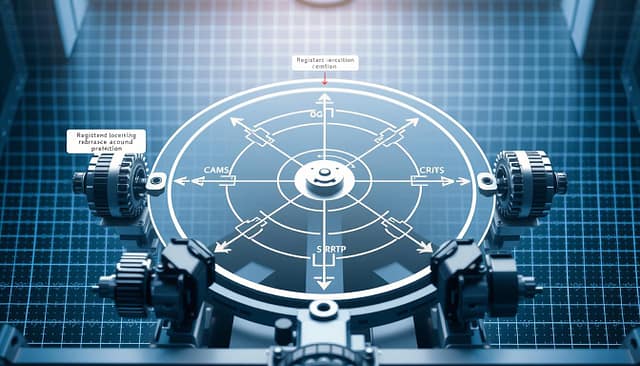
So, when do you use camming versus gearing? The table below breaks down the core differences.
| Feature | Electronic Camming | Electronic Gearing |
|---|---|---|
| Primary Relationship | Position-to-Position | Speed-to-Speed |
| Best For | Complex contouring (shapes, curves) | Constant synchronization (conveyors, rollers) |
| Programming Core | Cam Table (lookup table of positions) | Gear Ratio (simple numerator/denominator) |
| Dynamic Change | Can be complex mid-cycle | Often simple on-the-fly ratio change |
| Example Task | Placing a glue pattern on a rotating bottle | Keeping a cutting blade synced with moving film |
All this wizardry points to one ultimate goal: registration. Hitting the right spot at the exact right time, across multiple moving parts. It’s the moment the label perfectly meets the jar, or the seal aligns with the pouch. Registration is the standing ovation for your motion coordination.
The pros of electronic methods are huge: flexibility, reduced mechanical complexity, and easier tuning. The cons? They demand more from your drive and controller network. You need fast, deterministic communication. A tiny lag or jitter in the electronic signal is like a conductor missing a beat—the whole orchestra falls apart.
In the end, multi-axis coordination is about choosing the right tool for the relationship. Use physical couplings (belts, gears) for torque multiplication and direct, simple connections. Use electronic camming and gearing for sophisticated, adaptable, and precise temporal harmony. It’s the difference between a metronome and a maestro.
FAQ
Q: What is the significance of resonance in the context of the universe?
A: Resonance is a fundamental concept in the universe, playing a key role in the formation and evolution of celestial bodies. It is the phenomenon where objects vibrate at specific frequencies, creating harmonious interactions that shape the cosmos.
Q: How does resonance contribute to the formation of galaxies?
A: Resonance is responsible for the formation of galaxies by creating gravitational waves that guide the movement of stars and gas. These waves help in the formation of galaxy clusters and the overall structure of the universe.
Q: What is the role of resonance in the formation of stars and planets?
A: Resonance plays a vital role in the formation of stars and planets. It helps in the collapse of gas and dust into protostars, leading to the formation of stars. It also influences the formation of planets by creating gravitational waves that guide their movement.
Q: How does resonance contribute to the evolution of the universe?
A: Resonance is a driving force behind the evolution of the universe. It influences the formation of galaxies, stars, and planets, shaping the overall structure and evolution of the cosmos.
Q: What is the connection between resonance and the harmony of the universe?
A: Resonance is closely linked to the harmony of the universe. It creates harmonious interactions between celestial bodies, resulting in the formation of galaxies, stars, and planets. This harmony is a fundamental aspect of the universe.
Q: How does resonance contribute to the formation of galaxies?
A: Resonance is responsible for the formation of galaxies by creating gravitational waves that guide the movement of stars and gas. These waves help in the formation of galaxy clusters and the overall structure of the universe.
Q: What is the role of resonance in the formation of stars and planets?
A: Resonance plays a vital role in the formation of stars and planets. It helps in the collapse of gas and dust into protostars, leading to the formation of stars. It also influences the formation of planets by creating gravitational waves that guide their movement.
Q: How does resonance contribute to the evolution of the universe?
A: Resonance is a driving force behind the evolution of the universe. It influences the formation of galaxies, stars, and planets, shaping the overall structure and evolution of the cosmos.
Q: What is the connection between resonance and the harmony of the universe?
A: Resonance is closely linked to the harmony of the universe. It creates harmonious interactions between celestial bodies, resulting in the formation of galaxies, stars, and planets. This harmony is a fundamental aspect of the universe.
FAQ
Q: What is motion control servo sizing?
A: Motion control servo sizing is the process of selecting the right servo motor for a specific application. It involves considering factors such as the motor’s torque, speed, and power output to ensure optimal performance.
Q: Why is motion control servo sizing important?
A: Proper motion control servo sizing is essential for achieving precise and efficient motion control in various applications. It helps prevent issues such as motor overload, vibration, and reduced performance, ensuring reliable and accurate motion control.
Q: What factors should be considered when sizing a servo motor?
A: When sizing a servo motor, several factors should be taken into account. These include the motor’s torque, speed, power output, and the specific requirements of the application. It is important to choose a servo motor that can handle the load and provide the necessary performance.
Q: How can I determine the right servo motor for my application?
A: To determine the right servo motor for your application, you need to consider the specific requirements of your system. Factors such as the load, speed, and precision needed should be taken into account. It is recommended to consult with a motion control expert who can provide guidance and recommendations based on your specific needs.
Q: What are the benefits of proper motion control servo sizing?
A: Proper motion control servo sizing offers several benefits. It ensures optimal performance, prevents issues such as motor overload and vibration, and provides reliable and accurate motion control. By selecting the right servo motor for your application, you can achieve precise and efficient motion control.
Q: How can I ensure accurate motion control in my application?
A: To ensure accurate motion control in your application, it is important to properly size your servo motor. By considering factors such as torque, speed, and power output, you can choose a servo motor that can handle the load and provide the necessary performance. Consulting with a motion control expert can also help you make the right choice.
Q: What are the advantages of using a motion control expert for servo motor sizing?
A: Using a motion control expert for servo motor sizing offers several advantages. They have the knowledge and experience to provide accurate recommendations based on your specific requirements. They can help you choose the right servo motor for your application, ensuring optimal performance and accurate motion control.
Q: How can I optimize my servo motor selection for motion control?
A: To optimize your servo motor selection for motion control, it is important to consider factors such as torque, speed, and power output. By choosing a servo motor that matches your application’s requirements, you can achieve precise and efficient motion control. Consulting with a motion control expert can help you make the right choice.
Q: What are the benefits of using a motion control expert for servo motor sizing?
A: Using a motion control expert for servo motor sizing offers several benefits. They have the knowledge and experience to provide accurate recommendations based on your specific requirements. They can help you choose the right servo motor for your application, ensuring optimal performance and accurate motion control.
Q: How can I optimize my servo motor selection for motion control?
A: To optimize your servo motor selection for motion control, it is important to consider factors such as torque, speed, and power output. By choosing a servo motor that matches your application’s requirements, you can achieve precise and efficient motion control. Consulting with a motion control expert can help you make the right choice.
FAQ
Q: What is the significance of resonance in the context of the universe?
A: Resonance is a fundamental concept in the universe, playing a key role in the formation and evolution of celestial bodies. It is the phenomenon where objects vibrate at specific frequencies, creating harmonious interactions that shape the cosmos.
Q: How does resonance contribute to the formation of galaxies?
A: Resonance is responsible for the formation of galaxies by creating gravitational waves that attract and merge galaxies. These waves are generated by the vibrations of celestial bodies, leading to the formation of larger structures in the universe.
Q: What is the role of resonance in the evolution of stars and planets?
A: Resonance plays a significant role in the evolution of stars and planets. It influences their stability, growth, and eventual demise. The vibrations of celestial bodies contribute to the formation of planetary systems and the evolution of stars.
Q: How does resonance impact the formation of black holes?
A: Resonance is responsible for the formation of black holes. The vibrations of celestial bodies create gravitational waves that attract and merge, resulting in the formation of black holes. These powerful objects play a key role in the evolution of the universe.
Q: What is the connection between resonance and the cosmic dance?
A: Resonance is closely connected to the cosmic dance, a phenomenon where celestial bodies interact and move in harmony. The vibrations of celestial bodies create gravitational waves that attract and merge, resulting in the formation of larger structures in the universe.
Q: How does resonance contribute to the harmony of the universe?
A: Resonance is responsible for the harmony of the universe. The vibrations of celestial bodies create gravitational waves that attract and merge, resulting in the formation of larger structures in the universe. This harmonious interaction contributes to the overall balance and stability of the cosmos.
Q: What is the significance of resonance in the context of the universe?
A: Resonance is a fundamental concept in the universe, playing a key role in the formation and evolution of celestial bodies. It is the phenomenon where objects vibrate at specific frequencies, creating harmonious interactions that shape the cosmos.
FAQ
Q: What is camming?
A: Camming is a form of online entertainment where performers engage in live video streams, often in a private setting. It involves a range of activities, including nudity, sex acts, and interactive conversations.
Q: How does camming work?
A: Camming works through live video streaming platforms. Performers create profiles, set their rates, and offer various services. Viewers can then choose to watch for free or pay for private sessions.
Q: What are the benefits of camming?
A: Camming offers several benefits, including the ability to work from home, flexible schedules, and the opportunity to earn money through tips and private shows.
Q: What are the risks of camming?
A: Camming carries risks such as the possibility of encountering predators, dealing with trolls, and facing legal issues related to nudity and sex acts.
Q: How can I start camming?
A: To start camming, you need to create a profile on a camming platform, set your rates, and offer your services. It’s important to be prepared for the technical aspects of camming and to have a good understanding of the platform’s rules and guidelines.
Q: What are the different types of camming platforms?
A: There are several camming platforms available, including Chaturbate, Cam4, and Streamate. Each platform has its own features, audience, and rules, so it’s important to choose the one that best suits your preferences and goals.
Q: How can I make money on camming platforms?
A: To make money on camming platforms, you can earn tips from viewers during your live streams. You can also offer private shows for a fee. Building a loyal fanbase and providing high-quality content can help increase your earnings.
Q: What are the best camming platforms for beginners?
A: Chaturbate and Cam4 are popular camming platforms for beginners. They have a large user base and offer a range of features to help new performers get started.
Q: How can I promote my camming profile?
A: To promote your camming profile, you can use social media platforms like Twitter and Instagram to share your content and engage with your audience. You can also participate in camming communities and forums to connect with other performers and learn from their experiences.
Q: What are the best camming tips for beginners?
A: Some of the best camming tips for beginners include being comfortable with your body, building a strong online presence, and providing high-quality content. It’s also important to be prepared for the technical aspects of camming and to have a good understanding of the platform’s rules and guidelines.
Q: How can I make money on camming platforms?
A: To make money on camming platforms, you can earn tips from viewers during your live streams. You can also offer private shows for a fee. Building a loyal fanbase and providing high-quality content can help increase your earnings.
Q: What are the best camming platforms for beginners?
A: Chaturbate and Cam4 are popular camming platforms for beginners. They have a large user base and offer a range of features to help new performers get started.
Q: How can I promote my camming profile?
A: To promote your camming profile, you can use social media platforms like Twitter and Instagram to share your content and engage with your audience. You can also participate in camming communities and forums to connect with other performers and learn from their experiences.
Q: What are the best camming tips for beginners?
A: Some of the best camming tips for beginners include being comfortable with your body, building a strong online presence, and providing high-quality content. It’s also important to be prepared for the technical aspects of camming and to have a good understanding of the platform’s rules and guidelines.


