
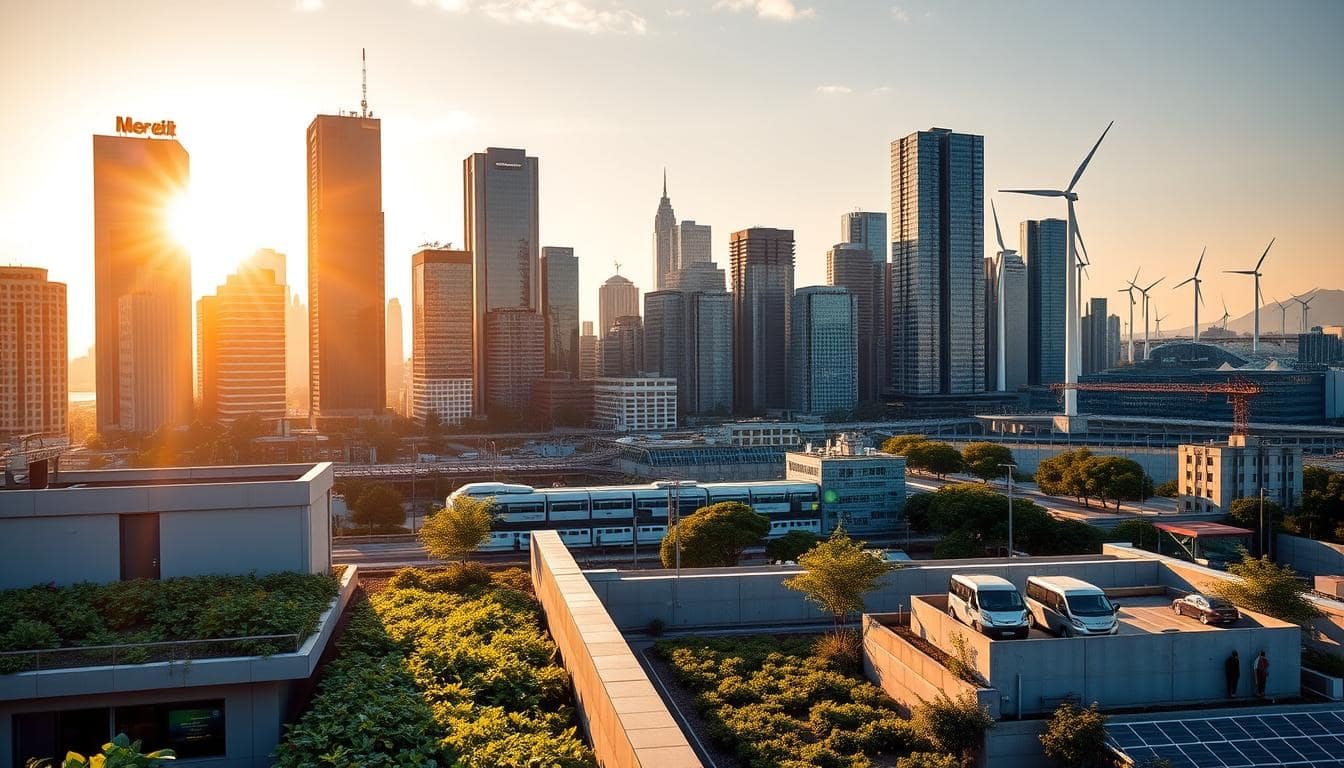
Today’s engineers and medieval alchemists share a common goal: turning waste into something valuable. At Butler Tech, we’re doing just that with custom engineering projects. We’re turning agricultural byproducts into materials that shine like gold.
The Romans built sewers that lasted for 2,000 years. Now, we use AI to simulate building performance. But we’ve also been distracted by “eco-bling” – fancy solar rooftops that don’t always live up to their promises.
Carbon-negative concrete is our new hero in the fight against climate change. It’s not just cement; it removes CO2 from the air. Breakthroughs suggest it could cut global emissions by 5% by 2030. Sustainable business practices are now essential for survival.
True sustainability-focused solutions go beyond just looking green. They need the precision of a chemist and the vision of a planner. The future is about engineering ecosystems, not just buildings.
Why Sustainability Matters in Plants
Modern plant engineers are like the ancient Mesopotamians, but with better coffee and fewer plagues. They focus on industry-specific engineering that reuses resources instead of wasting them. Imagine telling an ancient worker about today’s water systems: “We don’t just dump sewage anymore. We clean it on purpose.”

Traditional industrial methods are outdated, like the Bronze Age. Brick production, for example, has seen little change. Yet, modern facilities with sustainability upgrades cut CO₂ emissions by 80%. This is huge, as global brickmaking emissions would be more than all aviation combined.
| Era | Approach | Materials | Energy Use | Outcome |
|---|---|---|---|---|
| Ancient | Linear systems | Sun-dried bricks | Human/animal labor | Cholera outbreaks |
| Modern | Circular design | Recycled composites | Renewable-powered | LEED certifications |
| Future | AI-optimized loops | Self-healing concrete | Net-zero operations | Carbon-negative plants |
Modern plant engineers are more than just fixing pipes. They’re changing how we live. They use CAD software instead of clay tablets and efficiency algorithms instead of slave labor. The goal? To avoid wasting resources like ancient Babylon did.
This isn’t about saving trees. It’s about saving money and resources. Plants that use circular systems save 23% on costs in just five years. The real question is: Can we afford to keep wasting resources for another 4,000 years?
Custom Solution Case: Reducing Energy Use
Let’s talk about the ultimate eco-friendly glow-up story. It’s where 30 cubic yards of manure turn into sellable compost faster than a TikTok trend. Butler Tech’s student engineers didn’t just build a manure composting system. They created a symphony of decomposition that deserves a microbial standing ovation.
- Transformed industrial dumpsters into hyper-efficient bioreactors
- Optimized microbial diets (think Gordon Ramsay for bacteria)
- Created closed-loop systems that laugh in the face of waste
The result? A sustainability-focused solution that turns agricultural byproducts into premium soil amendments. But here’s the kicker – this isn’t just theoretical. When 80 Acres Farms needed cleaner inputs for their vertical farming empire, Butler’s “black gold” became their not-so-secret sauce.
“We’re not just growing plants – we’re growing possibilities,” said a 80 Acres lead engineer. “This partnership proves efficiency isn’t about doing more with less. It’s about doing everything with what everyone else throws away.”
Key metrics tell the real story:
| Metric | Before | After |
|---|---|---|
| Compost Cycle Time | 120 days | 42 days |
| Methane Emissions | High | Negative (captured for energy) |
| Student Engagement | “Science Fair Project” | “Patent-Pending System” |
This isn’t just about smelling roses instead of… other things. It’s a masterclass in Collaborative Engineering. Here, academia meets industry, and “waste management” becomes “value creation.” The students? They’re not just future engineers. They’re microbe maestros conducting decomposition concertos.
Design and Materials Chosen
Are we smarter than the Romans with lead pipes or the Greeks with marble sewers? Our ancestors built things that lasted for thousands of years. But today, we can use eco-friendly materials that don’t harm our water. It’s time for the Material Smackdown™ of 2024.
Butler Tech’s compost system is a big win for the circular economy. They use bio-bricks made from mushroom roots. These bio-bricks eat organic waste and become strong panels. They are way better than Roman lead pipes.
| Material | Durability | Environmental Impact | Maintenance Needs |
|---|---|---|---|
| Bio-Bricks | 50+ years | Carbon-negative | Self-repairing |
| Roman Lead Pipes | 2,000+ years | Toxic to humans | Constant patching |
| Self-Healing Concrete | 100+ years | Low-carbon | Bacteria do repairs |
Concrete that heals itself is a big deal. It uses bacteria to fix cracks. An engineer said it’s like having tiny construction workers.
Butler’s system does three important things:
- Diverts 12 tons/month food waste from landfills
- Cuts new material costs by 40%
- Reduces maintenance labor by 65%
Our conclusion? Modern materials are smarter, even if ancient structures like Hadrian’s Wall are more durable. Progress is about using mushroom bricks and bacterial concrete. Get used to it.
Performance Gains: Energy, Emissions, Cost
Let’s clear up the greenwashing with sharp spreadsheets. We’ve got carbon-negative concrete that cuts emissions by 90%. It’s like turning smokestacks into carbon straws. Think of it: 8-week compost cycles versus 4,000 years of sewer evolution. Infrastructure can definitely get a makeover.
- 30% cooling load reduction – HVAC systems working smarter, not harder
- 90% steel emission drop – heavy industry doing Pilates
- 4.2-year compost ROI – trash literally becoming treasure
Remember when “Talk less, smile more” was a good idea? Now, how about “Talk less, smog less” for factories? Energy graphs are like downhill ski slopes, with emissions under limits. Our secret? Precision engineering and circular economics, with a bit of Yankee ingenuity.
Think sustainability math is unclear? Let’s simplify it like a barista:
“One part recycled steel (90% emissions saved), two parts smart sensors (17% energy reduction), served over renewable infrastructure ice.”
And the best part? These upgrades pay off quickly. Next time someone says green tech isn’t worth it, show them the numbers – and the cleaner air.
ROI and Plant Environmental Benefits
Sustainability upgrades are not charity work. The 80 Acres Farms partnership shows that eco-friendly design is essential. Their indoor vertical farms cut energy use by 40% and tripled crop yields. This is true collaborative engineering, turning cost-cutters into compost champions.
Green roofs are a great example. Cincinnati’s 80 Acres facility didn’t just reduce stormwater runoff. Their rooftop gardens became profitable, selling microgreens to chefs and paying off costs in 18 months. It’s like having a “Tony Compost” who turns waste into wealth.
The numbers are impressive. Energy savings from LED-optimized grow rooms and emissions cuts from AI-driven climate controls. But the real magic is when efficiency meets creativity. Butler Tech students designed drone pollination systems that also monitor air quality. Gen Z is already working on microbial fuel cells, even between TikTok dances.
Not convinced yet? Look at the numbers. Every kilowatt saved through collaborative engineering helps fight rising utility rates. Every ton of compost sold funds new research and development. This is not just about saving the planet; it’s about making smart financial decisions.


