
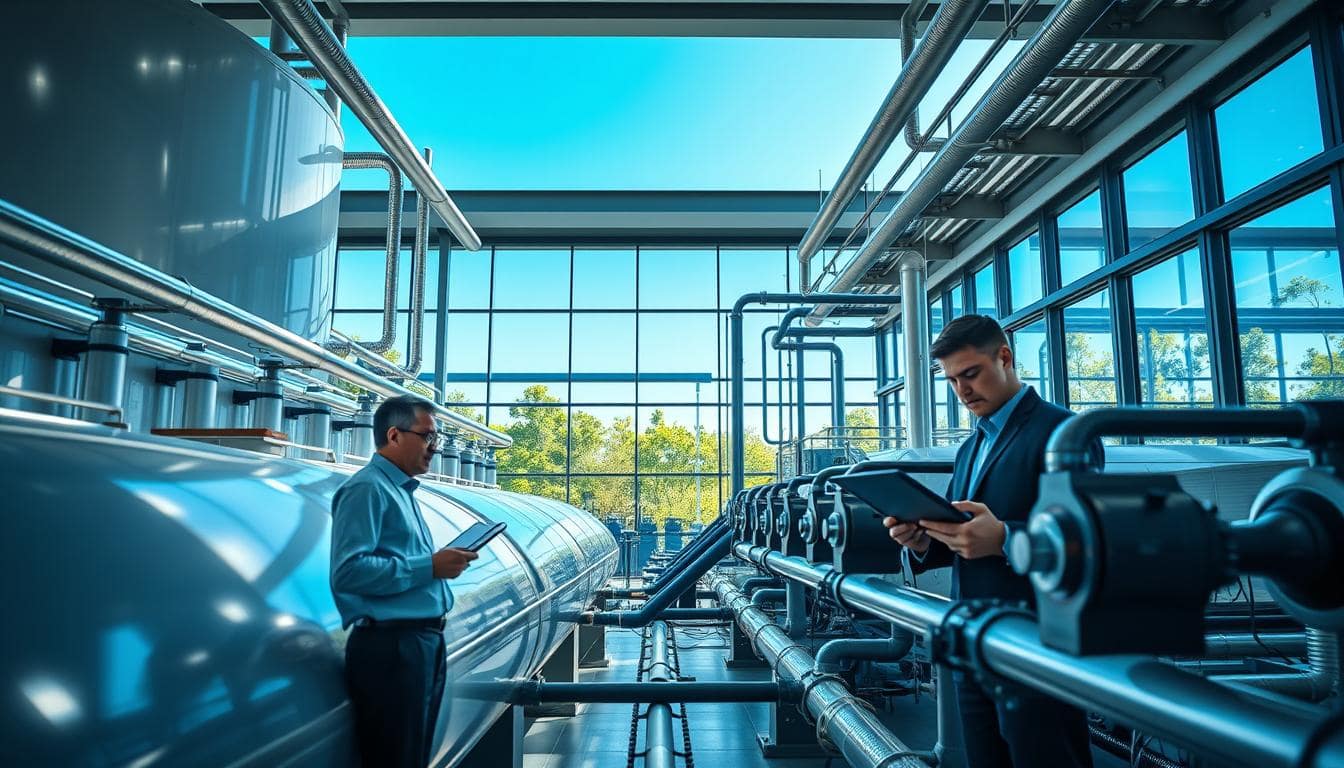
The world of environmental rules is changing fast, mainly for cities in the U.S. The Texas Commission on Environmental Quality (TCEQ) has made big changes. Now, how well cities follow the rules is checked every six months. This looks at all the rule-breaking over five years.
For many places, the consequences are serious. A big city’s water treatment plant was in trouble because it kept breaking the rules. These rules are set by the National Pollutant Discharge Elimination System permit. The plant was worried it would be seen as a repeat offender.
This would mean higher costs for permits and less chance to try new things. The plant was already facing big fines because it broke the rules too many times. In just a year and a half, it got three warnings. This led to huge monthly fines and legal costs.
The plant knew it had to do something big to avoid even more trouble. A major upgrade was not just a good idea, it was necessary to keep going.
Root Causes: load swings, grease, poor monitoring, undersized units
Understanding the failures in wastewater treatment is key to making upgrades. Many facilities face hydraulic and organic load swings due to old infrastructure. For example, a local dairy plant can overwhelm systems meant for average flows.
Peak flows often exceed system capacity, causing big problems. This leads to trouble with following rules.
Fats, oils, and grease from upstream sources are another big issue. These substances can cover diffusers, cutting oxygen transfer by about 30%. This makes treatment less effective and can lead to rule violations.
Also, using a SCADA system that only checks twice a day limits monitoring. Operators need to watch things like dissolved oxygen and pH in real time. Without this, they can only react to problems, not prevent them.
Existing systems, like belt presses and chemical feed systems, are often too small. This forces operators to make quick fixes, which can upset the biological processes needed for wastewater treatment.
These issues show that problems in wastewater treatment rarely come from one thing. They usually come from a mix of design, monitoring, and enforcement issues. Fixing these problems is essential for making future upgrades work right.
| Root Cause | Impact | Proposed Solution |
|---|---|---|
| Load Swings | Overwhelms treatment capacity | Upgrade to modular solutions |
| Grease Accumulation | Reduces oxygen transfer efficiency | Implement grease traps upstream |
| Poor Monitoring | Delayed response to process changes | Install continuous monitoring systems |
| Undersized Units | Instability in biological processes | Redesign and expand treatment units |
Process Train: equalization, DAF, bio, filters, disinfection, storage; controls strategy
A well-structured process train is key to making wastewater treatment more effective and sustainable. It includes various essential unit operations. Each one is designed to boost efficiency and meet strict standards.
The first part is the offline equalization basin, with a 500,000-gallon capacity. It uses variable-speed transfer pumps to handle changes in flow and organic loads. This helps protect the next steps in the process from sudden disruptions.
The Dissolved Air Flotation (DAF) unit is next, handling a peak flow of 2.5 million gallons per day (MGD). It removes grease and suspended solids, protecting the bioreactor and reducing aeration needs. The DAF unit is vital for keeping the biological process running smoothly.
The biological process upgrade uses the membrane aerated biofilm reactor (MABR) technology. This system works in one tank, handling nitrification and denitrification at the same time. It saves space and eliminates the need for internal recycle pumps, making treatment more efficient.
After biological treatment, tertiary treatment involves multi-media filtration. This step makes the water clear and clean, with turbidity levels below 2 NTU. The process ends with ultraviolet disinfection, validated to kill viruses to a 4-log level according to NSF/ANSI 350 standards.
The treated water goes to a 250,000-gallon reclaimed water storage tank. It has duplex transfer pumps for reliable operation. The controls strategy uses programmable logic controllers and online analyzers to monitor key parameters. This allows for quick adjustments and automatic diversion of off-spec water.
Each unit process was chosen to address specific problems, forming a cohesive treatment plan. This approach improves system performance and ensures it meets regulatory standards.
Construction Phasing: bypassing, odors, neighbors, storm events
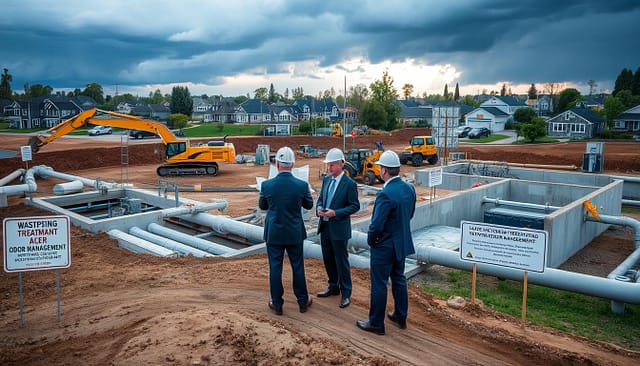
Upgrading wastewater treatment facilities in busy areas is tough. To keep services running, construction is phased carefully. This process has four main stages, each aimed at keeping treatment going without much disruption.
Phase 1 started with setting up the equalization basin and DAF unit on unused land. This step got these parts working before tearing down old structures. It made sure key functions kept running during the upgrade.
In Phase 2, the MABR bioreactor modules were built on concrete slabs next to the old aeration basin. Temporary pipes directed flow to the new biological process once it was stable. This planning reduced digging and avoided delays.
Phase 3 took down the old clarifiers and put in new filtration and UV disinfection systems in the old solids handling building. This step updated the facility and kept the construction area small.
Phase 4 finished the reclaimed water storage and distribution loop. Each phase was designed for efficiency and to reduce odors and keep neighbors happy. Mobile carbon adsorption units were used at the headworks and sludge areas to control smells, with constant hydrogen sulfide checks at the property line.
It was key to address community worries early on. The team had a plan for storm events, using the equalization basin as emergency storage. This plan stopped bypass events that could cause permit issues, keeping trust with regulators.
Using modular, containerized treatment technologies sped up the construction. What usually took 18 months was done in just 10 months. This quick work reduced disturbance to nearby homes, making the upgrade easier for everyone.
| Phase | Activities | Key Benefits |
|---|---|---|
| Phase 1 | Install equalization basin and DAF unit | Ensures continuous treatment |
| Phase 2 | Erect MABR bioreactor modules | Reduces excavation needs |
| Phase 3 | Decommission old clarifiers, install filtration | Modernizes facility |
| Phase 4 | Complete reclaimed water storage | Enhances water reuse capabilities |
Commissioning and Sampling: startup curves, lab methods, operator SOPs
The journey from construction to compliance in wastewater treatment starts with commissioning and sampling. This process is key to making the facility stable and meet permit standards.
The commissioning of Fluence Aspiral™ units is very efficient. These units are pre-made and tested in the factory. This ensures they work well with little on-site work. Each plant is made to fit the site’s needs, making it a complete solution.
The biological process startup followed a detailed 45-day curve:
| Week | Activity | Details |
|---|---|---|
| 1 | Seeding | Inoculated MABR modules with thickened waste activated sludge at a 15% ratio. |
| 2-4 | Ramp-Up | Increased influent flow from 25% to 75% of design capacity while maintaining a 10-day solids retention time. |
| 5-6 | Full Design Flow | Achieved full design flow with effluent ammonia below 1.0 mg/L and total inorganic nitrogen below 5.0 mg/L. |
Laboratory methods were greatly improved. The facility moved from Hach colorimetric kits to EPA-approved methods. These include SM 4500-NH3 for ammonia, SM 4500-P for phosphorus, and SM 2540 for total suspended solids. A third-party lab checks samples monthly to ensure they are accurate.
Operator standard operating procedures (SOPs) were rewritten for better efficiency. These are detailed guides posted at each process. They cover normal operation, alarm response, and preventive maintenance.
A 30-day performance acceptance test was set up. The system had to meet all permit limits continuously before it was certified. Commissioning is more than just checking equipment. It’s about training operators and getting the data needed to meet regulations from the start.
For more detailed regulations, refer to the Alabama Environmental Regulations.
Outcomes: compliance streak, surcharge savings, reuse to washdown/CIP makeup
Big changes have happened at the facility. In the last 24 months, it has not had any permit problems. This has moved it from a near-unsatisfactory to a high-performer status.
Being a high-performer means fewer inspections. This makes the facility more stable. Also, not having to pay surcharges has saved money. This money saved is between $144,000 to $216,000 each year.
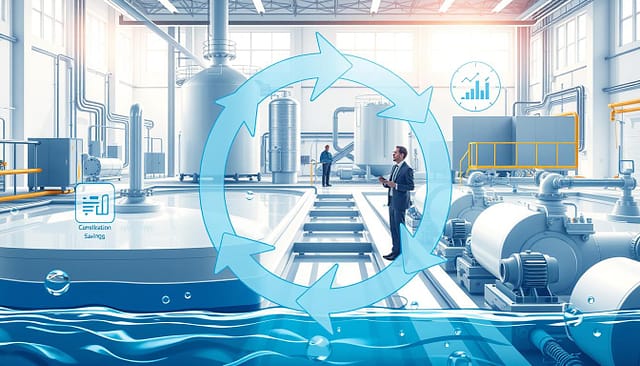
The reuse loop is a big win. About 30 percent of treated water, or 360,000 gallons per day, is reused. It’s used for cleaning, making water for chemical systems, and more.
- The effluent supplies washdown stations throughout the plant, replacing potable water previously used for cleaning.
- It provides clean-in-place makeup water for chemical feed systems, eliminating the need for softened potable water in polymer and coagulant mixing.
- Future plans include a connection to an adjacent industrial facility’s cooling tower makeup loop, which could increase reuse to 45 percent of total effluent.
These results are real and checked every quarter. The facility is now a leader in wastewater management.
| Outcome | Details | Impact |
|---|---|---|
| Compliance Streak | 8 consecutive quarters with zero permit exceedances | Improved regulatory classification |
| Surcharge Savings | $144,000 to $216,000 annually | Cost recovery within 18 months |
| Reuse Loop | 30% of treated effluent reused | Reduction in potable water usage |
Community & ESG wins and future phases
The way we manage wastewater has changed for the better. The US EPA Water Reuse Case Study for Los Angeles County shows how water reuse helps. It reduces the need for clean water and makes communities more drought-resistant.
Companies like Fluence are leading the way with new Water Management Services. They offer payment plans that help clients save money. This change makes water management more affordable and effective.
After making improvements, people near the facility stopped complaining about smells. This is thanks to a new covered DAF unit and better sludge handling. These changes have improved relations with the community and boosted the facility’s ESG scores.
The facility has seen big wins: a 30% drop in clean water use, a 25% cut in electricity use, and a 40% reduction in sludge. It’s a big step towards sustainability. The facility has also won awards and become a model for others to follow.
The project is planning even more for the future. Phase 2 will add reverse osmosis to reuse more water, aiming for 60% reuse. Phase 3 will look into making reused water safe for drinking, with help from a state grant. These plans show the facility’s commitment to helping communities and the environment.
For more on the project’s success, visit this link.


